Albrecht von Goertz and the BMW 507
Albrecht von Goertz, the BMW 507 designer, left Germany for America at 22, learned car design in Raymond Loewy's studio and drew the 507 and the 503 for BMW in 1954–55; Nissan later took him on as a consultant.
About the pictureThe side vent and roundel of a 507 in the BMW Museum, 2014: a detail of the car he drew, not the man.
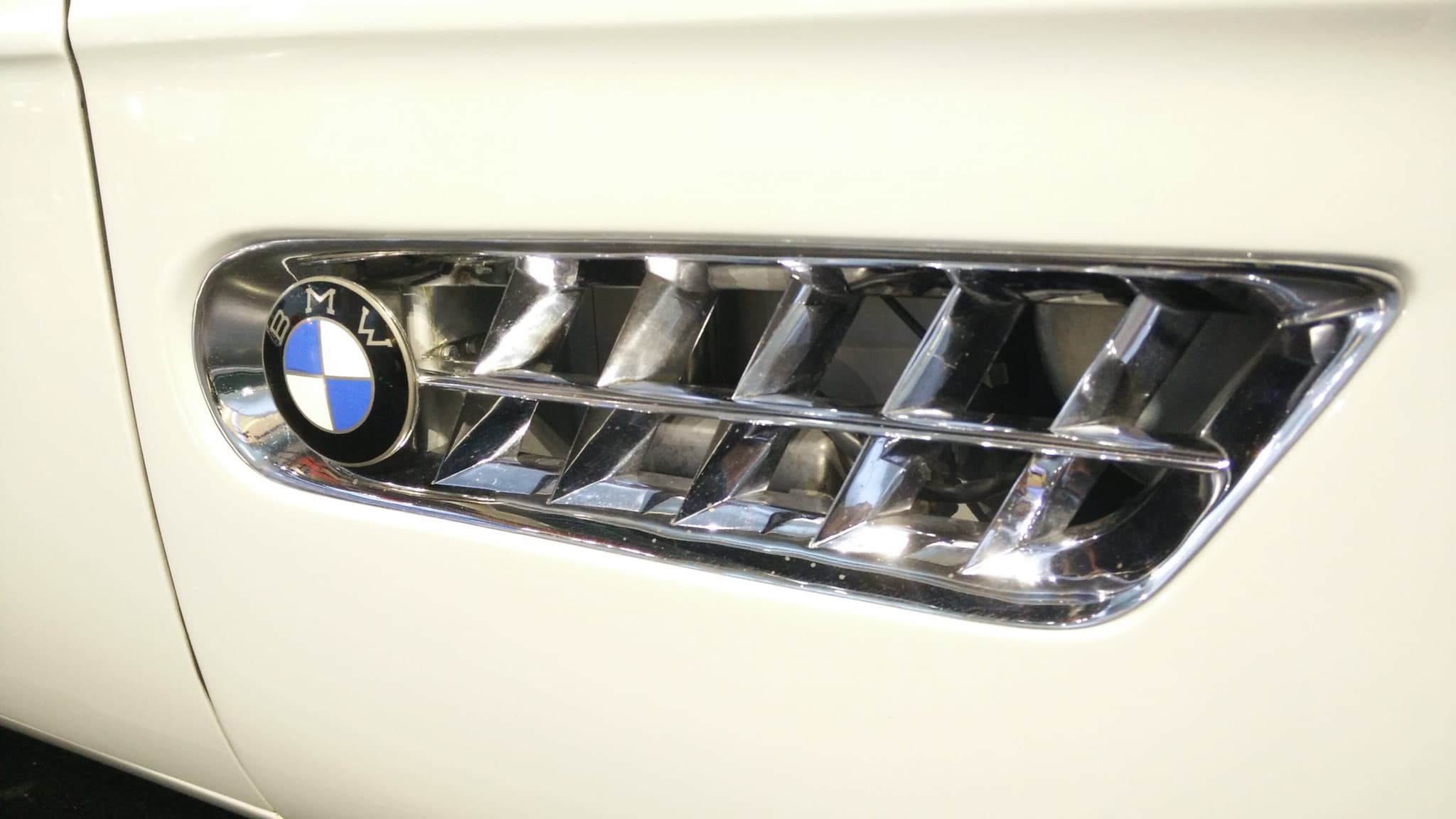
Albrecht von Goertz was not at the Frankfurt show in September 1955, where BMW showed the 507 and the 503, the two cars he had drawn. BMW's account has him unable to face the pressure of the premiere: he went back to New York before it opened and heard how the cars had been received from a telegram. He was 41, an American citizen who had left Germany at 22, served five years in the US Army and learned car design in Raymond Loewy's studio, and BMW was, in Industrial Design's words four years later, "his first major European client".source 1source 2source 3
Brunkensen, Hamburg and London, 1914–1936
Sources for Albrecht von Goertz
Melina Aulinger and Walter Zeichner, "You've got to be lucky", Mobile Tradition live (BMW Group Mobile Tradition), 02/2004, pp. 10–17source 1; Jürgen Pander, "Designer Albrecht Graf Goertz: Paradiesvogel als Retter für BMW", Spiegel Online, 22 Jan 2011source 2; Industrial Design, Profile of Albrecht Graf Goertz, Aug 1959 (vol. 6 no. 8), pp. 50–51source 3; BMW Group (PressClub Canada), "Designer Albrecht Graf Goertz passes away" (press release), 3 Nov 2006source 4; Alex Harmer, "Sisters under the skin?", Motor Sport, Feb 1987, p. 17source 5; Ben Hsu, "Goertz Myths Will Never Die, Part II", Japanese Nostalgic Car, 27 Jan 2009source 6; BMW Group Classic (BMW Classic blog), "60 Years of Pure Temptation", 2015source 7
He grew up on the family estate at Brunkensen, near Hanover, the second son of an old noble family; his father was an army officer and his mother the daughter of a wealthy Frankfurt banker. Cars had held him since he was five or six, BMW's profile of 2004 says. He left school at 18, shortly before his final examinations, and in 1933 began an apprenticeship with the Deutsche Bank in Hamburg, moving after 18 months to Helbert Wagg & Co. in London.
BMW's profile says he never warmed to banking and decided in 1935 to leave Europe; he applied for an American visa and sailed in the autumn of 1936. Der Spiegel, in 2011, gave another reason: his mother was Jewish, he counted in Nazi Germany as half-Jewish, and he could expect serious trouble there.source 1source 4source 2
Los Angeles, the Paragon and the war
New York came first, with jobs washing cars at an air service and in an aero-engine factory, then Los Angeles and its hot-rod builders. From 1938 he had a small garage with a showroom there, where he chopped Ford Model A and Model B cars, and in 1939, at 25, he built the first car of his own design on a Mercury chassis: the Paragon, a two-door coupé with covered rear wheels and unusual rear side windows, shown for several weeks at that year's World's Fair in San Francisco. From 1940 to 1945 he served in the US Army, five years on the Pacific front by BMW's account, and Der Spiegel adds that by then he had become an American citizen.source 1source 2source 3
Loewy and Studebaker
Back in New York after the war, staying at the Waldorf-Astoria, he parked the Paragon behind a customised Lincoln Continental. He got out to look at the Lincoln, its driver got out to look at the Paragon, and the driver was Raymond Loewy; BMW and Der Spiegel both tell it that way. Loewy helped him into the Pratt Institute in Brooklyn and then made him a junior designer in his Studebaker department, where, in BMW's words of 2006, "Goertz and a colleague designed the successful facelift of the Studebaker Champion - the so-called 'bullet nose'". After two and a half years they parted, and BMW's magazine, telling Goertz's story in 2004, gives Loewy a parting line:
Aus Ihnen wird nie ein richtiger Designer. Schauen Sie, dass Sie eine reiche Frau heiraten.
In English, translated: "You'll never be a real designer. See that you marry a rich woman." Goertz worked next for Carl Otto and then Norman Bel Geddes, drew cars for a New York magazine, and in 1953 opened his own office, Goertz Industrial Design, Inc., in New York. His first German client was Hohner, for accordions and harmonicas for the American market.
The BMW commission, 1954–55
After the 501 and the V8 502, BMW wanted a luxury sports car to win it a place in America, the only market, BMW's profile says, where cars at that price could be sold at all. Max Hoffman, its importer in New York, was the link. Industrial Design's profile of him in 1959 has Hoffman telling him he had taken BMW on as a client but that its car as then designed would not sell in America, and suggesting he send BMW some sketches; Der Spiegel has Hoffman, who knew of Munich's trouble with the shape, encouraging an acquaintance from New York to try. His designs were taken up, and he worked for BMW for two and a half years, Industrial Design says.
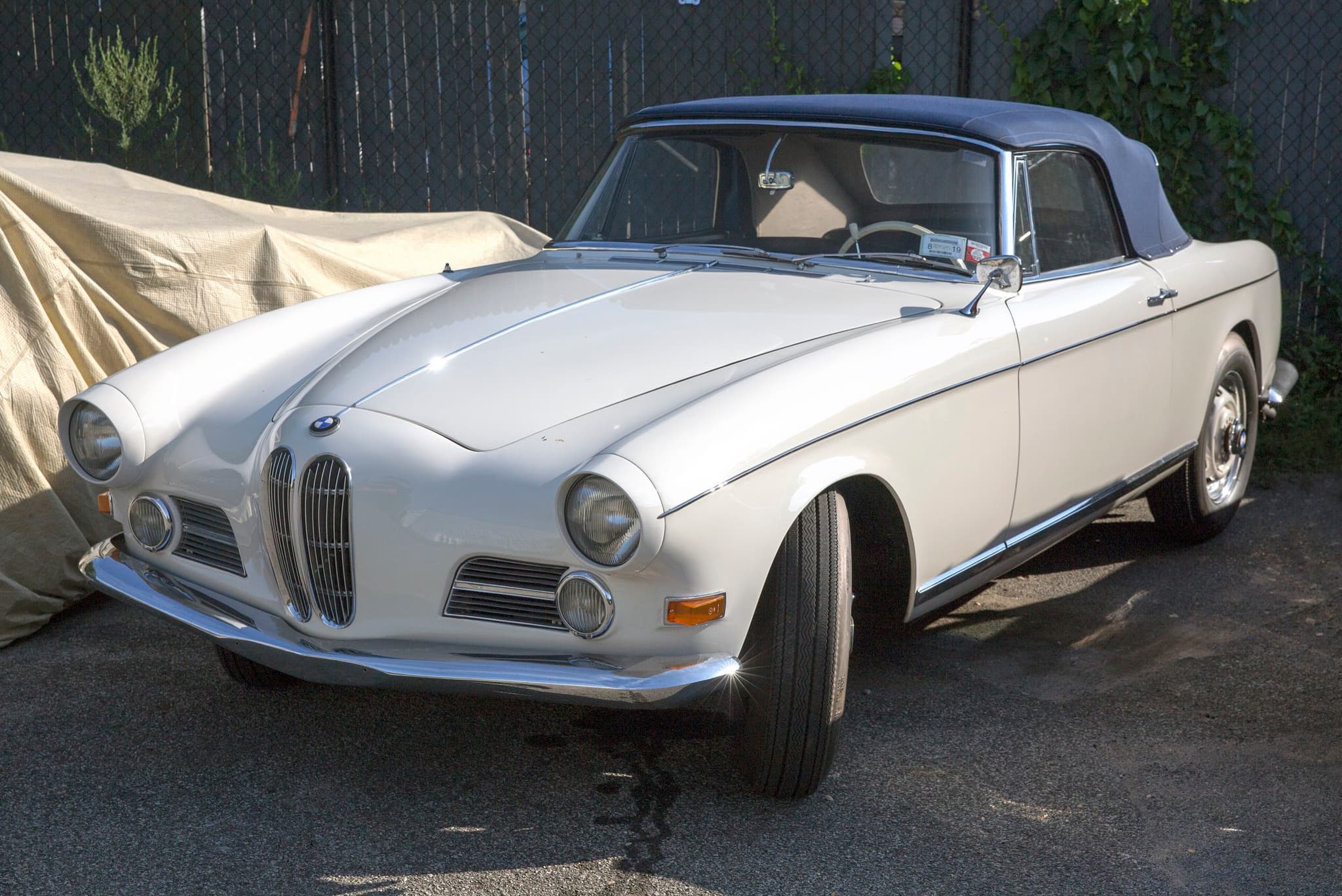
He started from the chassis of the 502 3.2 Super, shortened by 35.5 cm (14 in), and the 503, for which he built on Kurt Bredschneider's preliminary work, soon joined the 507 on his drawing board. The grille nearly sank the project. BMW's managers held, the 2004 profile says, that "ein BMW ohne vertikale Niere, wie man sie vom 328 kennt, sei kein BMW" (translated: a BMW without an upright kidney grille like the 328's was no BMW); Der Spiegel wrote in 2011 that only an outsider could have laid the kidney flat and stretched it so wide that it was hardly recognisable.
Both cars were ready for Frankfurt less than a year after the contracts were signed, and days after the premiere Hanns Grewenig, BMW's sales director, sent him a telegram in New York:
Der 507 ist der Star der Ausstellung! Gratulation!
In English, translated: "The 507 is the star of the show! Congratulations!"source 1source 3source 2source 4
After the 507
His work for BMW ended in 1957, BMW says; Der Spiegel also records sketches and models he made for it of a four-seat Isetta and a mid-sized car. Sports Cars Illustrated, testing a 507 in December 1959, wrote of him:
It's startling to hear that the rakish 507 is the product of American talent, but though he's been here since the thirties, Albrecht Goertz is actually German-born. Why no one has beaten a path to his door is beyond us.
Porsche, by BMW's account, had him design a successor to the 356, which stayed a prototype after "Dr. Porsche" called it "ein sehr schönes Auto, aber ein Goertz, kein Porsche" (a very beautiful car, but a Goertz, not a Porsche). BMW's list of his designs runs from an Agfa camera of 1955–60, Rowenta irons and Mont Blanc pens to SABA radios and televisions, a Rolodex and Puma sportswear of 1983–87, and Der Spiegel names an anniversary grand piano for Steinway as his last work.source 1source 2source 10
Japan: the Silvia, the 240Z and the 2000GT
BMW's profile says he went to Japan on impulse in 1962 and, after several visits, signed with Nissan. Nissan's own letter to him of 1980, as Japanese Nostalgic Car reproduced it in 2009, says it retained him from 1963 to 1965 as a design consultant, advising "on the basic methods of styling a general sports car", and that he was the sole design consultant on a two-litre sports car that Nissan was trying to develop with Yamaha, which was not built.
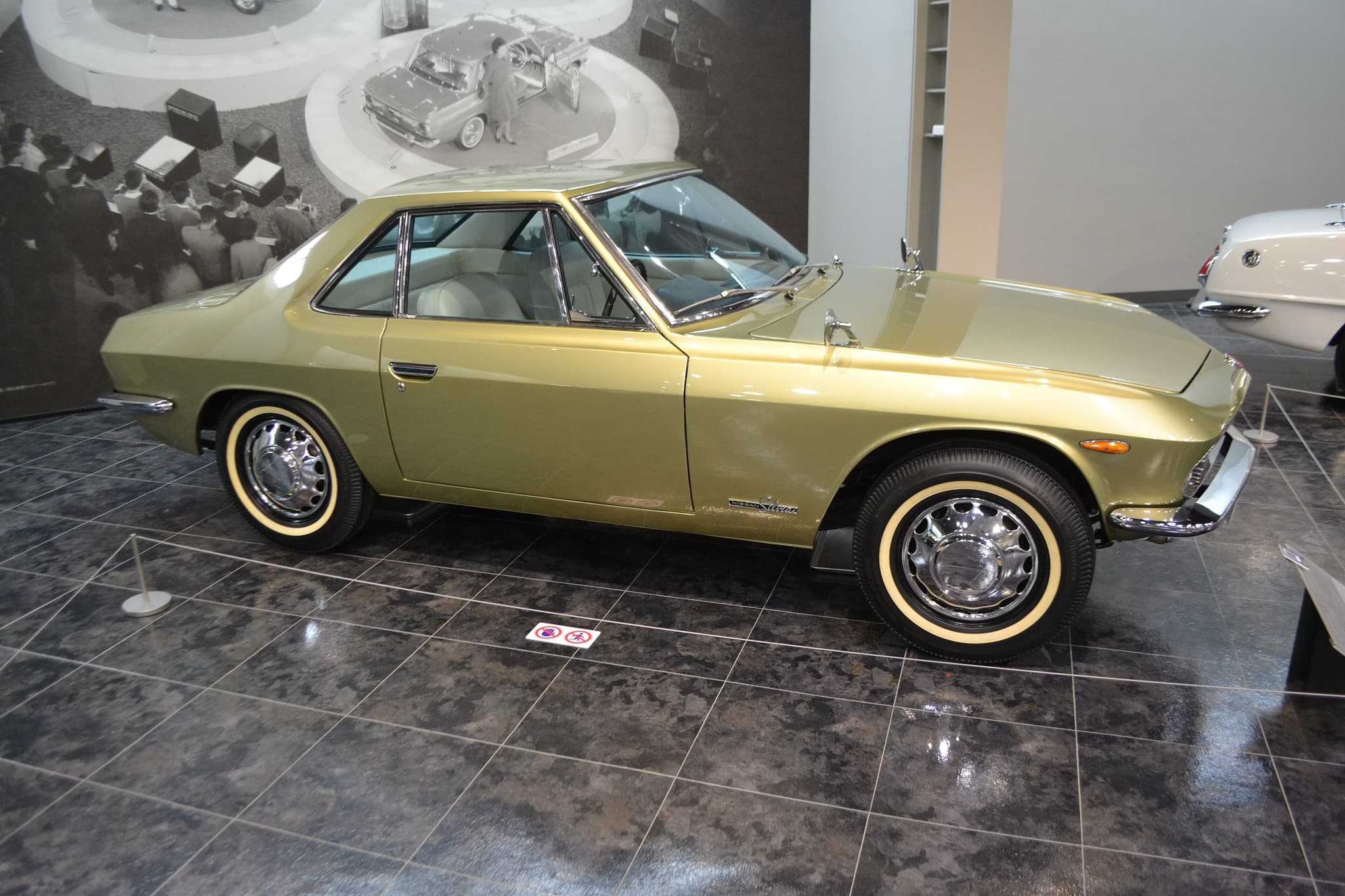
BMW, in 2004 and 2006, credits him with the Datsun Silvia and the Datsun 240Z; Motor Sport in 1987 had him producing "the distinctive profile of the Datsun 240Z coupe", and Der Spiegel (2011) says he designed the Fairlady prototype that became the 240Z. The same letter gives the 240Z to Nissan's staff:
While it is our view that the design of the 240Z was the product of Nissan's design staff, Nissan agrees that the personnel who designed that automobile were influenced by your fine work for Nissan and had the benefit of your designs.
Motor Sport wrote in 2007 that "contrary to popular belief, the 240Z wasn't penned by a German aristocrat", naming Yutaka Katayama as the man now widely held to be behind its outline, and in 2010 gave much of the final shape to Akio Yoshida and Kumeo Tamura. The dispute between Goertz and Nissan ended in 1980: amicably, Der Spiegel says; with a letter drafted to head off the lawsuit he was threatening, in Japanese Nostalgic Car's account; and with his day in court, in Motor Sport's of 2007.
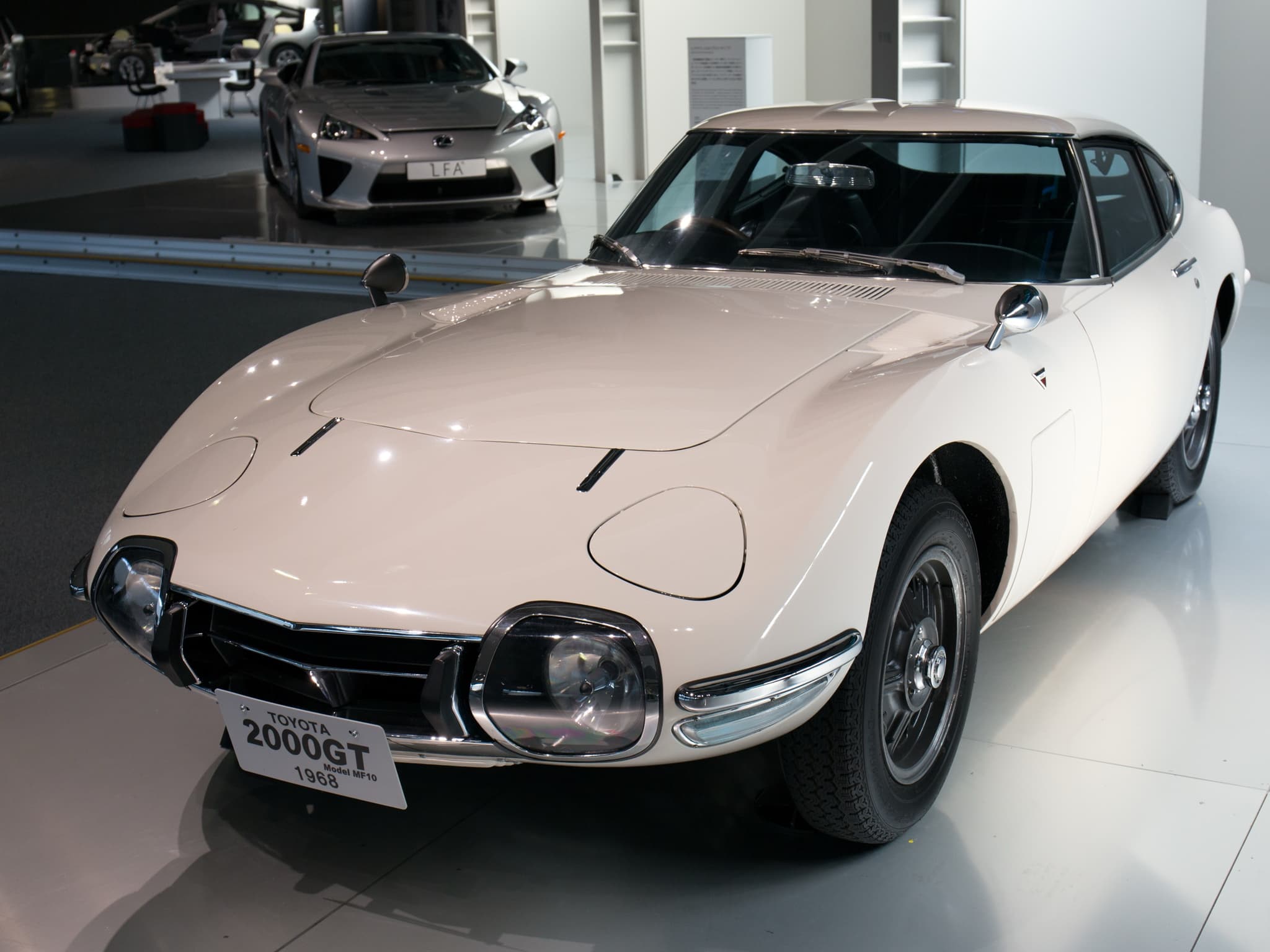
For the Silvia, BMW and Motor Sport (2007) say he styled it, Motor Sport (2010) that he had a hand in it "if only on a peripheral level", and Japanese Nostalgic Car calls the link tenuous; Nissan's letter does not name it. Hemmings, citing Wanda James's Driving from Japan, says the Toyota 2000GT came out of that Yamaha project: Nissan had dropped it by the time the prototype was ready in 1965, Yamaha offered the car to Toyota, and Toyota had its designer Satoru Nozaki finish the shape; Japanese Nostalgic Car gives the design to Nozaki.source 1source 6source 5source 2source 11source 12source 13source 14
Later life
BMW's profile of 2004 has him returning to the family estate at Brunkensen in 1989, at 75; BMW's notice of his death says in the 1990s. Early in 1996 he set up the Albrecht-Graf-Goertz-Stiftung for young designers, on 29 February 2000 he was awarded the Federal Republic's Verdienstkreuz 1. Klasse (Cross of Merit, First Class), and he spent his 90th birthday, on 12 January 2004, at BMW Mobile Tradition in Munich. He died in October 2006, aged 92. The Museum für Kunst und Gewerbe in Hamburg held his papers in 2011, Der Spiegel wrote, and showed "Made in USA – Design von Albrecht Graf Goertz" until 27 March 2011. Der Spiegel's profile of him that January recorded that he drove BMW M3s into old age.source 1source 4source 2
Roles
- 1954
Designer
October 1954–1957. Designed the 507's body, and the 503's. His sketches, sent at Max Hoffman's suggestion, reached BMW at the end of October 1954; two weeks later Hanns Grewenig invited him to Munich; BMW dates the contracts to January 1955 and the signing-off of the body design to March 1955. By BMW's account his only fixed instruction was to re-use the 502's chrome ashtray, a team of 30 to 40 worked with him, and only Grewenig and Fritz Fiedler stood by his wide, flat kidney grille. He stayed away from the Frankfurt show of 1955 and heard of the car's success by Grewenig's telegram. BMW says his work for it ended in 1957
BMW Group Classic (BMW Classic blog), "60 Years of Pure Temptation", 2015source 7; Jackie Jouret and Helmut Werb, "507s star at Pebble Beach", Bimmer, No. 119, 25 Oct 2013source 9; Melina Aulinger and Walter Zeichner, "You've got to be lucky", Mobile Tradition live (BMW Group Mobile Tradition), 02/2004, pp. 10–17source 1; BMW Group (PressClub Canada), "Designer Albrecht Graf Goertz passes away" (press release), 3 Nov 2006source 4; Industrial Design, Profile of Albrecht Graf Goertz, Aug 1959 (vol. 6 no. 8), pp. 50–51source 3; Jürgen Pander, "Designer Albrecht Graf Goertz: Paradiesvogel als Retter für BMW", Spiegel Online, 22 Jan 2011source 2
Sources
Every source the site cites is on the sources page.
- Primarymade at the time, by the maker or by people who were there
- Referenceserious later work: clubs, specialists, magazines, books
- Melina Aulinger and Walter Zeichner, "You've got to be lucky", Mobile Tradition live (BMW Group Mobile Tradition), 02/2004, pp. 10–17, pp. 11–14: America, the army, Loewy; Frankfurt and the telegram; pp. 10–17; p. 11, the family, school, the banks and the decision of 1935; pp. 11–12, New York, Los Angeles, the Paragon, the army; pp. 12–13, the Waldorf-Astoria, Pratt, Studebaker, the parting, Otto and Bel Geddes, his office, Hohner; p. 14, the American market, the 502 frame, Bredschneider, the grille, Frankfurt and the telegram; pp. 16–17, the end of the BMW work, Porsche, "Ausgewählte Produktdesigns"; p. 17, Japan, Nissan, the Silvia and the 240Z; p. 17, Brunkensen 1989, the foundation, the Verdienstkreuz, the ninetieth birthday; p. 14. bmw7er-club.de/interaktiv/download/mobilemtradition_02_04.pdf Primary
- Jürgen Pander, "Designer Albrecht Graf Goertz: Paradiesvogel als Retter für BMW", Spiegel Online, 22 Jan 2011, the emigration; American citizenship; Frankfurt; his mother; "Halbjude"; the hot rods; the Paragon; the army; citizenship; the meeting with Loewy; Hoffman's acquaintance; the flat kidney; the Isetta and the Mittelwagen; the Steinway piano; the Fairlady prototype; "gütlich", 1980; the Hamburg estate and exhibition; the BMW M3s. spiegel.de/auto/fahrkultur/designer-albrecht-graf-goertz-paradiesvogel-als-retter-fuer-bmw-a-740328.html Reference
- Industrial Design, Profile of Albrecht Graf Goertz, Aug 1959 (vol. 6 no. 8), pp. 50–51, pp. 50–51, "his first major European client"; pp. 50–51; pp. 50–51, the Paragon at San Francisco; pp. 50–51, Hoffman and the sketches; two and a half years. archive.org/details/sim_i-d_1959-08_6_8 Primary
- BMW Group (PressClub Canada), "Designer Albrecht Graf Goertz passes away" (press release), 3 Nov 2006, Hamburg and London; the bullet nose; "BMW came to ask Loewy"; the shortened chassis; Bredschneider; "In the 1990s"; his death, aged 92. press.bmwgroup.com/canada/article/detail/T0028576EN/designer-albrecht-graf-goertz-passes-away Primary
- Alex Harmer, "Sisters under the skin?", Motor Sport, Feb 1987, p. 17, "the distinctive profile of the Datsun 240Z coupe". motorsportmagazine.com/archive/article/february-1987/17/sisters-under-the-skin Reference
- Ben Hsu, "Goertz Myths Will Never Die, Part II", Japanese Nostalgic Car, 27 Jan 2009, Nissan's letter of 1980, as reproduced; the lawsuit. japanesenostalgiccar.com/goertz-myths-will-never-die-part-ii Reference
- BMW Group Classic (BMW Classic blog), "60 Years of Pure Temptation", 2015, late October 1954; March 1955. presstopic.bmwgroup.com/en/bmw-classic-blog/text/60-YEARS-OF-PURE-TEMPTATION-4484.html Primary
- Motor Sport, "The 44th Paris Salon", Nov 1957, p. 21, Loewy's coupé on a 507 chassis. motorsportmagazine.com/archive/article/november-1957/21/the-44th-paris-salon Primary
- Jackie Jouret and Helmut Werb, "507s star at Pebble Beach", Bimmer, No. 119, 25 Oct 2013, p. 5, Loewy's coupé; p. 1. bimmer-mag.com/issues/119/articles/507s-star-at-pebble-beach Reference
- Sports Cars Illustrated, "Disc-Braked BMW 507" (road test), with the same issue's Frankfurt show report, Dec 1959, pp. 49–51, 104, the road test, on the designer. archive.org/details/sim_car-and-driver_1959-12_5 Primary
- Motor Sport, "Datsun 240Z", May 2007, p. 98, Katayama; the Silvia; "his day in court". motorsportmagazine.com/archive/article/may-2007/98/daisun-2407 Reference
- Motor Sport, "Datsun 240Z", Aug 2010, p. 126, Yoshida and Tamura; the Silvia, "on a peripheral level". motorsportmagazine.com/archive/article/august-2010/126/datsun-240z Reference
- Ben Hsu, "Goertz Myths Will Never Die", Japanese Nostalgic Car, 16 Jan 2009, the Silvia; the 2000GT and Satoru Nozaki. japanesenostalgiccar.com/goertz-myths-will-never-die Reference
- Kurt Ernst, "Stereotype shatterer: Toyota's first U.S.-market 2000GT", Hemmings, 20 Aug 2015, Nissan, Yamaha and Toyota; Nozaki. hemmings.com/blog/2015/08/20/stereotype-shatterer-toyotas-first-u-s-market-2000gt Reference