BMW 507 History
How BMW, without a sports car since the war, came to build the 507: Max Hoffman's American brief, Ernst Loof's rejected prototype, Albrecht Goertz's shape, the debut of 1955, three years of building by hand at a loss, the car's markets and its press, the crisis of 1959, and what came before and after.
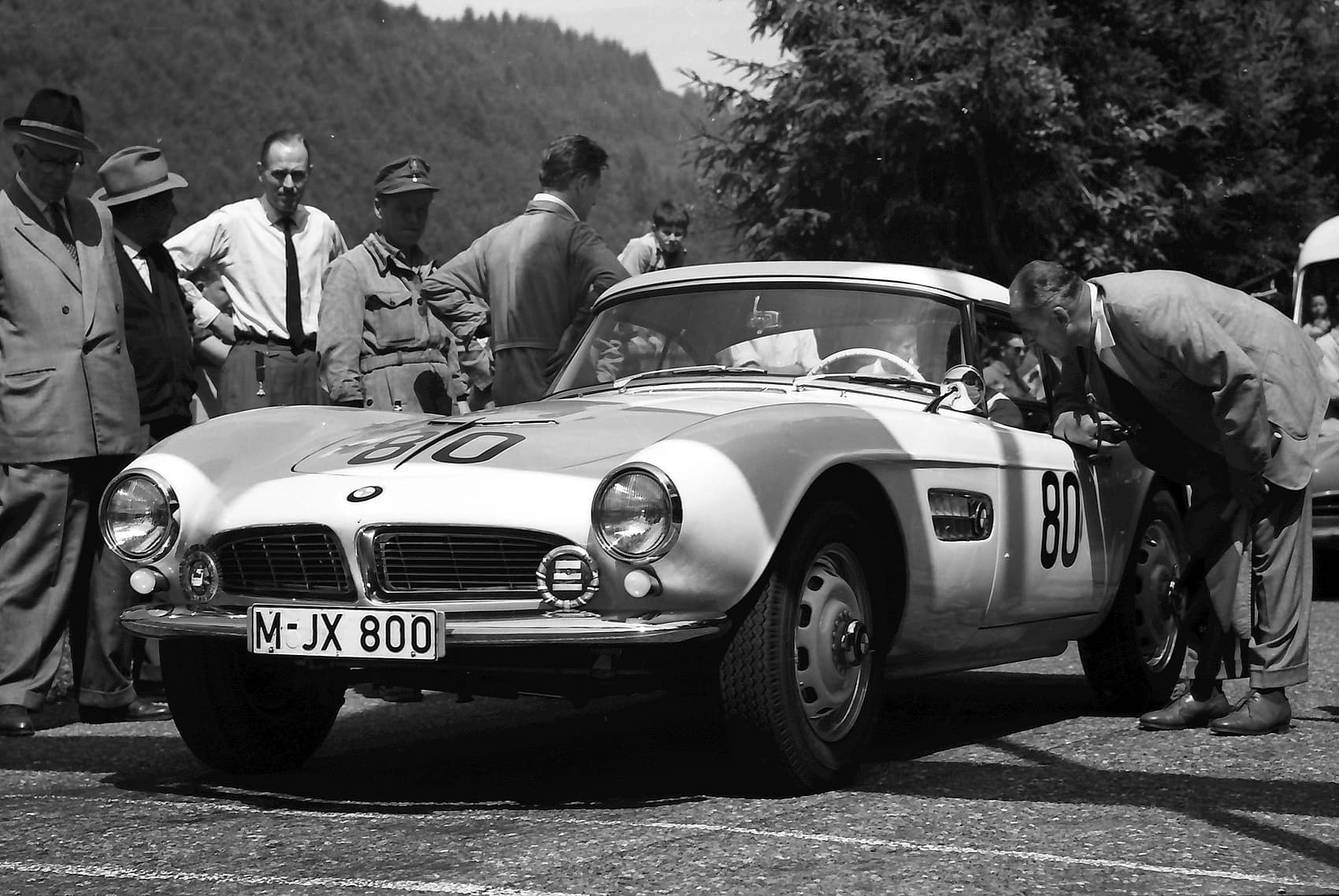
BMW came out of the war without a car factory. Every BMW car before 1945 had been built at Eisenach, which ended up in the Soviet zone, and the works in Munich was stripped on the American military government's orders. When BMW built cars again it started at the top of the market, with large saloons (sedans), and by 1954 it had no sports car to sell. The 507 filled that gap from the end of 1956. BMW gave it up towards the end of 1959, the year its small shareholders blocked a rescue that would have handed control of the company to a consortium led by Daimler-Benz.source 1source 2source 3source 4
BMW after the war
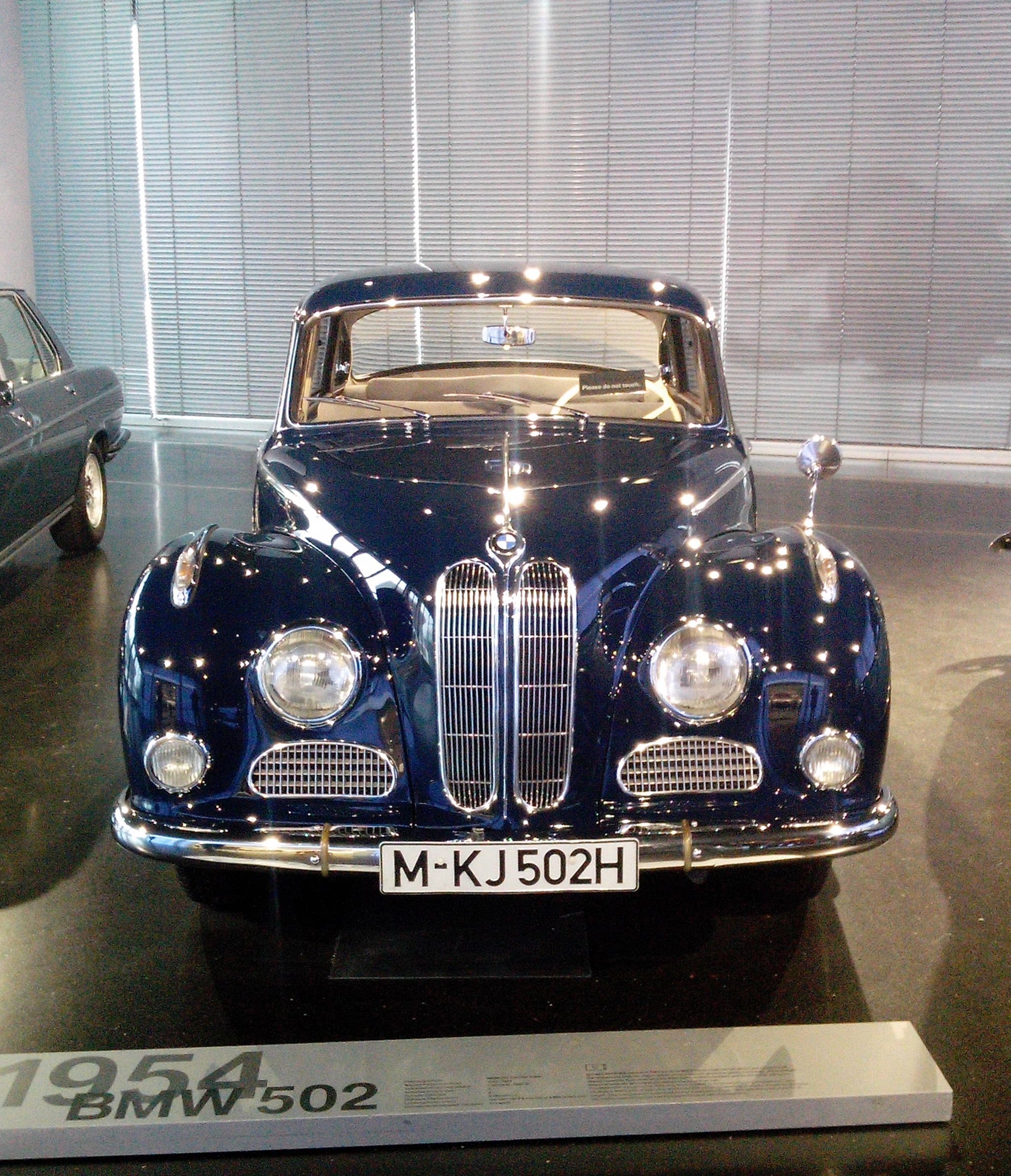
In October 1945 the American military government ordered BMW's Munich plant and its works at Allach dismantled, and BMW did not regain control of its assets until 1949. Its first post-war product was a motorcycle, the R 24 of 1948. The first post-war car, the six-cylinder 501, was unveiled in 1951 and built from 1952; in 1960 Der Spiegel reported that BMW's board had admitted the first series hurt the BMW name.
In 1954 BMW showed a light-alloy V8 at the Geneva salon, and its 2005 press kit calls it the first aluminium eight-cylinder built in series anywhere in the world. One basic chassis carried all of BMW's large cars, from the 501 to the 507, and when Denis Jenkinson of Motor Sport toured the works in 1955 he found BMW making almost everything itself, buying in only carburettors, electrics and tyres. In September 1956 it was building 20 to 25 cars a day, mostly 501s and 502s. Der Spiegel later blamed the supervisory board's chairman and the commercial director, Hanns Grewenig, for a programme limited to heavy motorcycles, luxury cars and sports cars.source 1source 2source 3source 5source 6
Max Hoffman's brief
BMW's own account of 2005 puts the start of the 507 in America. In 1954, it says, all of Germany was looking to America, and BMW, a leading sports-car maker before the war, had nothing for that market; a certain Max Hoffman, its general importer in New York, asked Munich above all for a sports car. The press kit sums up the position in one line:
Der Name war da, der Markt war da, der Importeur war da – nur das Auto fehlte.
In English, the name, the market and the importer were all there; only the car was missing. Hoffman was a Vienna-born importer who had left Austria after the Anschluss of 1938, reached New York in 1941 and founded Hoffman Motors there in 1947, and Mercedes-Benz had already built the road-going 300 SL at his urging.
Karlheinz Lange's research tells it differently. Lange wrote BMW's own monograph on the car in 2005, and as Jackie Jouret and Helmut Werb reported his findings in Bimmer in 2013, "his investigations reveal as incorrect the popular belief that the 507 was suggested to BMW by U.S. importer Max Hoffman". Engineers and marketing staff in Munich, by his account, began planning a sports car in March 1953, the board decided on 1 March 1954 to build a first prototype of an open sports car, and Hoffman saw photographs of that prototype, probably in September 1954. BMW Group Classic says the car began life as the "Typ 528" in company parlance, or the "507a".
The two accounts agree on what Hoffman wanted, which was a sports car he could sell in America. A profile of Albrecht Goertz in Industrial Design in 1959 records Hoffman telling him that BMW's car "as then designed wouldn't sell in this country". BMW says Hoffman had pictured buying the car from the factory for about DM 12,000, and Lange that he expected to sell around 2,000 in the United States; Bimmer reported in 2009 that BMW itself had hoped for "at least 1,000 per year, most of which would go to the U.S."source 3source 7source 8source 9source 10source 11source 4
Ernst Loof's proposal and its rejection
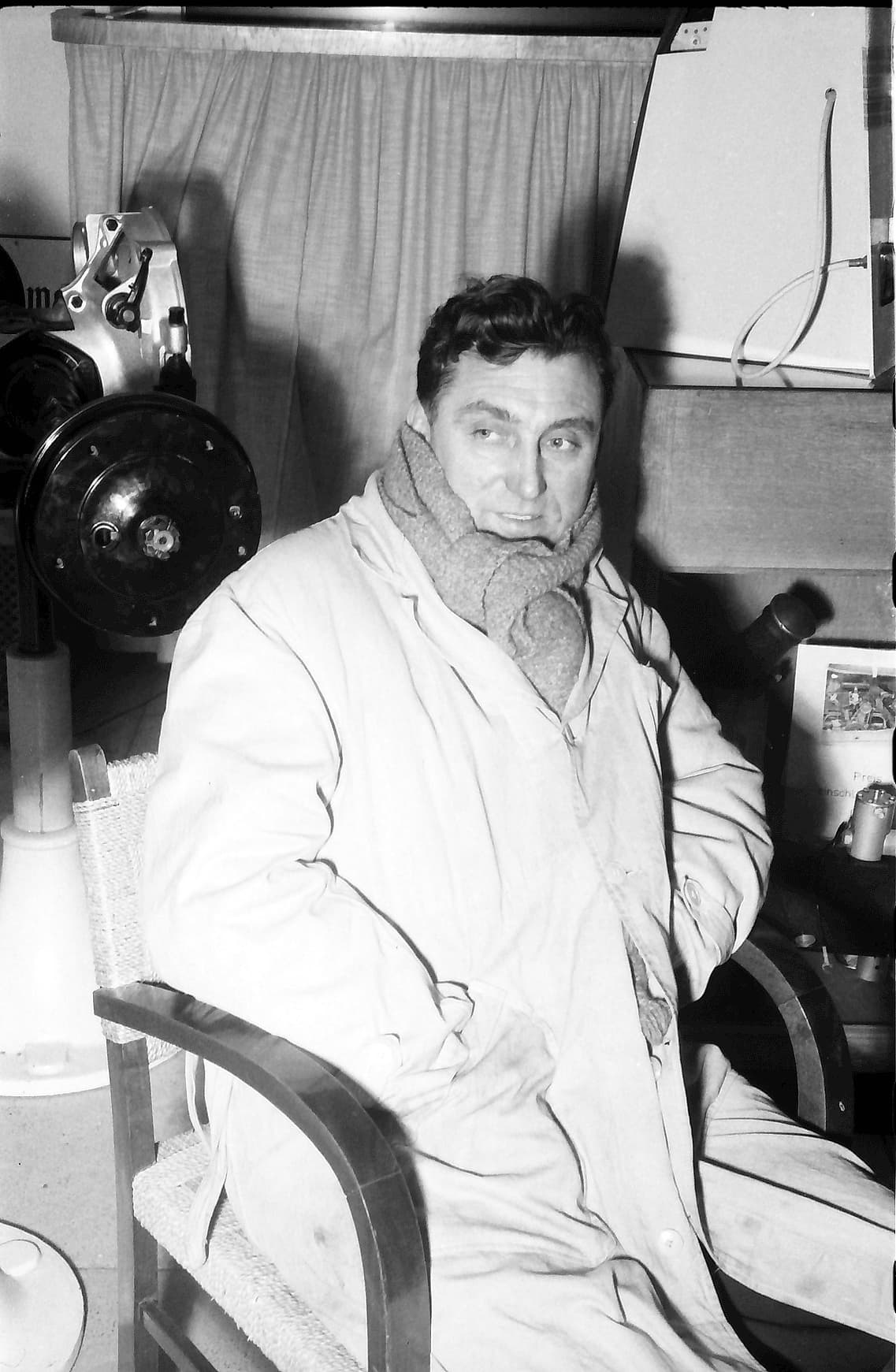
The first prototype was Ernst Loof's. He had headed BMW's sports-car department, and after the war he set up Veritas, which built racing and sports cars in the Eifel; when Veritas stopped production BMW took over its works and made him head of its development branch at the Nürburgring. There, in 1954, his team built an open two-seater on the 502's chassis, with a curved screen, a scoop in the bonnet (hood) and crescent-shaped vents. BMW's 2005 account gives it an aluminium body and the chassis number 70001. Loof showed it at a concours at Bad Neuenahr in September 1954, where it won a gold medal and was criticised in the motoring press.
BMW Group Classic names Hoffman as one of the loudest dissenting voices, and BMW's 2005 press kit quotes his verdict on the car:
Das wird man nie verkaufen können.
In English: "That will never sell." By Lange's account Hoffman went to Italy to look for alternatives before he turned to Goertz. BMW's own 2005 account has the order the other way round: Goertz was commissioned first, and Loof's car, built as an alternative to his designs, could not hold its own against them before BMW's board.source 10source 3source 9
Goertz's commission
Hoffman met Goertz, a German-born designer working in New York, at the New York motor show, and asked him for designs. His sketches reached BMW at the end of October 1954; two weeks later he was invited to Munich; BMW dates the contracts to January 1955 and the signing-off of the body design to March 1955. BMW Group Classic counts 20 weeks from the first sketches to the approved design.
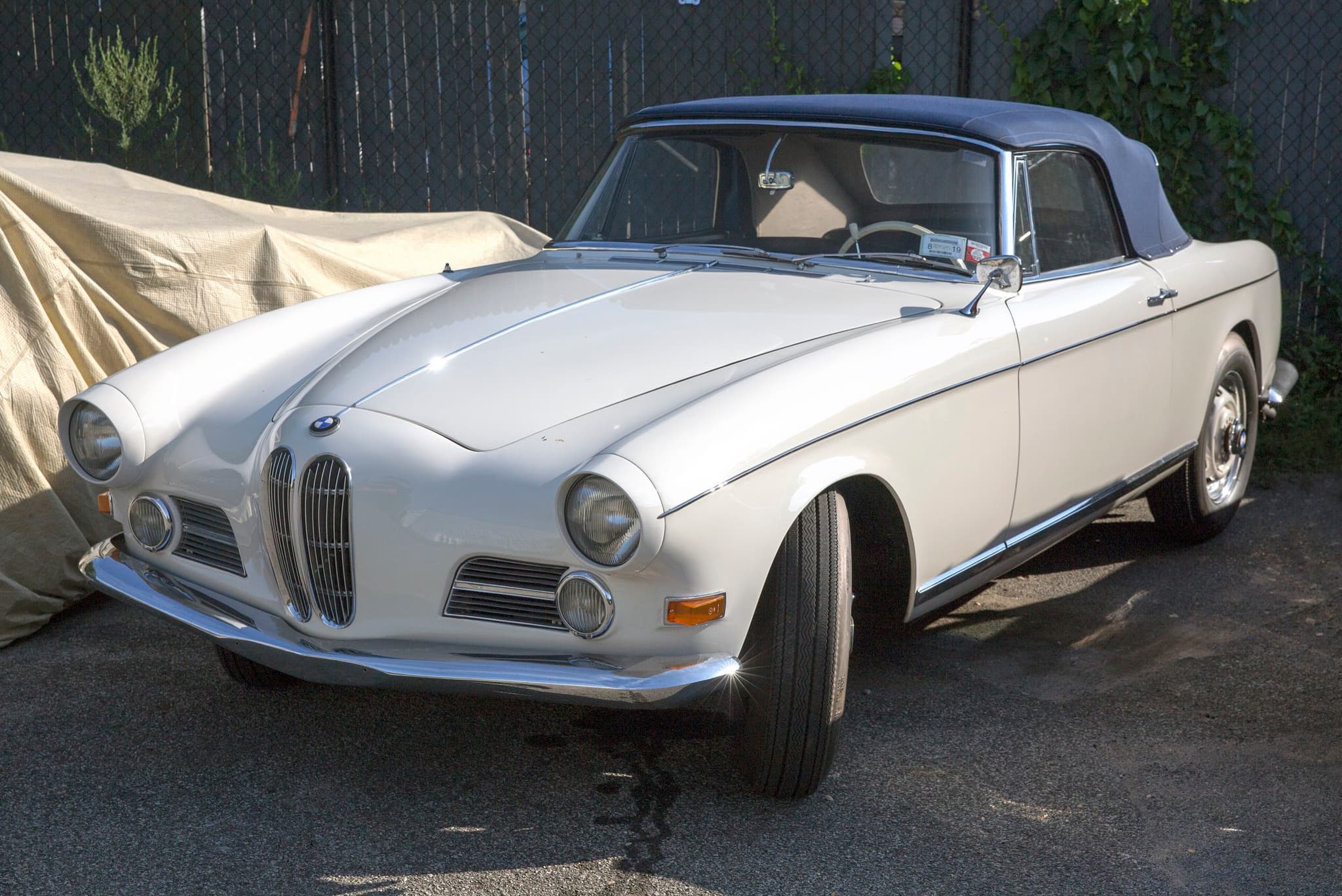
Goertz drew the 503 as well, the coupé and cabriolet BMW built beside the 507 on the 502's chassis. BMW chose the two type numbers to show the family tie with the 501 and 502 saloons: 507 for the sports car, 503 for the coupé.source 9source 10source 12source 13source 11source 3
Fritz Fiedler's chassis
The engineering went to Fritz Fiedler, head of BMW's design department, who before the war had concentrated on the chassis of the 328. Lange's research gives him responsibility for the 507's construction, with its frame to be built in BMW's test department and the final assembly to be done by Loof at the Nürburgring. Under the 507 went the 502's frame, the box-section frame with tubular cross-members that BMW called "Vollschutzrahmen", shortened between the axles, with double wishbones and torsion bars at the front and a live axle on torsion bars at the rear.
BMW Group Classic's account of 2015 gives Goertz's memory of working with them:
If I told the chap in charge that I needed more space in the engine compartment so that I could lower the bonnet line, he just said 'no problem', and a few days later the engine would be five centimetres lower down.
The two debuts of 1955
BMW's 2005 account says Goertz first unveiled the 507 to a small circle at the Waldorf-Astoria in New York in June 1955 (the BMW V8 Club says July); no report of that showing from 1955 has been found. The public debut, and the first the press reported, was the Frankfurt show in September 1955. BMW's account puts two cars in the hotel's salon, one of them chassis 70002.
At Frankfurt the 507 and the 503 stood together on BMW's stand in hall 1b, and Lange's research names the 507 shown there as 70002, the first with Goertz's body. The Isetta bubble car stood on the same stand; most visitors, BMW recalled in 2005, were happy if they could afford that. auto motor und sport printed its report on 24 September 1955, with a price list dated two days earlier. In October AFN Ltd, BMW's British importer, showed a 507 at Earls Court in London.source 3source 16source 17source 18source 9source 19
What the press said
The first reviews were written at Frankfurt. Jenkinson reported the show for Motor Sport:
The real pearl of the whole show was the new B.M.W. 507 sports-roadster, finished in white with red interior, and having the expensive extras of the coupé hard-top fitted and knock-off splined hubs, the pressed steel wheels being coveted by chromium discs.
auto motor und sport called it "zweifellos das Prunkstück der ganzen Ausstellung", without doubt the showpiece of the whole exhibition, and wrote that it had lost its BMW face but that a good solution had been found for a fast sports car. In America Sports Cars Illustrated remembered in May 1957 that the 503 and 507 had been "the hit of the show".
Later verdicts kept the praise and qualified the speed. When Motor Revue timed a 507 against a 300 SL roadster in 1958, auto motor und sport reported that neither was a sports car in the sense of one fit for competition; both were "Touren-Sportwagen", touring sports cars. Motor Trend's annual guide of January 1959 called the 507 "one of the most desirable sportscars to come along in recent years". The one full American road test, in Sports Cars Illustrated in December 1959, ended by recommending it to a buyer content with reasonable performance as "a quality car combining luxury, comfort and beauty, one which he could be proud to own and pleased to drive".source 17source 18source 20source 21source 22source 23
From prototype to production, 1955–56
In the autumn of 1955 Jenkinson drove a prototype round the houses near the works in Munich. It had the tuned V8, a five-speed gearbox (transmission) on the clutch housing, larger alloy brake drums and a higher axle ratio, and inside it had a radio, a heater, large door pockets and thick carpets. His verdict was on the speed:
In every way a two-seater roadster, full of luxury and comfort, there is nothing roadster about the performance of the. 507.
When Motor Sport came back to Munich in September 1956 the car had more power and a normal four-speed gearbox, whose short, stiff lever tended to jump out of second and top. The magazine reported that the 507 was now in production, though the car it drove was still a prototype. Alex von Falkenhausen, BMW's racing chief, gave the magazine its figures, and the magazine wrote that BMW appreciated the 507 was "not sufficiently fast for sports-car racing". Von Falkenhausen hoped to drive one in the 1957 Alpine Rally. BMW says that early in 1957, about three months after deliveries began, he took a car with the hardtop and an undertray onto a closed stretch of the Munich–Ingolstadt autobahn and reached the top speed BMW claimed for it.source 5source 6source 3
Production, 1956–59
Series production began at the end of 1956: BMW's monograph dates the first series car to 11 December 1956 (as Bimmer reported it in 2009), and BMW delivered the first car to a customer that month (BMW, 2005), a buyer "aus dem Hochadel", from the high nobility. BMW's model page and the BMW V8 Club give November 1956. In the spring of 1957 the Hoffman Motor Car Company told Sports Cars Illustrated that the interior had been widened, the dashboard changed once and due to be redrawn, and the tank moved beside the spare wheel to free space behind the seats. BMW dates those changes to June 1957, and the versions page lists them.
The bodies were made largely by hand, from aluminium, and Motor Sport wrote in 1987 that the factory never averaged as many as two cars a week. In May 1959 Der Spiegel put the sales of BMW's two sporting cars in one sentence:
Von den erstklassigen Sport-Coupés und -Kabrioletts BMW 503 (32 950 Mark) und BMW 507 (29 950 Mark) konnten ohnehin nur einige Hundert an zahlungskräftige Käufer losgeschlagen werden.
In English, only a few hundred of the first-class sports coupés and cabriolets could be sold off to buyers with the money. BMW's annual report for 1959, as BMW quoted it in 2005, says the 503 and 507 were given up towards the end of that year; Sports Cars Illustrated found the 507 still in production, at a reduced rate, at the Frankfurt show of September 1959. The BMW V8 Club dates the end to March 1959, and BMW's own magazine in 2004 to spring 1959. How many were made gives each count with its source.source 4source 3source 16source 20source 2source 24source 25source 23source 12source 26
The price new and why the car lost money
The specifications give the prices new with their dates: the German list prices from the launch list of 22 September 1955 to the list of 30 September 1958, the British price in the 1957 list, and the American prices, announced and charged. In the launch list the 507 cost less than the 503 and less than the 300 SL coupé. BMW's own comparison for the dearer 503 was that its price would have bought a comfortable terraced house in 1956, or about seven Volkswagens. Set against West German earnings, the 507's launch price came to about five and a half years of the average insured employee's pay in 1956, by our arithmetic from the official series.
In the spring of 1957 Hoffman's company sent Sports Cars Illustrated its plans for the car:
Full production and active retailing of the 507 model will bring the price down to $4,988 FOB New York, complete with heater and leather upholstery. The whole effort of the Hoffman sales organization will be placed behind this car …
Hoffman's company promised a price it never charged; by 1959 the port-of-entry price was about twice the promise. No source read explains the rise between January and May 1959. By December 1959 Sports Cars Illustrated was dismissing "the $5000 figure touted by the former importer's press agent".
Even at its higher prices the car did not pay. Der Spiegel wrote of the 503 and 507 in January 1960: "Die auf Millionärssöhne abgestimmte Eleganz deckte selbst mit diesen Preisen ihre eigenen Kosten bei weitem nicht", an elegance pitched at millionaires' sons that came nowhere near covering its costs even at those prices. John Surtees told Automotive Engineering International in 2000 that each 507 cost BMW more to build than it sold for, and no source read gives BMW's cost per car. BMW's own magazine admitted in 2004 that "Im Vergleich zu manchem Konkurrenten bietet der Goertz-Roadster zu wenig Motorleistung", that against some rivals the Goertz roadster had too little power, and BMW's 2005 account says the balance of price and performance lost it American buyers.
Most of BMW's losses came from elsewhere. Der Spiegel put the loss on the six- and eight-cylinder saloons at DM 76 million, on about 19,000 cars sold, or DM 4,000 on each. A study Heinrich Richter-Brohm made for BMW's board in 1957 found that the car business had lost almost DM 60 million since it began, and that the motorcycles' profits had paid for it.source 18source 3source 20source 22source 27source 23source 2source 28source 12source 29
Local markets
BMW built one 507 for every market, and every one had left-hand drive. BMW's 1957 catalogue lists sealed-beam headlamps among the extras "nur für Export", for export only. In 1987 Motor Sport explained why AFN, BMW's British importer, brought no more cars in: a right-hand-drive car "would have meant re-designing the sump and the steering box". The same article gave two would-be British buyers:
Fleeting interest in the 507 was expressed by Tommy Sopwith and Ken McAlpine, both of whom had wallets capable of sustaining the bruising inflicted by the sky-high tax-paid £4,201 price tag. They would have put their money on the table, but did not want LHD!
AFN Ltd of Isleworth had sold the pre-war 328 in Britain as the Frazer Nash-BMW. It showed a 507 at Earls Court in 1955 and 1957, and in 1958 the show guide noted that the car was still available only with left-hand drive; in 1959 the 507 had a stand of its own. By Motor Sport's count only three came to England, two of them through AFN, and John Surtees bought his new in Munich.
America was the market the car had been planned for, and in the end one of its smallest: BMW's 2005 press kit gives 39 cars delivered new to the United States; Lange's research, as Bimmer reported it in 2013, gives 41. The importer changed too. The Hoffman Motor Car Company announced the car in 1957, quoting its power by the American SAE gross standard, which gave a bigger number than BMW's DIN rating; by May 1959 Automotive News carried advertisements for Fadex Commercial Corporation of New York as the exclusive United States importer of BMW's cars, the 507 among them. When the franchise changed hands, no source read says.
Most 507s stayed in Europe, where Lange's research found Germany, Italy, France and Switzerland the largest markets, and BMW printed a French-language brochure in January 1958. By BMW's 2005 account its Austrian importer, Wolfgang Denzel, and the Swiss driver Robert Jenny raced 507s, and BMW Group Classic records that a Venezuelan, Enrique Muro, started the 1957 Mille Miglia in one and did not finish.source 15source 25source 30source 19source 31source 14source 3source 9source 20source 27source 32source 10source 33
The 1959 crisis and the end of production
Heinrich Richter-Brohm became BMW's chief executive on 1 March 1957, the Deutsche Bank's choice. His study for the board judged the range far too narrow for the market, but the middle-class car he planned had to wait for want of capital. Early in 1959 BMW designed the small 700 coupé in haste, with the help of Italian body experts, and in April it announced a loss of DM 6.5 million. BMW presented the 700 on 9 June 1959.
On 9 December 1959 about 800 shareholders met for 10 hours in the Kongreßhalle in Munich to vote on a rescue that would have given a consortium led by Daimler-Benz control of BMW. The Frankfurt lawyer Friedrich Mathern objected that the whole cost of developing the 700 had been charged to a single year's accounts, the vote on the plan was adjourned, and the Daimler-Benz offer, valid until midnight, lapsed. Der Spiegel reported that the figures put to the shareholders showed a loss for 1959 of at least DM 9.5 million. In the annual report for that year, as BMW quoted it in 2005, the 503 and 507 were given up for the sake of further rationalising production.
Herbert Quandt held an estimated 10 to 15 per cent of BMW's shares by February 1960, by Der Spiegel's reckoning, and backed a new rescue plan, which the shareholders adopted on 30 November 1960. The 700 sold more than 190,000 by 1965, which by BMW's account took the company through the trough, and from 1961 the Neue Klasse 1500 followed it.source 24source 2source 1source 3source 34source 35source 36
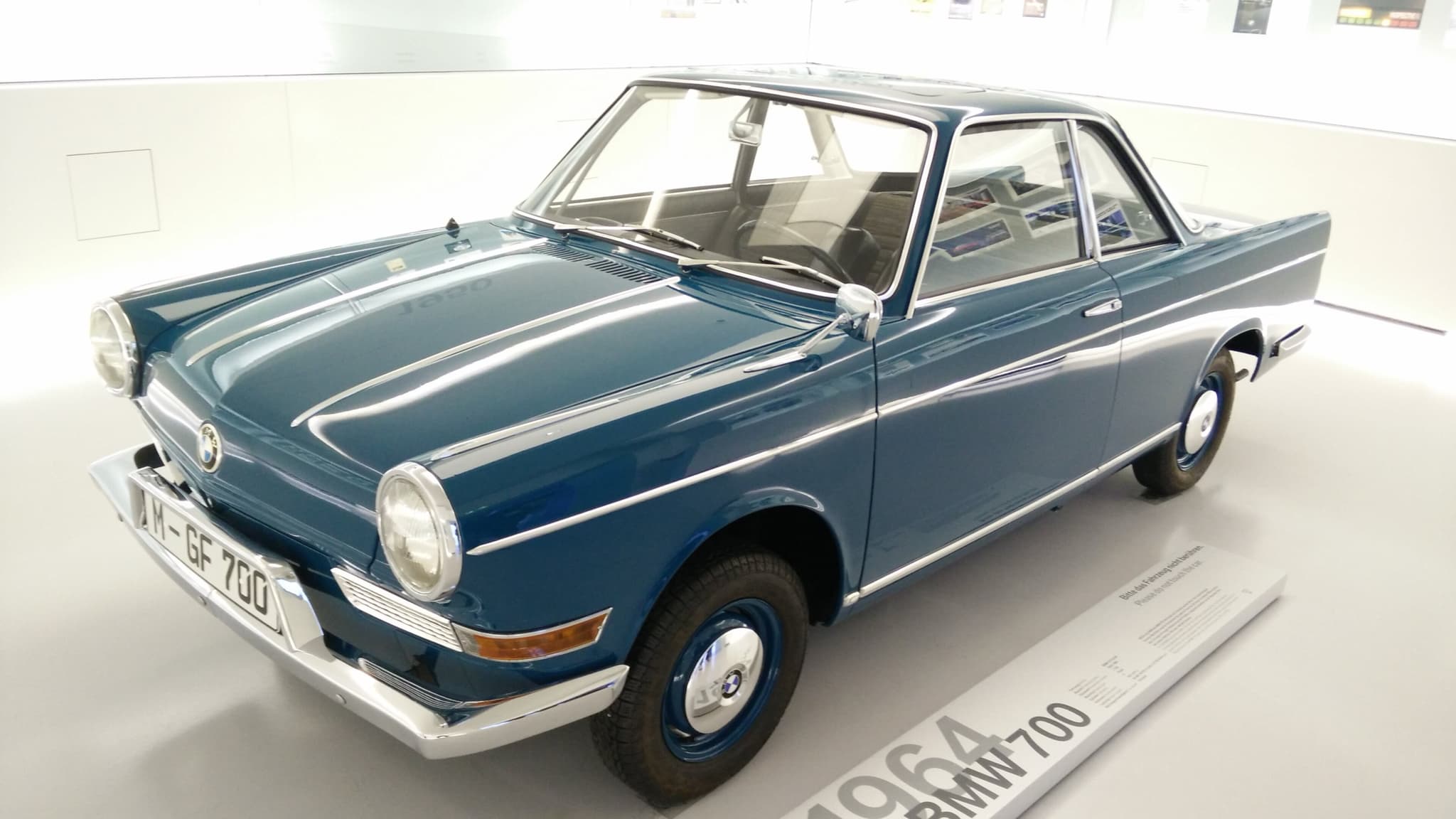
Before and after
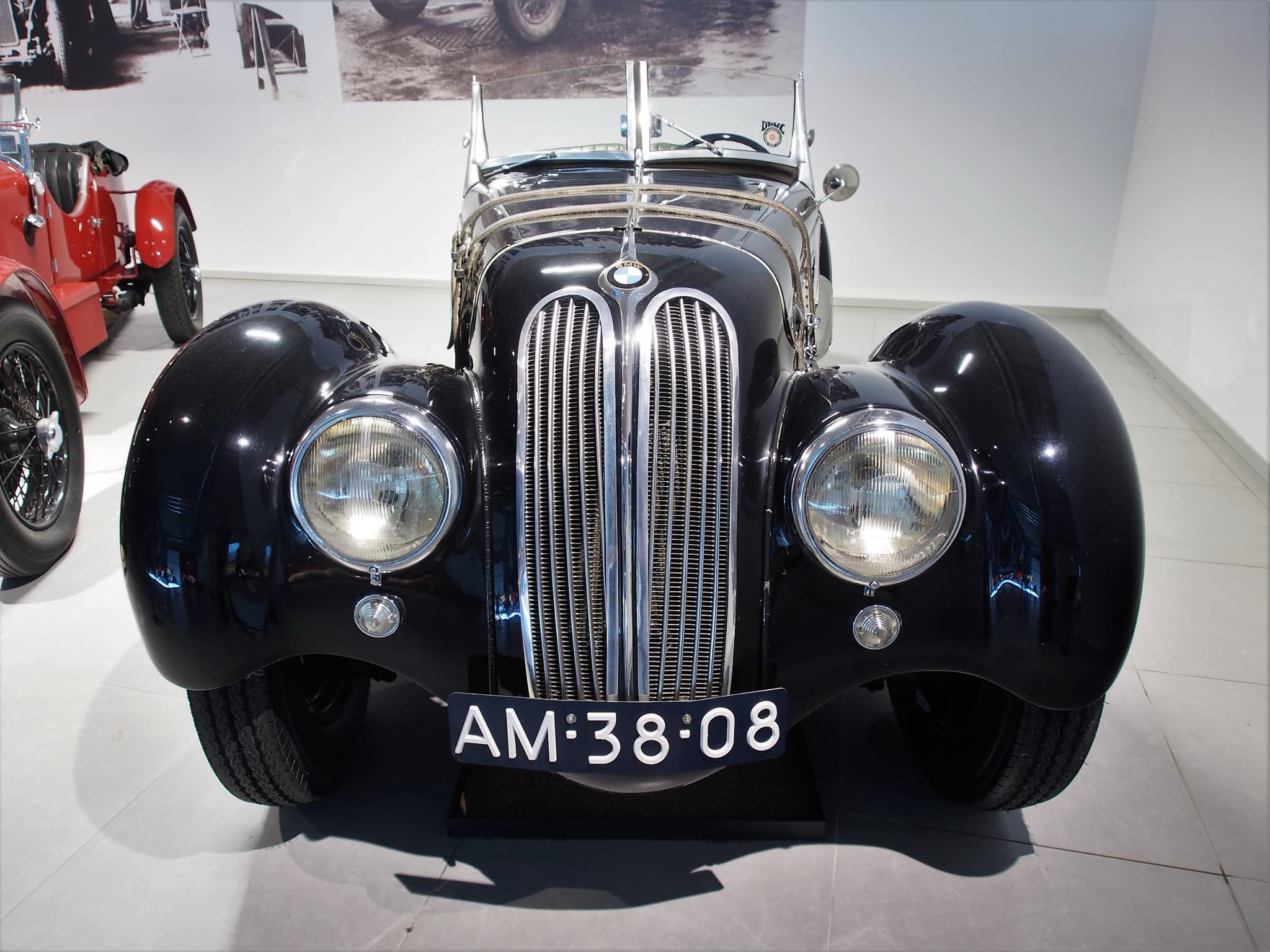
BMW's sports car before the war was the 328, a two-seater that won on its first appearance, at the Nürburgring on 14 June 1936, and was built at Eisenach until August 1939. Two of the 507's makers came from it: Fiedler had designed its chassis, and von Falkenhausen had raced a private 328 in 1946. At Frankfurt in 1955 Jenkinson made the connection himself:
This handsome two-seater, selling at a lower price than the Mercedes-Benz 300SL, should find a large market and very ably carry on the tradition of the old Type 328 B.M.W. sports-roadster.
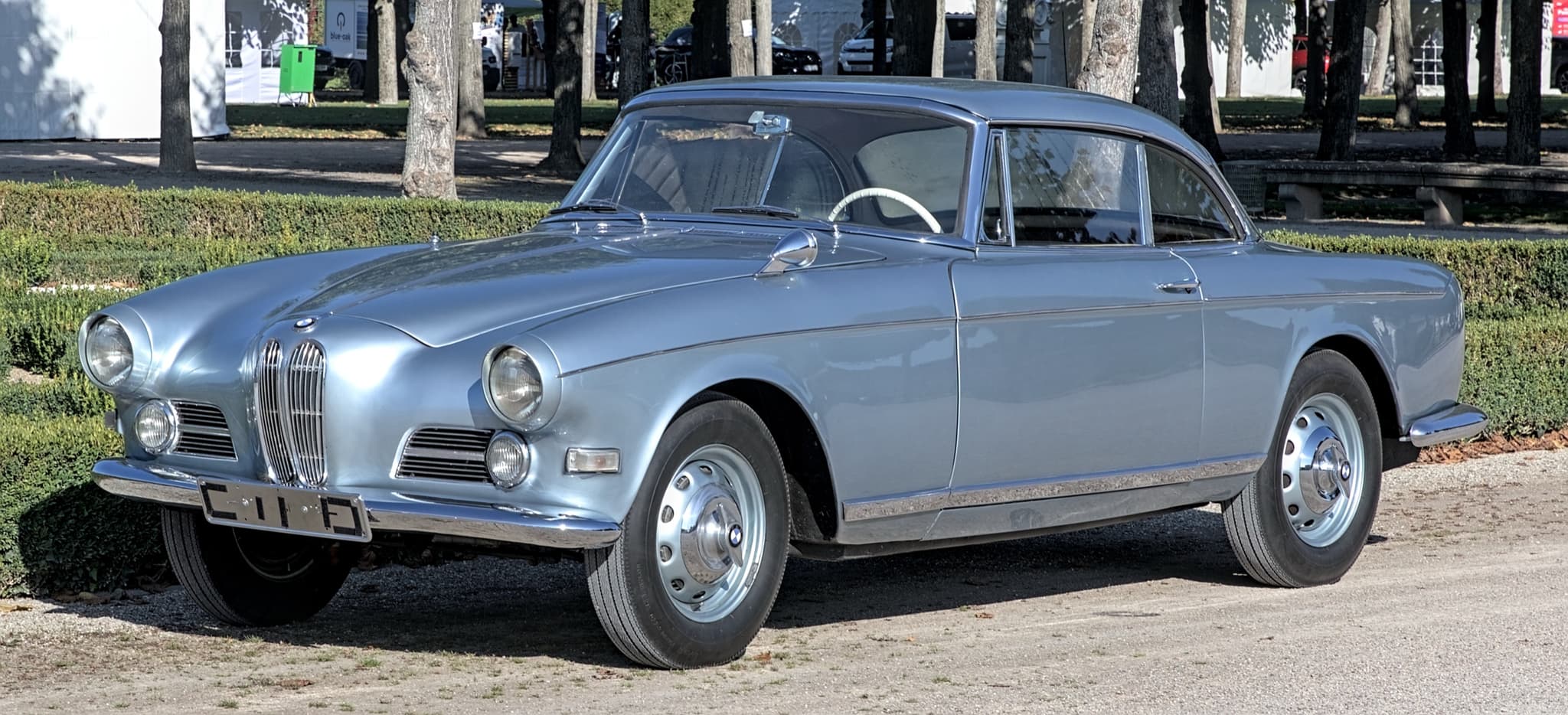
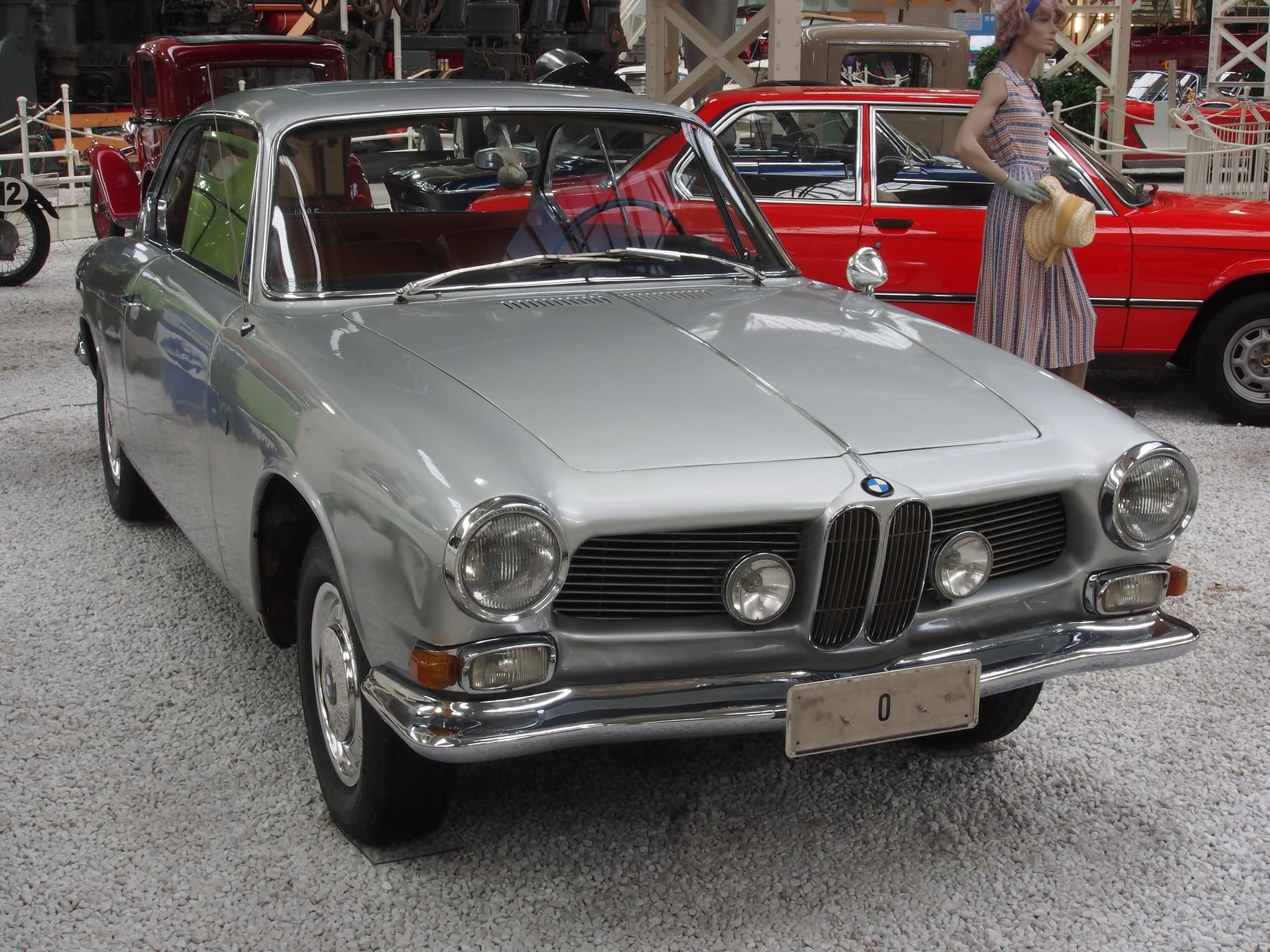
Beside the 507 BMW built Goertz's 503 coupé and cabriolet, on the 502's chassis at its full length and with a less powerful version of the same V8. It was built from 1956; BMW gives the end as May 1960, the BMW V8 Club as March 1959. BMW and the club count 412 of them, 273 coupés and 139 cabriolets. After both came the 3200 CS, which the club lists as the 503's successor, built from 1962 to 1965 with a 160 hp version of the same V8. Automotive News found it at the Frankfurt show of 1961 "with a Bertone body": "The car is powered by the 160-horsepower V-8 formerly used on the expensive BMW 507."
Giovanni Michelotti made a bid of his own for the 507's successor. He finished his first drawing on 25 July 1957, and when 507 chassis 70184 reached Italy in 1958 he had it bodied by Scaglietti at Maranello and assembled at Vignale in Turin. He showed it at the Turin show in 1959, in May by BMW's account, hoping, as Jouret and Werb wrote, that it would succeed Goertz's car as "a second-generation 507". It stayed a one-off, and BMW Group Classic bought it in 2005.
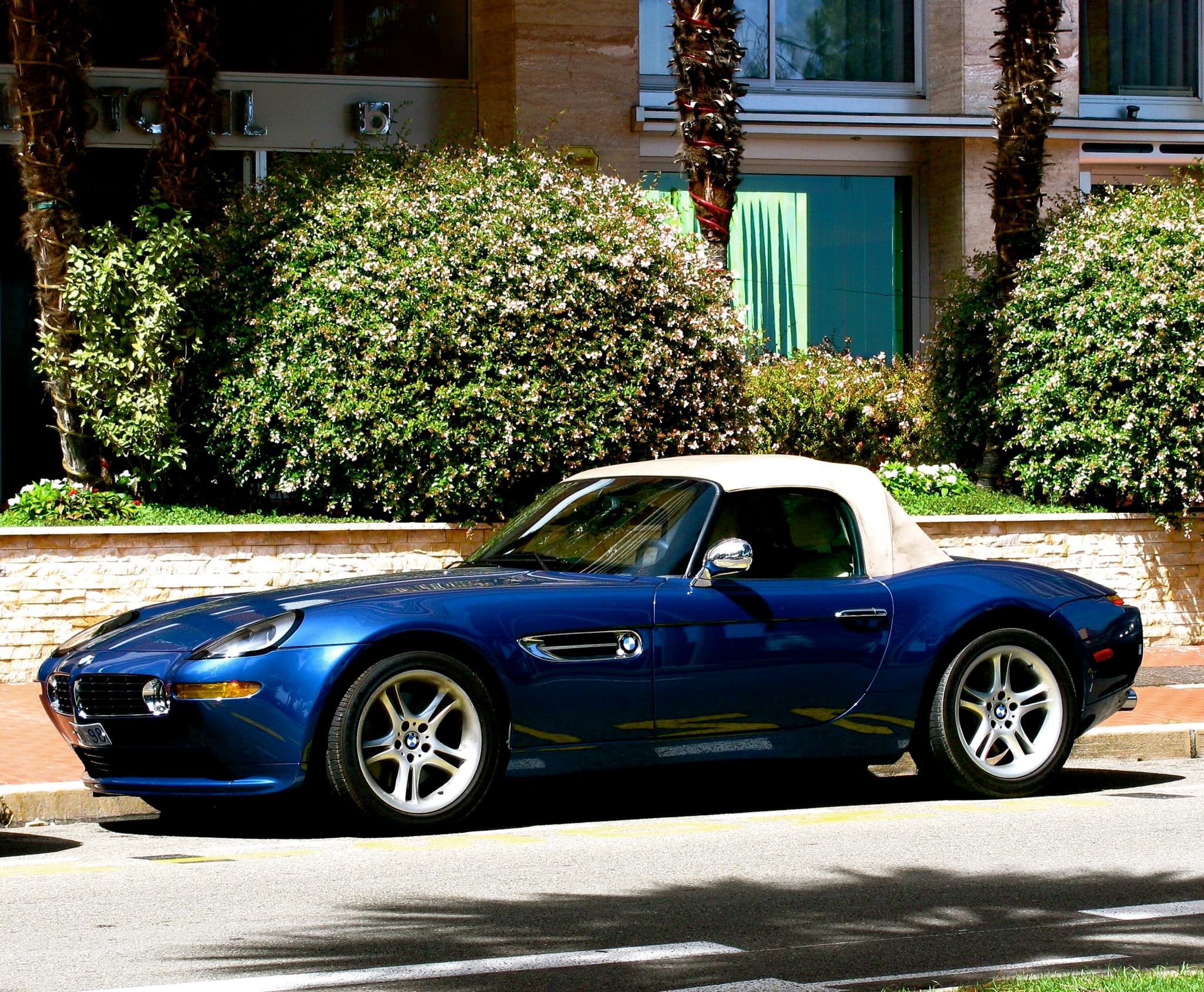
BMW returned to the idea in 1997 with the Z07 concept at the Tokyo Motor Show, and in 1999 it showed the production Z8, designed by Henrik Fisker, at the Frankfurt show; BMW built it in Munich from 2000 to 2003, and BMW Group Classic describes it as an open tribute to the 507. Automotive Engineering International called the Z8 "a modern day echo of the 1950s' V8 507" in 2000, and quoted Goertz: "If I were to design the 507 today, it would look like the Z8."source 14source 37source 17source 38source 3source 6source 16source 9source 10source 28source 39source 40source 36
Afterlife
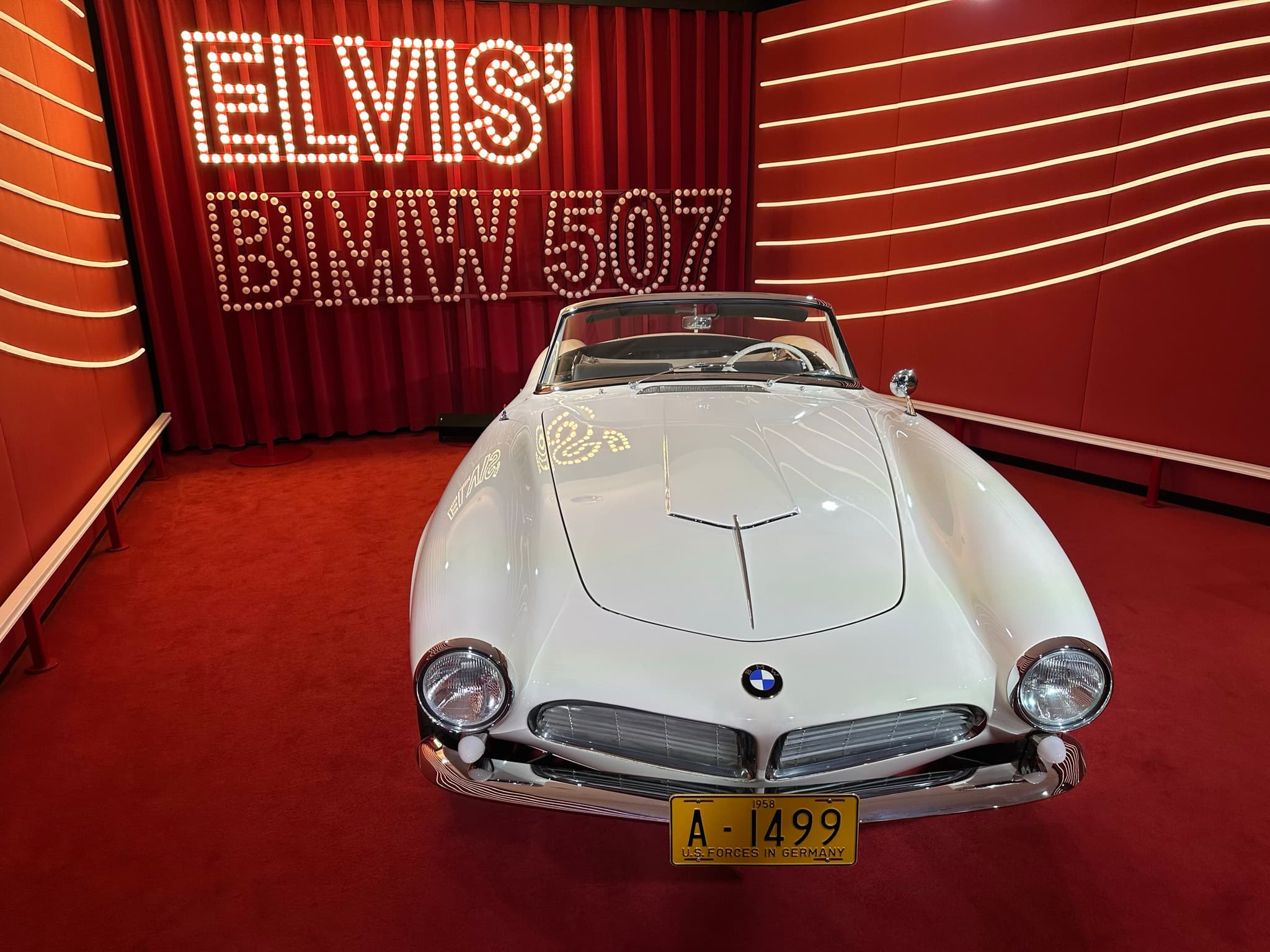
When Motor Sport visited BMW's museum in 1975 it found "that big, very handsome V8 507" among the sports cars. In 2005, 50 years after the debut, BMW issued a press kit on the 507 and 503, and Lange's monograph appeared through BMW's Mobile Tradition department. The Pebble Beach Concours gave the 507 its own class in 2013; Loewy's coupé and Michelotti's car were two of the six entries. For the sixtieth year, in 2015, the BMW Museum staged the exhibition "Family affairs. Variations on a design icon.", with Michelotti's car. Germany's Finance Ministry issued a 145-cent stamp of the 507 on 2 April 2015, paired with a Mercedes-Benz 220 S, and in August 2016 BMW showed Elvis Presley's car, restored, at Pebble Beach.source 3source 9source 10source 41source 42source 43
Sources
Every source the site cites is on the sources page.
- Primarymade at the time, by the maker or by people who were there
- Referenceserious later work: clubs, specialists, magazines, books
- BMW Group (bmwgroup.com), "BMW Group history", 1945–1952: Eisenach in the Soviet zone, the Munich plant dismantled, the 501; 1945–1952: the dismantling order of October 1945, the R 24 of 1948, the 501 of 1951; 1959–1961: the shareholders and the workforce reject the offer; Quandt; the Neue Klasse. bmwgroup.com/en/company/history.html Primary
- Der Spiegel, "Industrie / BMW: Bayerns Gloria", 3/1960, 12 Jan 1960, "Eisenach … war verloren"; the meeting of 9 December 1959; the first-series 501 and the BMW name; the board's programme of heavy motorcycles, luxury cars and sports cars; "weitgehend handwerklich hergestellter Leichtmetall-Karosserie"; "Die auf Millionärssöhne abgestimmte Eleganz …"; DM 76 million on the six- and eight-cylinder saloons, DM 4,000 a car; Richter-Brohm's study; Richter-Brohm's study; the meeting of 9 December 1959: the Kongreßhalle, Mathern, the adjournment, the offer valid to midnight; the loss for 1959. spiegel.de/politik/bayerns-gloria-a-0dd99757-0002-0001-0000-000043062979 Primary
- BMW AG (BMW Group PressClub Czech Republic), "Zeitlose Eleganz: 50 Jahre BMW 507 und BMW 503", chapter of the press kit "Legenden der 50er Jahre: BMW 507 – BMW 503 – BMW Isetta", German, Apr 2005, chapter "Zeitlose Eleganz": BMW without a sports car in 1954; the 1959 annual report on the end of production; the V8 at Geneva in 1954, "erste in Serie gebaute Aluminium-Achtzylinder der Welt"; chapter "Zeitlose Eleganz", the section on Hoffman: the quotation; Hoffman's "Einkaufspreis von rund 12 000 DM"; Veritas and the "Außenstelle Nürburgring"; the prototype, chassis 70 001, aluminium; Hoffman's verdict; Loof's car as an "Alternativvorschlag zu den Goertz-Entwicklungen" before the board; "Für den Sportwagen war die Ziffernkombination 507 vorgesehen, für das Coupé 503"; "Wie der 503 basierte auch das Chassis des 507 auf dem Unterbau der 502 Limousine. Allerdings war der Vollschutzrahmen verkürzt"; "507: Furioses Debüt im Waldorf-Astoria, New York": June 1955, two cars, one of them 70 002; the Isetta on the Frankfurt stand; the run on the Munich–Ingolstadt autobahn, early 1957; the first delivery, December 1956, "aus dem Hochadel"; the changes of June 1957; the annual report for 1959; the 503's price: "ein komfortables Reihenhaus oder rund sieben Volkswagen"; price and performance and the American customers; "nur 39 Roadster gingen als Neufahrzeuge in die USA"; Denzel and Jenny; the 1959 annual report: "Aus Gründen der weiteren Rationalisierung der Fertigung …"; the 503 on the 502's chassis; its numbers; the press kit itself, "50 Jahre BMW 507 und BMW 503", April 2005. press.bmwgroup.com/czech/article/attachment/T0066597CS/96056 Primary
- Jackie Jouret, "Elvis' 507: The real story", Bimmer, No. 83, Jun 2009; republished on bimmer-mag.com, 28 Jul 2014, the first series car, completed 11 December 1956; BMW's hope of "at least 1,000 per year, most of which would go to the U.S."; "The first 'real' 507 … wasn't built until December 11, 1956". web.archive.org/web/2016id_/http://www.bimmer-mag.com:80/news-blog/elvis-507-the-real-story Reference
- Denis Jenkinson ("D.S.J."), "At the House of B.M.W.", Motor Sport, Nov 1955, p. 46, p. 46, one basic chassis for the range; BMW buying in only carburettors, electrics and tyres; p. 46, Fiedler as head of design; p. 46, the drive "round the houses", the five-speed gearbox, the equipment; the quotation. motorsportmagazine.com/archive/article/november-1955/46/at-the-house-of-bmw Primary
- Bill Boddy, "German high performance", Motor Sport, Nov 1956, p. 28, "BMW are now producing 20 to 25 cars a day, mostly 501s and 502s"; the September 1956 visit: "now in production", the four-speed gearbox, von Falkenhausen's figures, "not sufficiently fast for sports-car racing", the 1957 Alpine Rally; the 503 and 507 engines compared. motorsportmagazine.com/archive/article/november-1956/28/german-high-performance Primary
- Hannes Richter, "Motor Man: Maximilian Hoffman", Austrian Embassy, Washington (austria.org), "USA 250" series, 29 May, Hoffman's life to 1947. austria.org/usa250/1dh70msdgdg5rlxri9hlk33wmy0v9q Reference
- Motor Sport, "Road car buying guide: Mercedes-Benz 300 SL", Jun 2020, p. 132, Hoffman and the road-going 300 SL. motorsportmagazine.com/archive/article/june-2020/132/road-car-buying-guide-mercedes-benz-300-sl Reference
- Jackie Jouret and Helmut Werb, "507s star at Pebble Beach", Bimmer, No. 119, 25 Oct 2013, p. 1, Lange's findings: March 1953, the board's decision of 1 March 1954, Hoffman's photographs of September 1954, his 2,000 cars; p. 2, Hoffman "went to Italy to investigate alternatives"; p. 2, Hoffman met Goertz at the New York motor show; the sketches sent at the end of October 1954; p. 2, "Fritz Fiedler was given responsibility for the car's construction"; the frame and the final assembly; p. 2, the Frankfurt car named as 70002; p. 1, the 41 US cars; the four largest markets; p. 9, Michelotti's car: the drawing of 25 July 1957, chassis 70184 in Italy in August 1958, Scaglietti and Vignale, Turin, "a second-generation 507"; Lange's monograph of 2005; the 507 class at Pebble Beach in 2013, six cars. bimmer-mag.com/issues/119/articles/507s-star-at-pebble-beach Reference
- BMW Group Classic (BMW Classic blog), "60 Years of Pure Temptation", 2015, "Typ 528" or "507a"; Loof and the Nürburgring branch; the prototype's design; Bad Neuenahr, the gold medal and the criticism; Hoffman's dissent; the meeting Hoffman brokered; "Only 20 weeks passed" from the first sketches to the signing-off in March 1955; the quotation, "Goertz later recalled"; Enrique Muro and the 1957 Mille Miglia; Michelotti's own initiative, Turin in May 1959, the purchase of 2005; the Z8 of 1999 as a tribute to the 507; the exhibition "Family affairs. Variations on a design icon.". presstopic.bmwgroup.com/en/bmw-classic-blog/text/60-YEARS-OF-PURE-TEMPTATION-4484.html Primary
- Industrial Design, Profile of Albrecht Graf Goertz, Aug 1959 (vol. 6 no. 8), pp. 50–51, pp. 50–51, Hoffman: the car "as then designed wouldn't sell in this country"; pp. 50–51, Goertz "designed both the 507 and 503". archive.org/details/sim_i-d_1959-08_6_8 Primary
- Melina Aulinger and Walter Zeichner, "You've got to be lucky", Mobile Tradition live (BMW Group Mobile Tradition), 02/2004, pp. 10–17, p. 14, the invitation to Munich and "im Januar 1955 werden die Verträge geschlossen"; p. 15, "Produktionsende im Frühjahr 1959"; p. 15, "Im Vergleich zu manchem Konkurrenten bietet der Goertz-Roadster zu wenig Motorleistung". bmw7er-club.de/interaktiv/download/mobilemtradition_02_04.pdf Primary
- BMW Group (PressClub Canada), "Designer Albrecht Graf Goertz passes away" (press release), 3 Nov 2006, the contracts of January 1955. press.bmwgroup.com/canada/article/detail/T0028576EN/designer-albrecht-graf-goertz-passes-away Primary
- Denis Jenkinson ("D.S.J."), "BMW type 328: fifty years ago", Motor Sport, Jun 1986, p. 40, p. 40, "Fiedler concentrated on the chassis"; AFN and the Frazer Nash-BMW; p. 40, the Eifelrennen of 14 June 1936; Eisenach to August 1939. motorsportmagazine.com/archive/article/june-1986/40/bmw-type-328-fifty-years-ago Reference
- Bayerische Motoren Werke AG, BMW 502 · 503 · 507 (V8 range catalogue), German, 1957, Nr. W 147, the 507 data page: frame, suspension, steering; the extras: "Sealed-Beam Scheinwerfer (nur für Export)". archive.org/details/100_20260601 Primary
- BMW V8 Club Deutschland, "Modellübersicht 503 507 3200 CS", "im Juli 1955 in New York"; "ab November 1956"; "im März 1959 wieder eingestellt"; the 3200 CS as the 503's successor. bmw-v8-club.de/fahrzeuge/8-zylinder-baureihe/modeluebersicht-503-507-3200-cs.html Reference
- Denis Jenkinson ("D.S.J."), "The Frankfurt Motor Show", Motor Sport, Nov 1955, p. 51, p. 51, hall 1b; the white car with red interior, hardtop and knock-off hubs; p. 51, the quotation. motorsportmagazine.com/archive/article/november-1955/51/the-frankfurt-motor-show Primary
- auto motor und sport, IAA report, "Technische Daten der deutschen Personenwagen" and "Preise der deutschen Personenwagen", Heft 20, 24 Sep 1955, the IAA report of 24 September 1955 and the price list of 22 September; the IAA report: "zweifellos das Prunkstück der ganzen Ausstellung"; "Der 507 hat kein BMW-Gesicht mehr"; the price list of 22 September 1955: the 507, the 503 and the 300 SL coupé. archive.org/details/auto-motor-und-sport-1955-heft-20 Primary
- Motor Sport, "Sports and high-performance cars at Earls Court", with the list "Sports Cars Costing Under £1,000 Inclusive of P.T.", Nov 1955, p. 16, AFN Ltd's stand 119: "a 507 sports/ roadster"; AFN Ltd's BMW stand, October 1955. motorsportmagazine.com/archive/article/november-1955/16/sports-and-high-performance-cars-at-earls-court Primary
- Jesse Alexander, "Complete report on BMW 507", with "Factory test data" and "Late news from BMW", Sports Cars Illustrated, May 1957, pp. 18–21, 50, p. 18, "the hit of the show"; "Late news from BMW": the interior, the dash and the tank; "Late news from BMW", p. 18, the quotation; "Late news from BMW": the Hoffman Motor Car Co.; the SAE rating. archive.org/details/sim_car-and-driver_1957-05_2 Primary
- auto motor und sport, "Wie sie beschleunigen", Heft 4, 15 Feb 1958, the opening: neither car a sports car for competition, both "Touren-Sportwagen". archive.org/details/auto-motor-und-sport-1958-heft-4 Primary
- Motor Trend, Annual guide: sports cars (the BMW 507 entry), Jan 1959, pp. 37–44 (BMW 507 p. 41), p. 41, the photograph caption; p. 41, the port-of-entry price. archive.org/details/sim_motor-trend_1959-01_11_1 Primary
- Sports Cars Illustrated, "Disc-Braked BMW 507" (road test), with the same issue's Frankfurt show report, Dec 1959, pp. 49–51, 104, p. 104, the verdict; the Frankfurt show report, September 1959: "still in production at a reduced rate"; p. 104, "the $5000 figure touted by the former importer's press agent". archive.org/details/sim_car-and-driver_1959-12_5 Primary
- Der Spiegel, "BMW: Das rettende Modell", 20/1959, 12 May 1959, the quotation; Richter-Brohm from 1 March 1957; the middle-class car deferred; the 700 "unter Mitwirkung italienischer Karosserie-Experten"; the loss announced in April 1959. spiegel.de/politik/das-rettende-modell-a-4829ddb4-0002-0001-0000-000046162557 Primary
- Alex Harmer, "Sisters under the skin?", Motor Sport, Feb 1987, p. 17, the rate of building, under two cars a week; the sump and the steering box; three cars to England, two through AFN; Surtees's car; the quotation. motorsportmagazine.com/archive/article/february-1987/17/sisters-under-the-skin Reference
- BMW Group Classic, "BMW 507 model series", "Production 11/1956 – 12/1959". bmwgroup-classic.com/en/models/bmw-classics/product-description-page.ad-1173-1.bmw-507-model-series.html Primary
- Automotive News (Crain Communications), via Internet Archive, "Port-of-Entry Prices On Imported Cars", 11 May 1959, vol. 33 no. 3706; also 14 Sep 1959 (vol. 34 no. 3724) and 14 Mar 1960 (vol. 35 no. 3750), the port-of-entry lists from 11 May 1959; Fadex's advertisements; Fadex Commercial Corporation's advertisements, May 1959. archive.org/details/sim_automotive-news_1959-05-11_33_3706 Primary
- Stuart Birch, "Global Viewpoints – From 507 to Z8", Automotive Engineering International (SAE International), Jul 2000, Surtees: each 507 "cost BMW more money to build than it was sold for"; the Z07 at Tokyo in 1997; "a modern day echo of the 1950s' V8 507"; Goertz on the Z8. sae.org/automag/globalview_07-00/01.htm Reference
- Bundesministerium der Justiz (gesetze-im-internet.de), Sozialgesetzbuch (SGB) Sechstes Buch, Anlage 1: "Durchschnittsentgelt in Euro/DM/RM", Anlage 1, the average earnings of 1956 (our arithmetic against the launch price). gesetze-im-internet.de/sgb_6/anlage_1.html Primary
- Motor Sport, "The Cars at Earls Court", Nov 1958, p. 22, the BMW stand: left-hand drive only. motorsportmagazine.com/archive/article/november-1958/22/cars-earls-court Primary
- Motor Sport, "Earls Court Reviewed", Nov 1959, p. 39, "B.M.W. 507 Stand 122". motorsportmagazine.com/archive/article/november-1959/39/earls-court-reviewed Primary
- Bayerische Motoren Werke AG, BMW 507 Touring Sport (sales brochure, French), French, 1/1958, W 61 f 5 1.58, the French brochure, W 61 f 5 1.58. archive.org/details/101_20260417 Primary
- Motor Sport, "The Cars at Earls Court", Nov 1957, p. 22, the BMW stand 133 and its 507. motorsportmagazine.com/archive/article/november-1957/22/cars-earls-court Primary
- Der Spiegel, "BMW: Nicht kaputtgekriegt", 9/1960, 23 Feb 1960, Quandt's holding, February 1960. spiegel.de/wirtschaft/nicht-kaputtgekriegt-a-2fc71441-0002-0001-0000-000043063395 Primary
- BMW AG (BMW Group PressClub Global), "BMW Group celebrates successful new beginning 50 years ago" (press release), 29 Nov 2010, the rescue plan adopted on 30 November 1960. press.bmwgroup.com/global/article/detail/T0091393EN Primary
- BMW Group (PressClub Austria), "103 Jahre BMW Group, 100 Jahre Rekorde und Siege" (press release), 1 Mar 2019, T0292605DE, the 700, presented on 9 June 1959; more than 190,000 sold by 1965; BMW through the trough; the Z8: Henrik Fisker, the IAA of 1999, built in Munich from 2000 to 2003. press.bmwgroup.com/austria/article/attachment/T0292605DE/425844 Primary
- BMW Group (PressClub USA), "The three lives of the BMW baron" (press release), 18 May 2007, von Falkenhausen's private 328, 1946. press.bmwgroup.com/usa/article/detail/T0017811EN_US Primary
- BMW V8 Club Deutschland, "Technische Daten 503 507 3200CS", the 503: 412 cars, 273 coupés and 139 cabriolets; the 3200 CS, 1962–65, and its engine. bmw-v8-club.de/fahrzeuge/8-zylinder-baureihe/techniche-daten-503-507-3200-cs.html Reference
- BMW Group Classic, "BMW 503 model series", the 503: production 05/1956 – 05/1960; 412 cars, 273 coupés and 139 convertibles. bmwgroup-classic.com/en/models/bmw-classics/product-description-page.ad-133-1.x.html Primary
- Automotive News (Crain Communications), via Internet Archive, "BMW Returns to Big-Car Field" (news photograph and caption), 6 Nov 1961, vol. 37 no. 3836, "BMW Returns to Big-Car Field": the 3200 CS at Frankfurt, 1961. archive.org/details/sim_automotive-news_1961-11-06_37_3836 Primary
- BMW AG (BMW Group PressClub Global), "Elvis' BMW 507 lives on: Comeback at the Concours d'Elegance in Pebble Beach" (press release), Munich, 4 Aug 2016, Elvis Presley's car at Pebble Beach, August 2016. press.bmwgroup.com/global/article/detail/T0262726EN/elvis Primary
- Bill Boddy, "BMW of Munich", Motor Sport, Mar 1975, p. 43, p. 43, the museum's sports cars. motorsportmagazine.com/archive/article/march-1975/43/bmw-of-munich Primary
- Bundesministerium der Finanzen, "Sondermarken April 2015" (gallery of the special stamps of April 2015), 2015, the stamp of 2 April 2015, 145 cents, with the Mercedes-Benz 220 S. bundesfinanzministerium.de/Content/DE/Bilderstrecken/Sondermarken/Programm_2015/april15-Bildergalerie.html Primary