Built 1954
Ernst Loof's 507 prototype
Survives
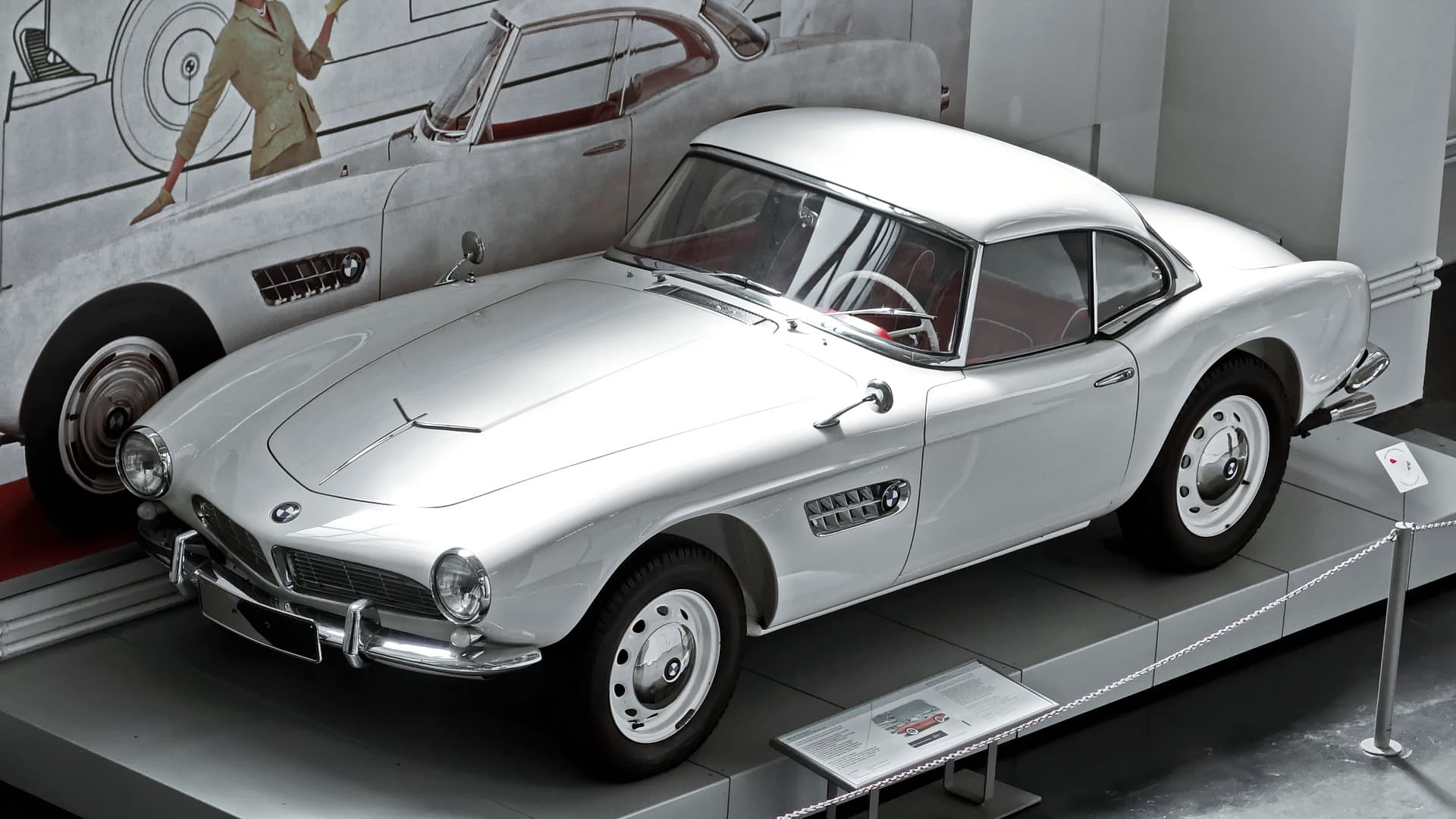
BMW's two-seat roadster of 1956–59, the 507 Touring Sport in its maker's catalogue: Albrecht Goertz's aluminium body on a shortened saloon frame with BMW's light-alloy V8, shown at Frankfurt in 1955, built by hand in Munich and driven by Elvis Presley in Germany.
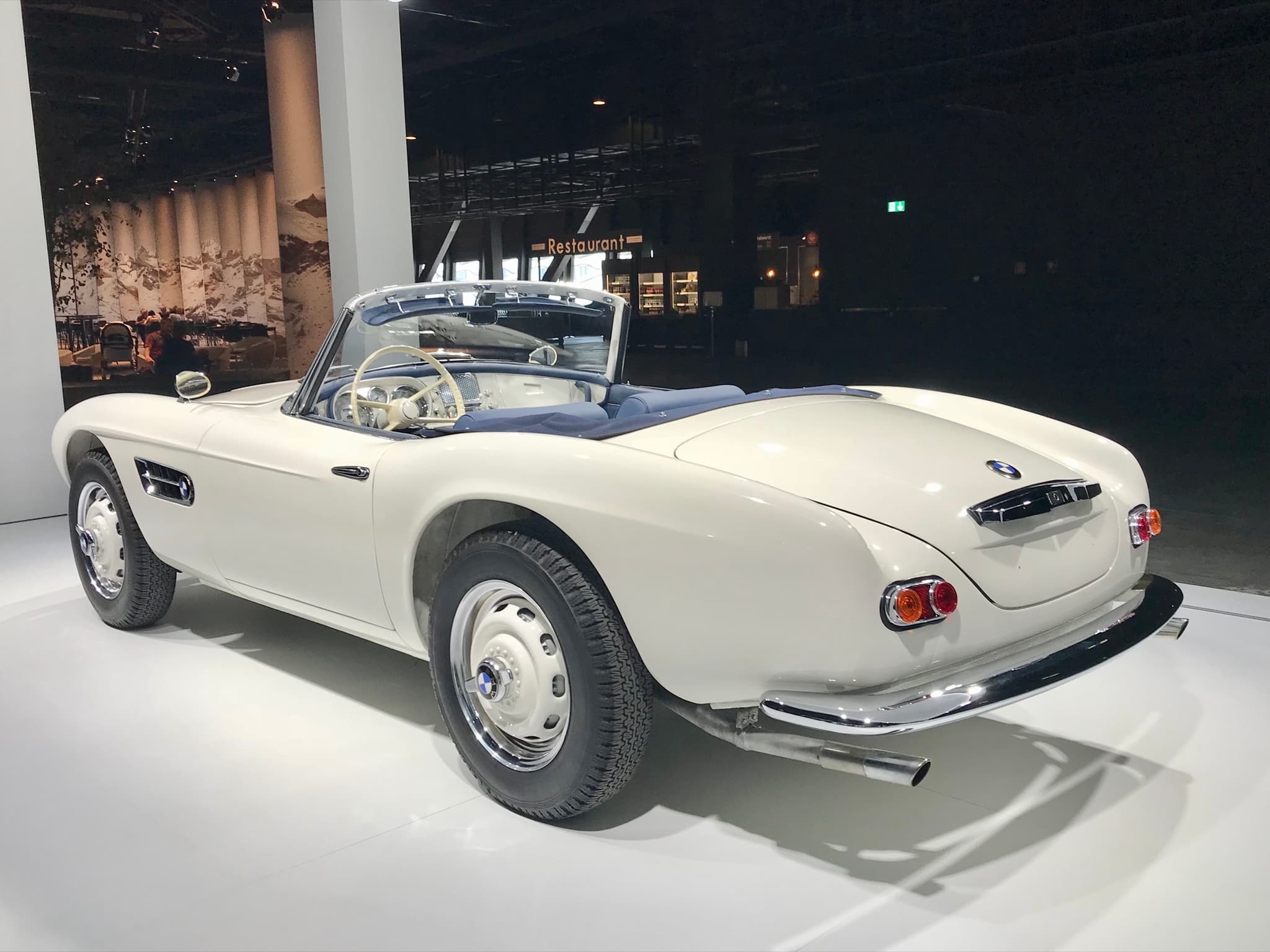
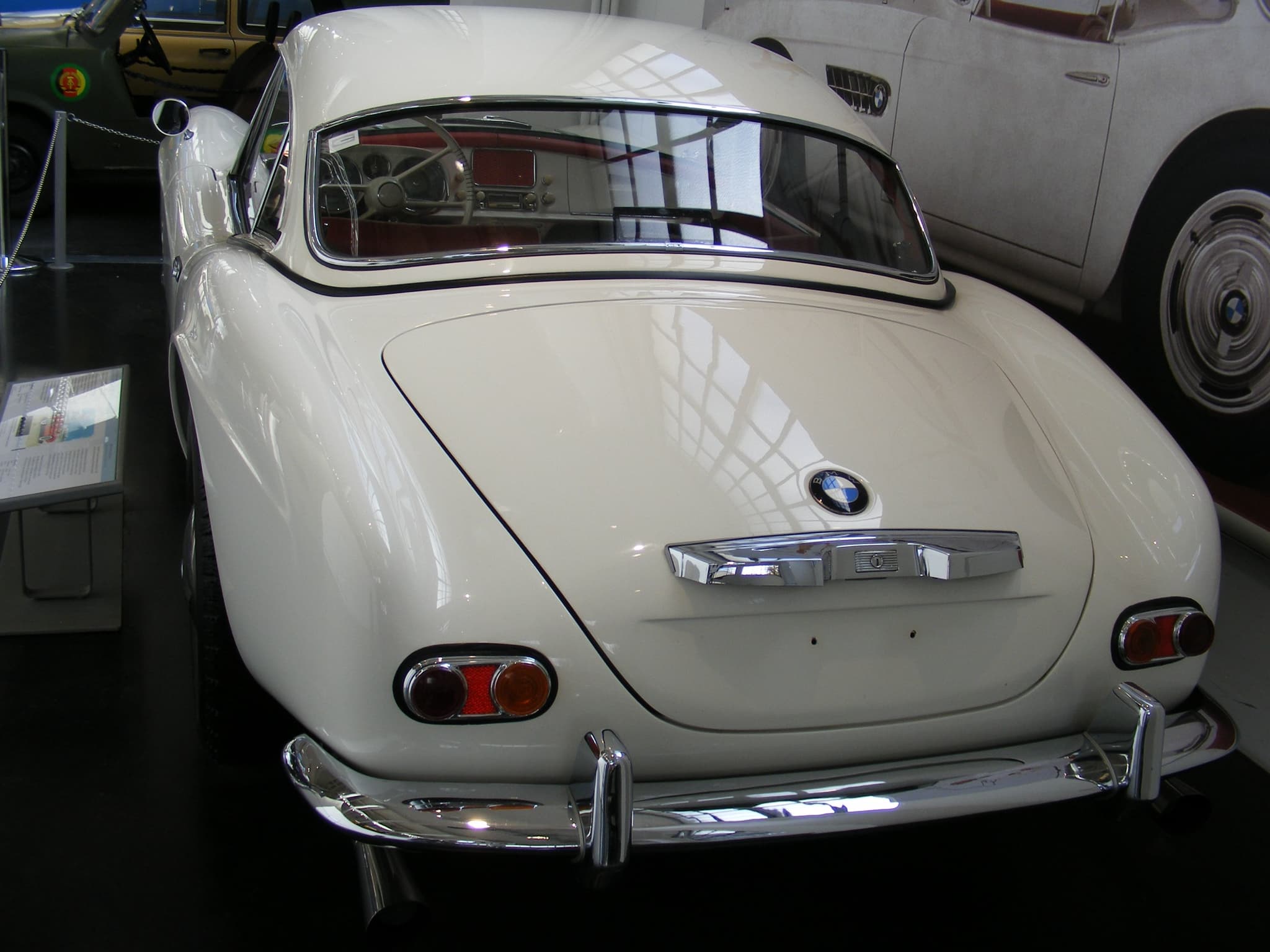
At the Frankfurt motor show of September 1955 BMW showed two new V8 models, the 503 and the 507, and the crowds gathered round the 507. It was a white two-seater with a red interior, wearing the aluminium hardtop and knock-off hubs from its extras list, and auto motor und sport reported that most of the love the crowd felt for it would have to stay platonic. BMW built it in Munich from the end of 1956 until production was given up towards the end of 1959, with a body made largely by hand, and every one had its steering on the left.
The shape was drawn by Albrecht Goertz, a German-born designer working in New York, whose sketches reached BMW at the end of October 1954. The engine is the light-alloy V8 of BMW's big 502 saloon (sedan), in a stronger tune with two twin-choke carburettors. Elvis Presley drove a 507 while he served with the US Army in Germany, and John Surtees bought one new in Munich. By the numbers gives its figures, and the specifications give every reading with its source.source 1source 2source 3source 4source 5source 6source 7source 8source 9source 10source 11
The press of the 1950s wrote about the shape before anything else. Denis Jenkinson of Motor Sport, at Frankfurt, liked the way the alloy body was drawn in close round the wheels when most makers let their bodies overflow the tyres, and auto motor und sport noticed that the 507 no longer had a BMW face. In America, Sports Cars Illustrated captioned a picture in May 1957: "Italianesque styling of 507 has been talk of sports car world since car was introduced well over a year ago." Two and a half years later Sports Cars Illustrated tested one, and put the looks first:
The 507's strongest appeal is its beauty. No other car has such animal grace or more justifies the old expression, "it looks like it's going a hundred when it's standing still."
The same test found the performance reasonable but not earth-shaking. The panels it admired were hand-hammered aluminium; members of the magazine's staff had watched them being made.source 2source 1source 12source 9source 5
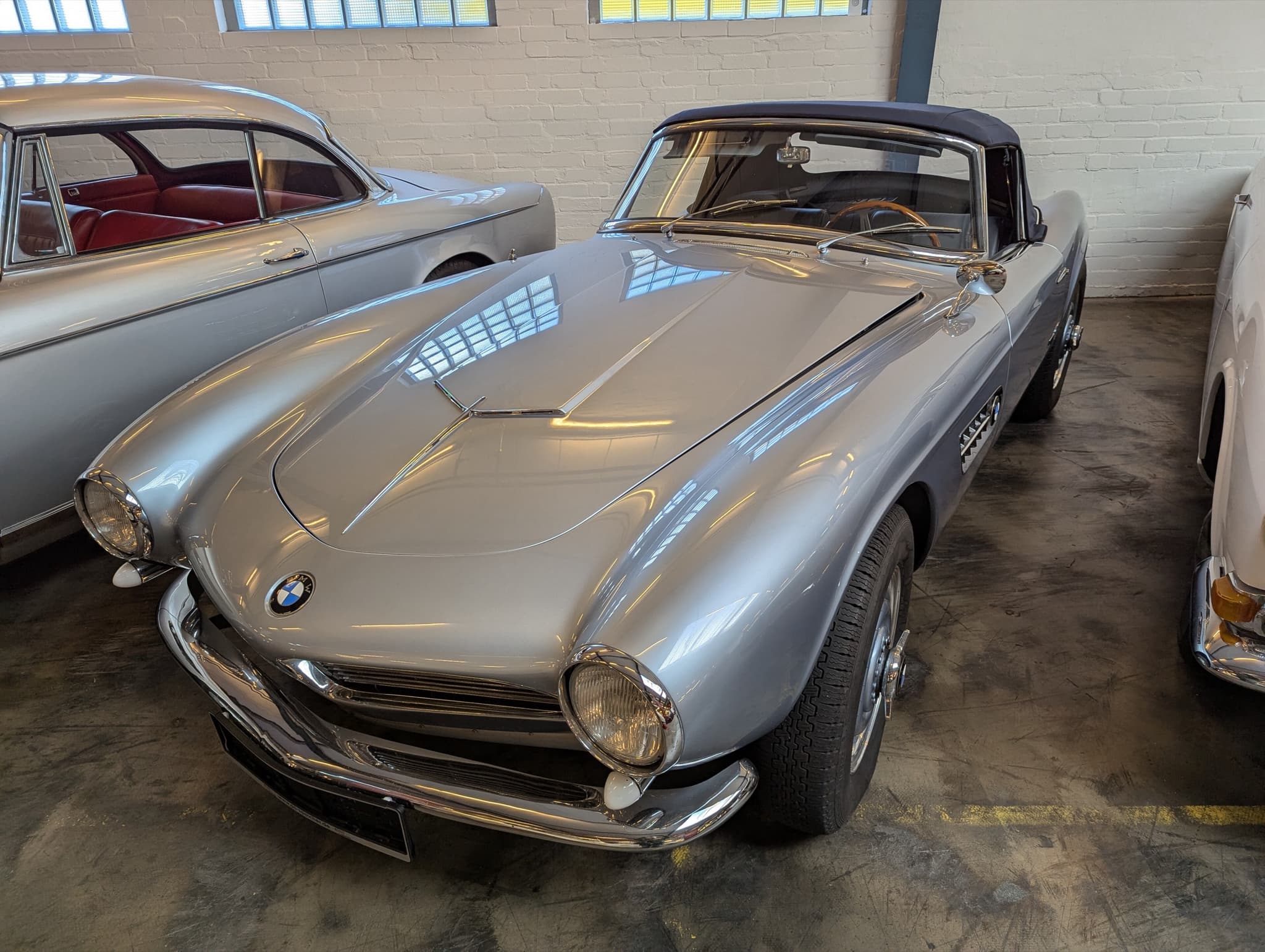
In BMW's catalogue and brochures the car was the 507 Touring Sport, and auto motor und sport listed it as the "507 Touring-Sport" from 1955. It is a two-seater with an aluminium body and a folding hood (soft top), and a detachable aluminium hardtop was an extra. The engine is BMW's 90-degree V8 with pushrod valve gear and two twin-choke carburettors. It sits in a box-section steel frame with tubular cross-members, BMW's own description, shortened from the 502's; torsion bars spring all four wheels, the rear axle is a live one, and the brakes are Alfin light-alloy drums. Dunlop front discs were offered only at the very end, for the 1960 cars. The hardtop, which BMW called the Coupé-Aufsatz, was held on by screws and clips, and the other extras included centre-lock wheels, a Becker radio and a choice of axle ratios.
BMW revised the car in June 1957. The tall tank behind the seats went under the boot (trunk) floor beside the spare wheel, which freed space for luggage behind the seats, and the dashboard was redrawn. Cars built before the change are known as Series I and cars built after it as Series II. The BMW V8 Club's list puts the change at chassis 70044. The counts of early cars differ, BMW's of the cars delivered before the change and the club's and Bimmer's of the Series I cars, and the line-up shows all three; the versions page lists the differences one by one.source 13source 14source 1source 3source 12source 4source 9source 15source 16source 17
Who began the 507 depends on whose account you read. BMW's accounts of 2005 and 2015 give the idea to Max Hoffman, its importer in New York, who wanted a sports car he could sell in America. Karlheinz Lange's research in BMW's archive, as Bimmer reported it in 2013, has engineers in Munich planning a sports car from March 1953, with Hoffman involved only after he had seen photographs of the first prototype, probably in September 1954. The history gives both accounts; they agree that he rejected the first design.
That prototype was Ernst Loof's, built at BMW's development branch at the Nürburgring. Hoffman judged it unsaleable in America. According to a profile of Goertz in Industrial Design in 1959, he told Goertz that BMW's car as it stood would not sell there and suggested he send Munich some sketches of his own; Goertz had worked in Raymond Loewy's design studio. BMW dates Goertz's contracts to January 1955 and the signing-off of his body design to March 1955, 20 weeks after his first drawings arrived. Fritz Fiedler, head of BMW's design department and the engineer who had designed the pre-war 328's chassis, was responsible for the car's construction. Alex von Falkenhausen, BMW's head of racing, tested it and gave Motor Sport his performance figures for the prototype in September 1956.source 4source 7source 17source 8source 18source 19source 20source 3source 21source 22
auto motor und sport printed the 507's German price in its list of 22 September 1955, in its Frankfurt show issue, below the price of the Mercedes-Benz 300 SL coupé in the same list. It was unchanged in the lists of March and June 1956, had risen by July 1958 and rose again by the end of that September. BMW put the money in its own terms for the 503, which cost a little more: in 1956 it would have bought a comfortable terraced house, or about seven Volkswagens. In America, Hoffman's company announced in May 1957 a price that it said full production would bring; the first American price found in a list, in Motor Trend's guide of January 1959, was almost twice as much, and the import lists from May 1959 were higher again. BMW's 2005 press kit counts 39 cars delivered new to the United States and Lange's research 41, against the 2,000 or so Hoffman had expected to sell there, by Lange's account.
BMW lost money on every 507 it sold, by Der Spiegel's reckoning in 1960 and John Surtees's in 2000. Most of its losses in those years, though, came from its large six- and eight-cylinder saloons. On 9 December 1959, in the year the 503 and 507 were given up, BMW's small shareholders blocked a rescue led by Daimler-Benz.
How many were made depends on what is counted. The BMW V8 Club's data sheet numbers the chassis from 70001 to 70254, and BMW gave a total to match in 2015 and 2016. How many were made sets each total beside its source. BMW's own press kit of 2005 counts the cars with its series body and adds three chassis supplied for special versions, without naming them, and Motor Sport printed two other totals, in 1987 and 2020.source 1source 23source 24source 25source 4source 9source 26source 27source 17source 5source 28source 29source 15source 7source 11source 30
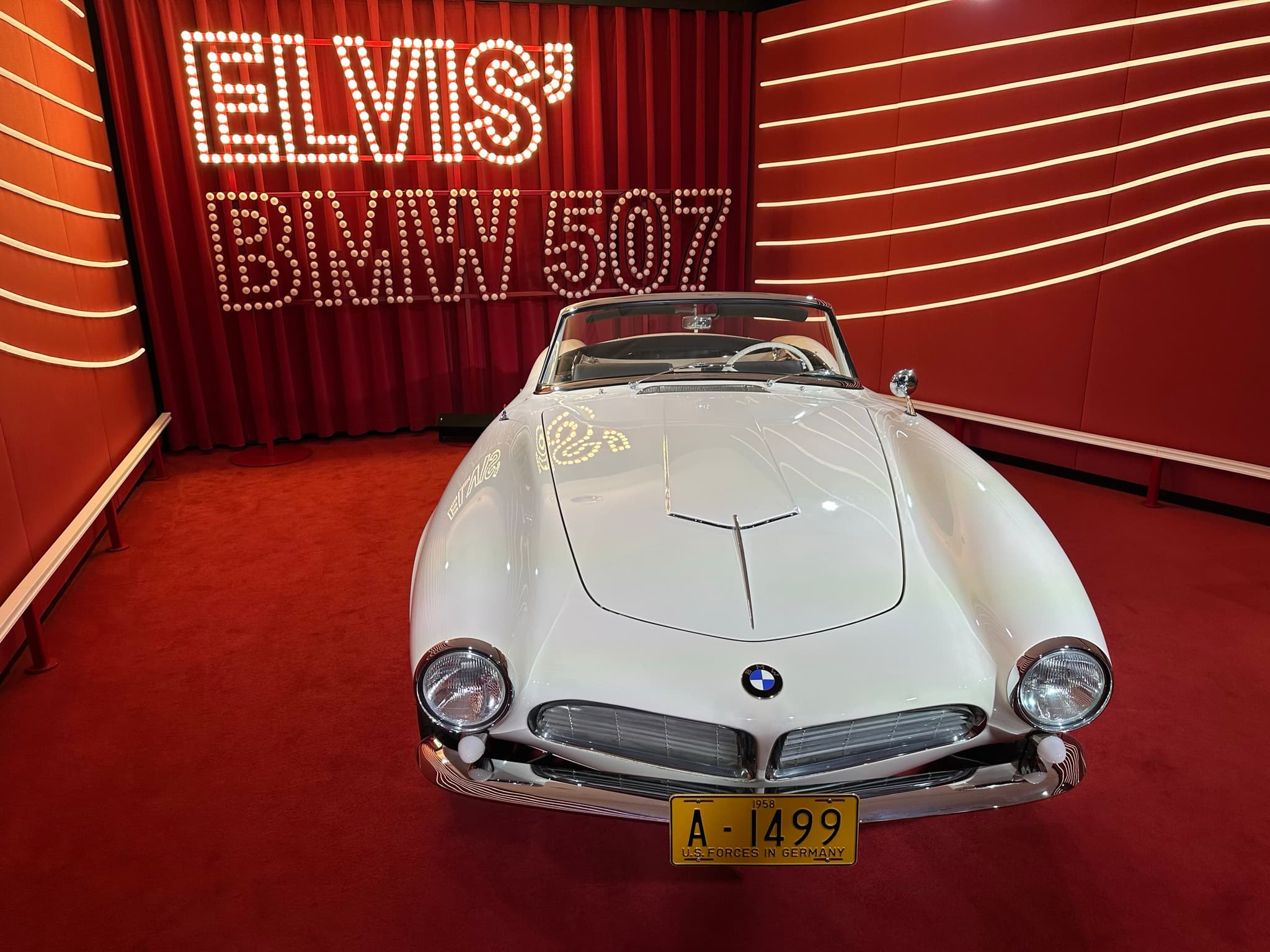
Chassis 70079 was finished on 13 September 1957 in Feather White and spent its first year as a works car: BMW's demonstrator, registered M-JX 800, and the car Hans Stuck raced in hillclimbs in the summer of 1958. By later accounts it was also the car Motor Revue timed for its road test that year. On 20 December 1958 a Frankfurt dealer delivered it to Private Elvis Presley, who drove it between Bad Nauheim and the barracks at Friedberg. Fans wrote on its white paint in lipstick, and in 1959 he had it painted red.
After Presley left Germany the car turned up at a Chrysler dealer in New York, which sold it to the Birmingham, Alabama radio personality Tommy Charles; he raced it with an American V8 in place of BMW's. The aerospace engineer Jack Castor bought it in 1968 and kept it, stored, for some 40 years. BMW bought it in 2014, showed it unrestored in its museum that summer, restored it over almost two years and showed it at Pebble Beach on 21 August 2016.source 10source 31source 32source 33source 34
John Surtees bought his 507 new in Munich in 1957, after the first of his 500 cc world titles, and kept it for the rest of his life; he died in 2017. Stuck drove BMW's works cars in hillclimbs in 1958 and 1959, and in the first season won his class at Rossfeld, Schauinsland and Ollon-Villars in the car Presley later bought. In 1959 he drove another works car, 70145, and at the Wurzen Pass in Austria that September finished sixth, behind Greger's Porsche Carrera among others. BMW Group Classic records one 507 in the 1957 Mille Miglia, entered by the Venezuelan Enrique Muro; it did not finish.
Two famous designers had 507 chassis bodied. Raymond Loewy had a coupé made by the coachbuilder Pichon-Parat, in plastic as BMW tells it, and it stood at the Paris Salon in October 1957; Loewy gave it to a Los Angeles museum in 1962, and in 2013 the Petersen Automotive Museum showed it at Pebble Beach. Giovanni Michelotti bought a chassis on his own initiative, had it bodied by Scaglietti and assembled at Vignale, and showed it at the Turin show in 1959; BMW Group Classic bought it in 2005. Notable BMW 507s grades each famous owner by the evidence; Ursula Andress and David Carradine are among the documented ones.source 11source 35source 31source 36source 37source 38source 39source 17source 7source 40
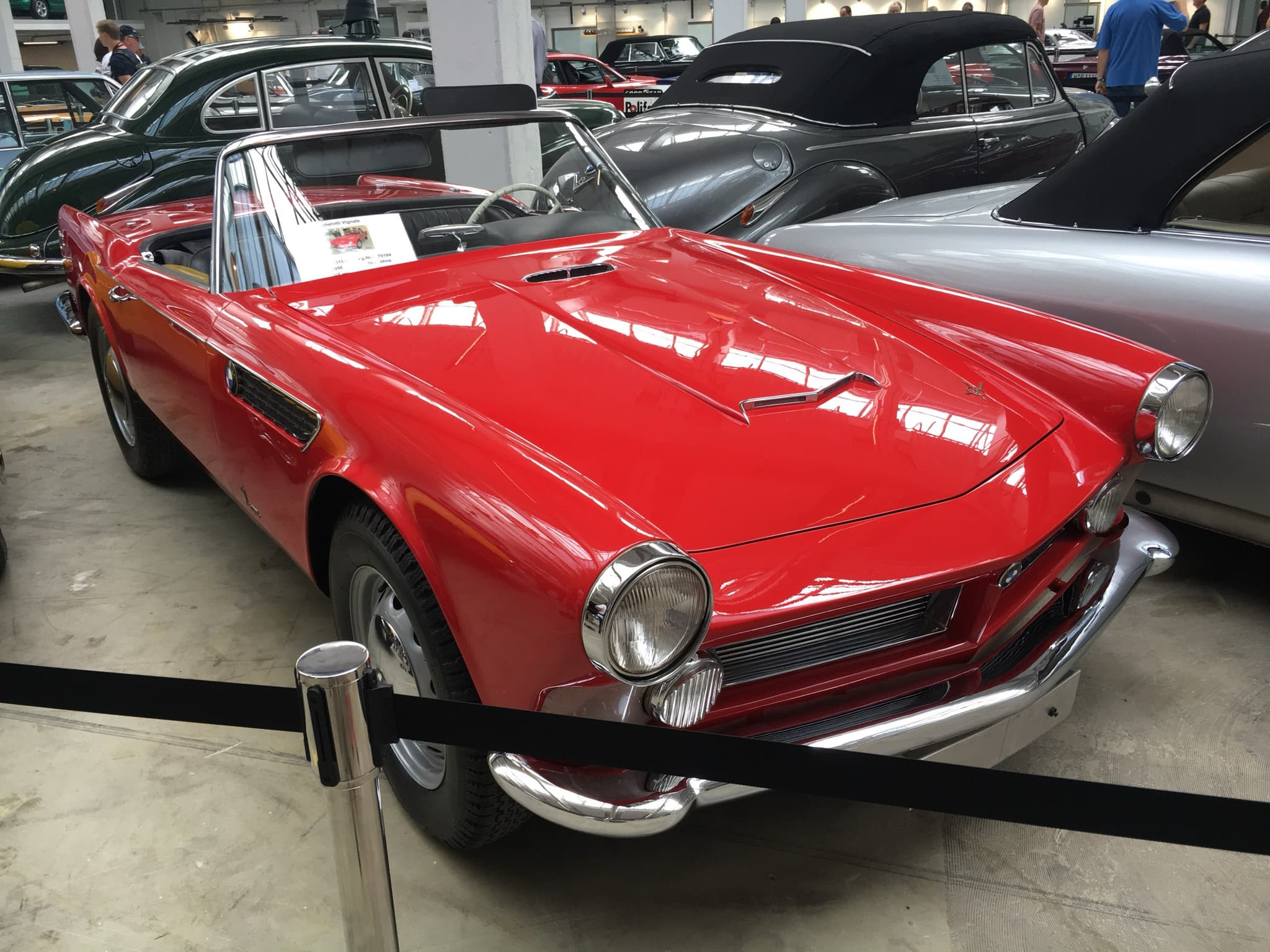
Max Hoffman wanted both cars for America, and the two were compared from the start: Jenkinson's report from Frankfurt in 1955 already set the BMW's price against the SL's. The 507 cost less than the 300 SL in every price list read: Germany's in September 1955 and September 1958, the American port-of-entry list of January 1959 and the Earls Court guide of October 1959.
The 507 against the 300 SL has the full comparison. It was also built in far smaller numbers: Mercedes-Benz made 1,400 of the 300 SL coupé alone between August 1954 and May 1957. Sports Cars Illustrated, which compared the two in 1957, thought the BMW slower, with more room for luggage and easier to get into and to service. When Motor Revue measured both in 1958, the SL was the faster above 130 km/h (81 mph), and the BMW pulled harder in top gear between 65 and 130 km/h (40 and 81 mph), by the report in auto motor und sport.source 2source 19source 4source 41source 1source 25source 26source 42source 9source 43
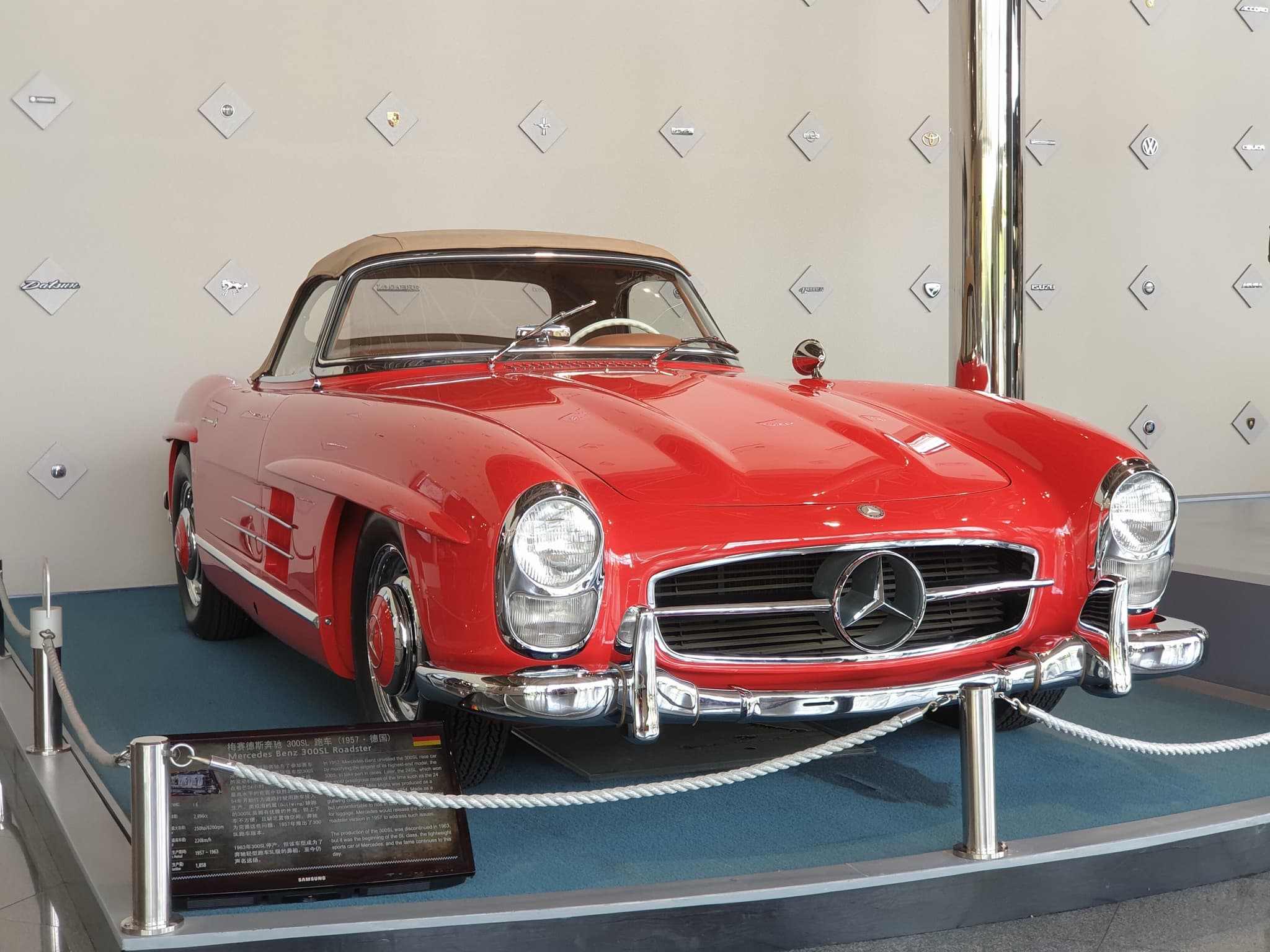
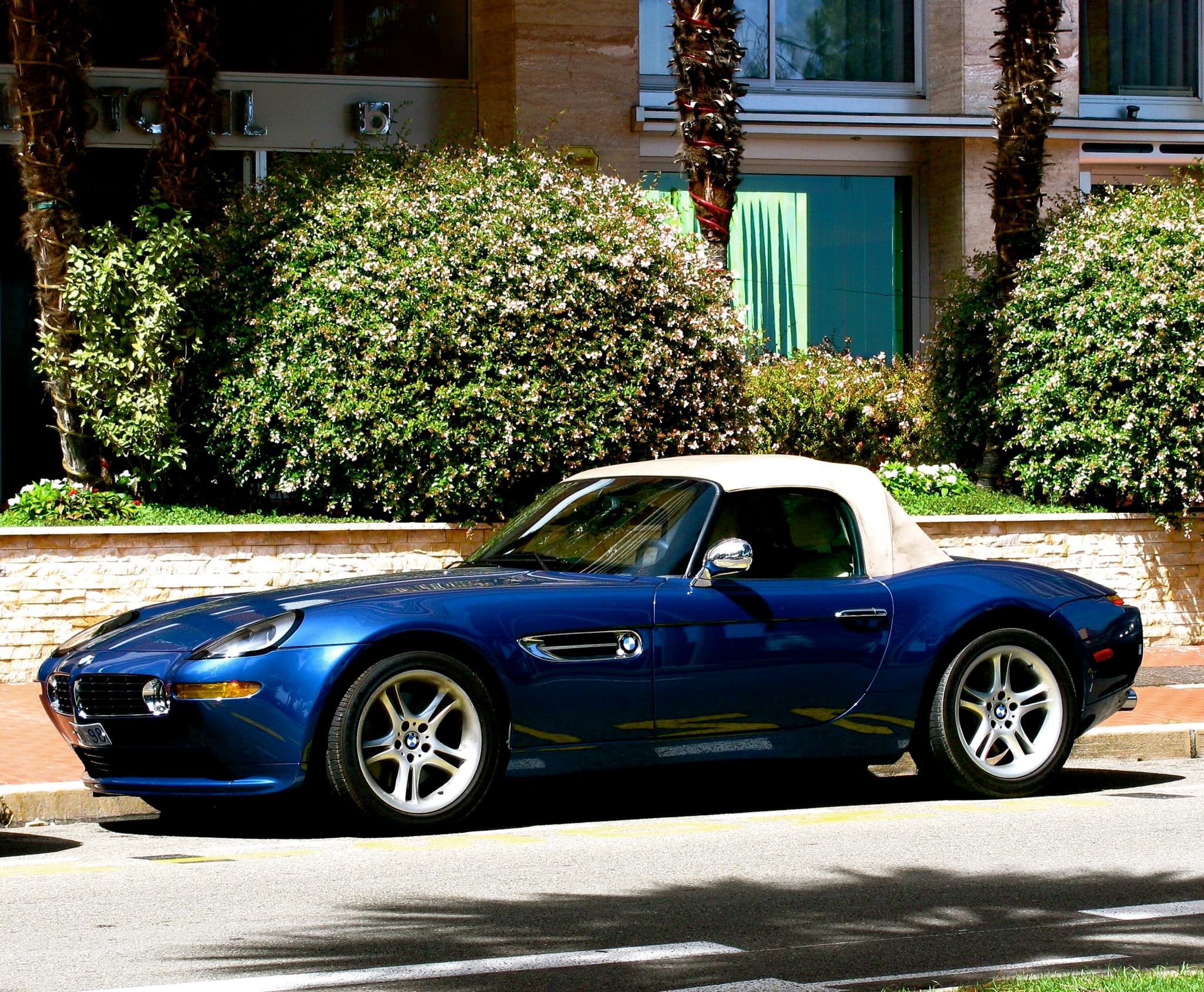
Before the war BMW's sports car was the 328, and Motor Sport hoped in 1955 that the new car would carry on its tradition. The 507's mechanical parents were the 501 and 502 saloons, and beside it BMW built the 503 coupé and cabriolet, Goertz's other design for the firm, on the same V8 chassis. After both came the 3200 CS, the 503's successor, built from 1962 to 1965 with a more powerful version of the same V8; the history follows each of them. The Z8 that BMW unveiled in 1999, after a Tokyo concept car of 1997, is in BMW Group Classic's words "a roadster designed openly as a tribute to the BMW 507".source 21source 2source 4source 8source 15source 16source 7source 29
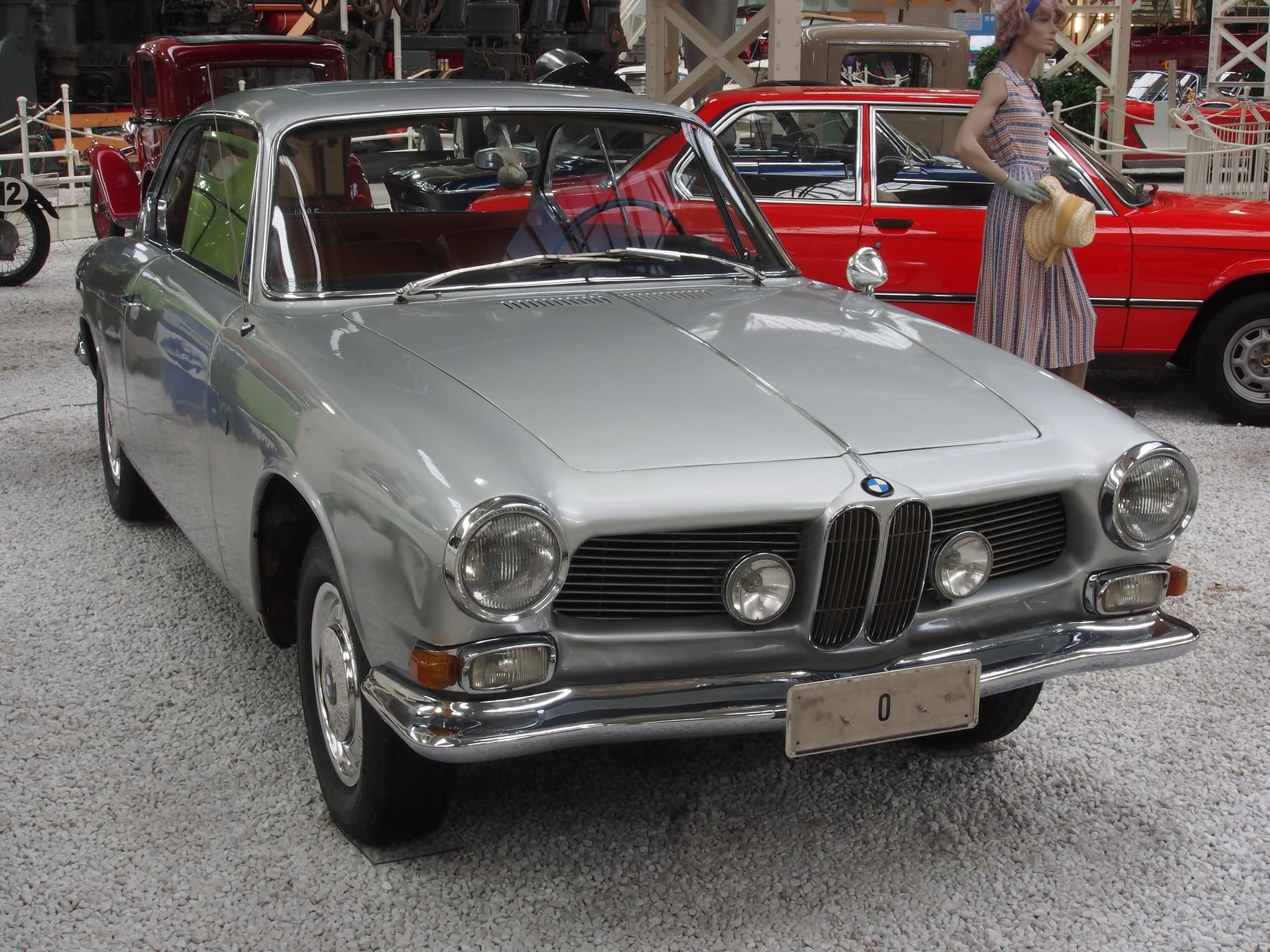
A 507 was among the sports cars in BMW's museum when Motor Sport visited in 1975. At the Pebble Beach Concours in August 2013 six 507s, Loewy's coupé and Michelotti's car among them, had a class of their own. In 2014 BMW Group Classic said that Elvis Presley's car would stay in BMW's museum in Munich once it was restored, and in 2015 the museum's sixtieth-anniversary exhibition, "Family affairs", showed Michelotti's car beside the 507s.source 34source 7source 17source 44
Sources for Versions
1956–1957
43 built or 45 or 34
1957–1959
Built 1954
Survives
Built 1955
Whereabouts unknown
Built 1957
Survives
Survives
Whereabouts unknown
Built 1959
Survives
Built 1958
Survives
Built 1957
Survives
head of motor racing, head of engine development
Engineer and racing driver. Born in Munich, he joined BMW in 1934 as a works rider and motorcycle designer; after the war he built racing cars under his own name, AFM, and won the German sports-car championship of 1948. He returned to BMW in 1954, added engine development to racing in 1957 and retired in 1976. He died in Munich.
engineer
The engineer who designed the 328's chassis, the tubular frame BMW patented; after the war he joined AFN in Britain and was loaned to Bristol for its Type 400. Back at BMW, its board gave him charge of the first 507 prototype in March 1954 (Bimmer, reporting Karlheinz Lange's research), and he was head of its design department by 1955.
designer
Industrial designer, born into an old noble family at Brunkensen, near Hanover. After a banking apprenticeship with Deutsche Bank in Hamburg and Helbert Wagg & Co. in London he emigrated to the United States in 1936; Der Spiegel adds that his mother was Jewish. In Los Angeles he modified Ford cars and built a coupé of his own design, the Paragon, shown at the 1939 World's Fair in San Francisco; he served in the US Army from 1940 to 1945 and became an American citizen. A chance meeting with Raymond Loewy led to the Pratt Institute and two and a half years in Loewy's Studebaker studio, where he and a colleague drew the Champion's "bullet nose" facelift. He opened Goertz Industrial Design in New York in 1953. Max Hoffman, BMW's importer in New York, put him forward to BMW, and he designed the 507 and the 503. His later designs ranged from an Agfa camera and Mont Blanc pens to SABA radios and televisions, and his last work was a Steinway grand piano. BMW and Motor Sport (1987) credit him with the Datsun 240Z; Nissan's letter to him of 1980, as Japanese Nostalgic Car reproduces it, says he was its design consultant from 1963 to 1965 and the sole consultant on a two-litre sports car developed with Yamaha that was not built, and that the 240Z was the work of Nissan's own designers, who had the benefit of his designs. Der Spiegel records that he drove BMW M3s into old age.
sales director
BMW manager in the 1950s, in charge of sales when the 503 and 507 were designed.
importer
Car importer. Born in Vienna, he raced motorcycles and cars and built a Vienna dealership importing cars to Central Europe. His father was Jewish, and he left Austria after the Anschluss of 1938 and reached New York in 1941. He founded Hoffman Motors in 1947 and in 1954 opened a New York showroom designed by Frank Lloyd Wright. He urged Mercedes-Benz to build a road-going 300 SL and ordered the first 1,000 cars himself, and the Austrian Embassy's profile credits him with the demand that led to Porsche's 356 Speedster. He was BMW's importer when the 507 was planned. In 1975 he divested his interests to BMW of North America, and in 2003 he was inducted into the Automotive Hall of Fame posthumously.
engineer
BMW's director of racing, by BMW's account, until the racing division was disbanded early in 1941; after the war he had the Kamm coupé for his own use, and entered it for Karl Kling's win at Hockenheim in 1947. He later headed BMW's development branch at the Nürburgring, his former Veritas works, where he built the first 507 prototype in 1954.
stylist
Turin car stylist. He began his career in 1937 as an apprentice at Stabilimenti Farina; according to carrozzieri-italiani he opened his own design studio in Turin in 1949, the first in Italy devoted only to car design; the TSOA Newsletter of 1966 also dates the studio to 1949. His first contact with Standard-Triumph came in 1957: Harry Webster's obituary in the Telegraph says Webster "discovered" him, while Graham Robson says he was found through Raymond Flower and hired on Webster's recommendation with Alick Dick's approval. His first Triumph design was the one-off TR3 "Dream Car" on a TR3 chassis, shown at Geneva in 1957 according to later accounts; Krause says it followed a chance meeting with Alick Dick at a motor show. He went on to design the Italia (1959–62) on TR3A and TR3B running gear. On his own initiative he drew a one-off body for a BMW 507 chassis, shown at the Turin show in 1959, which BMW has owned since 2005. He styled the Herald (1959), whose separate chassis made the Spitfire possible; answering Webster's idea of a "Herald sports car", he built a single prototype in 1960, code-named "Bomb", and later restyled the car as the Mk IV of 1970. For the TR he styled the prototypes Zest (1958) and Zoom (1959) and the TR4 of 1961, which joined Zest's nose to Zoom's tail and kept Zoom's hardtop with its lift-out panel; the TR4A, TR5 and TR250 kept that body with new detail, and its centre section on the TR6 (1969), whose new front and rear Karmann designed because he was busy. According to his son Edgardo, his work for Triumph ended in the late 1970s with a restyle of the TR7 from coupé to spider; he died in January 1980. No source read links him to the Le Mans or Macau competition bodies.
owner
American singer. He served with the US Army in Germany from 1 October 1958 to 2 March 1960, and owned a BMW 507 there.
shareholder
Industrialist, the second son of Günther Quandt, trained in accumulator manufacture and from the late 1930s a manager in the Quandt group. The BMW Foundation records, after Joachim Scholtyseck's study of 2011, that he joined the NSDAP in 1940 and, as a personnel manager, knew of the forced labour in the group's factories. He had been buying BMW shares since the 1950s. BMW founded the BMW Stiftung Herbert Quandt in 1970, for his sixtieth birthday.
chairman of the board
BMW's chief executive from 1957, through the end of the 503 and 507 and the crisis of 1959.
test driver, demonstrator, driver
Racing driver, known as the Bergmeister (mountain master). Before the war he drove Auto Union's Grand Prix cars and won the European Mountain Championship three times. Motor Sport, at lunch in 2011 with his son, Hans-Joachim Stuck, dates his work with BMW from 1957: he took class wins in the 507 and later won the German hill climb title in BMW's 700 coupé.
owner
Motorcycle and car racer: 500 cc world champion for MV Agusta in 1956, 1958, 1959 and 1960, and Formula 1 world champion in 1964, the only man to win Grand Prix world championships on two wheels and on four (BBC News). Motor Sport's Earls Court guide of 1959 noted that he owned a 507.
Every source the site cites is on the sources page.