BMW 507 Buyers Guide
How to tell what a BMW 507 is: its chassis number and BMW's records, the Series I and Series II details, the parts that were changed later, replicas and one-off bodies, restoration, and what the period testers and a restorer found in the V8 and the brakes.
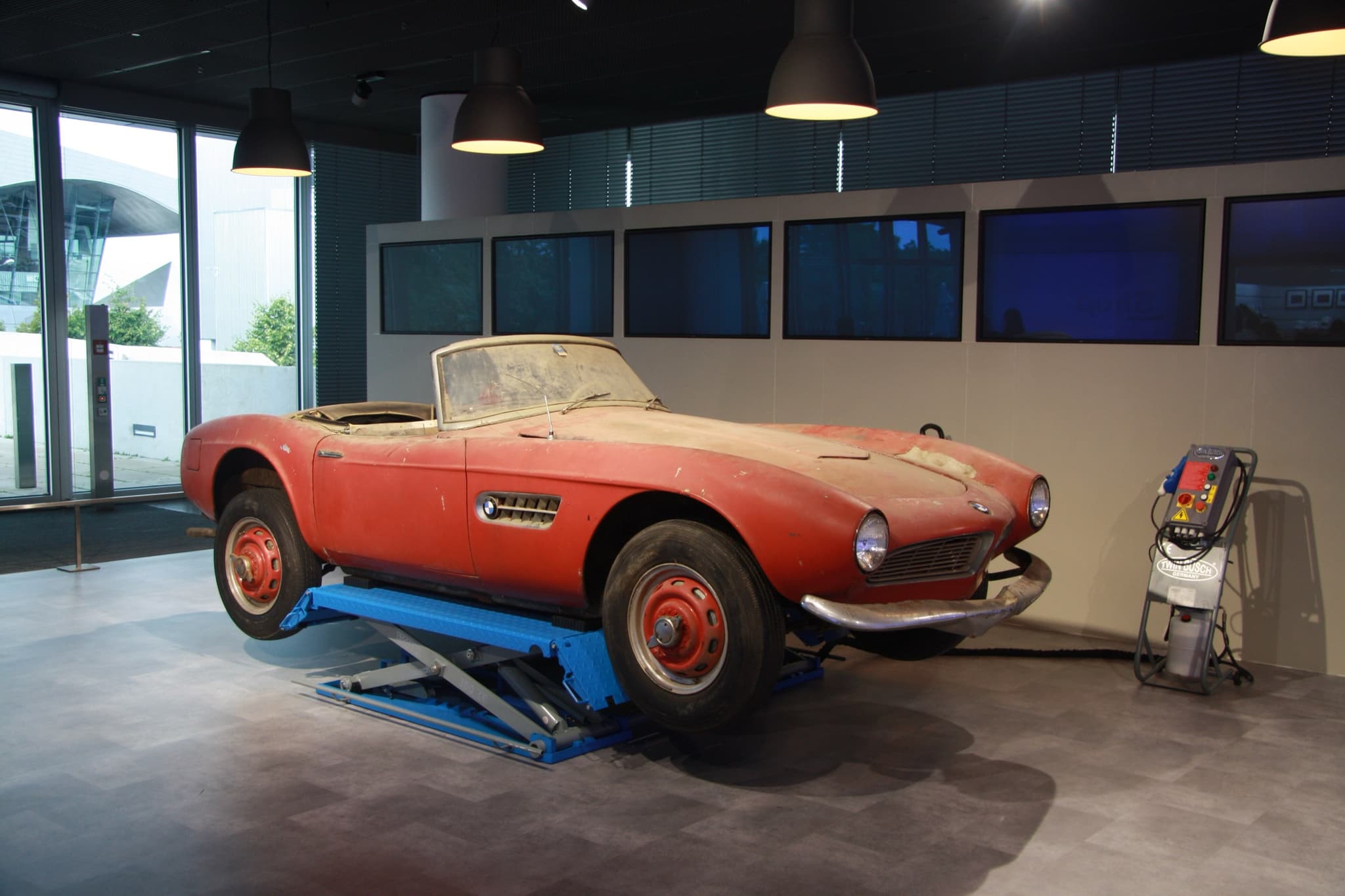
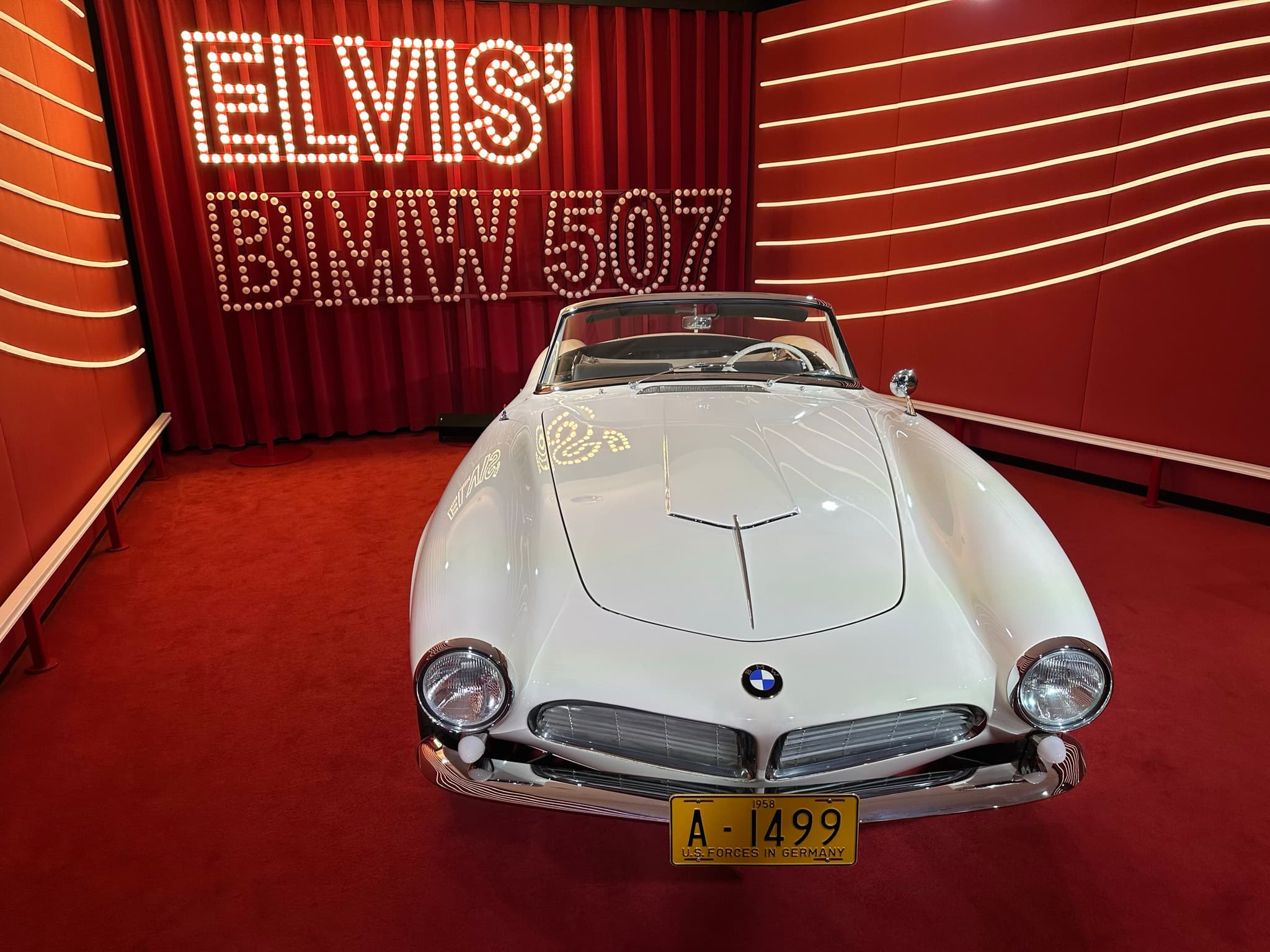
A 507 is checked through its numbers. Every car carries a chassis number between 70001 and 70254, by the BMW V8 Club's data sheet, and not every car still has the engine it left Munich with: Elvis Presley's was raced in America with a Chevrolet V8 and reached BMW in 2014 with no engine at all.source 1source 2
The numbers and BMW's records
A 503, the coupé and cabriolet BMW built beside the 507 on the same V8, carries a number in its own range, 69001 to 69412, on the same club's sheet.
BMW's archive can say what its own records hold for a car. Since early 2024 the BMW Group Archive has issued a digital birth certificate with the details it holds of a car. Its order form asks for the type and the chassis, engine and gearbox numbers, and for proof of ownership, a registration document or a purchase contract; BMW Group Classic says that what the certificate contains depends on the model and the car's age. No source read shows where the chassis, engine and body numbers are stamped on a 507.
A chassis number in an advertisement proves little on its own. The BMW V8 Club has published a member's account of a 507 advertised online with the photographs and chassis number of a genuine car sold in the United States years before; the "seller" stopped answering when asked for current photographs.source 1source 3source 4
Series I or Series II
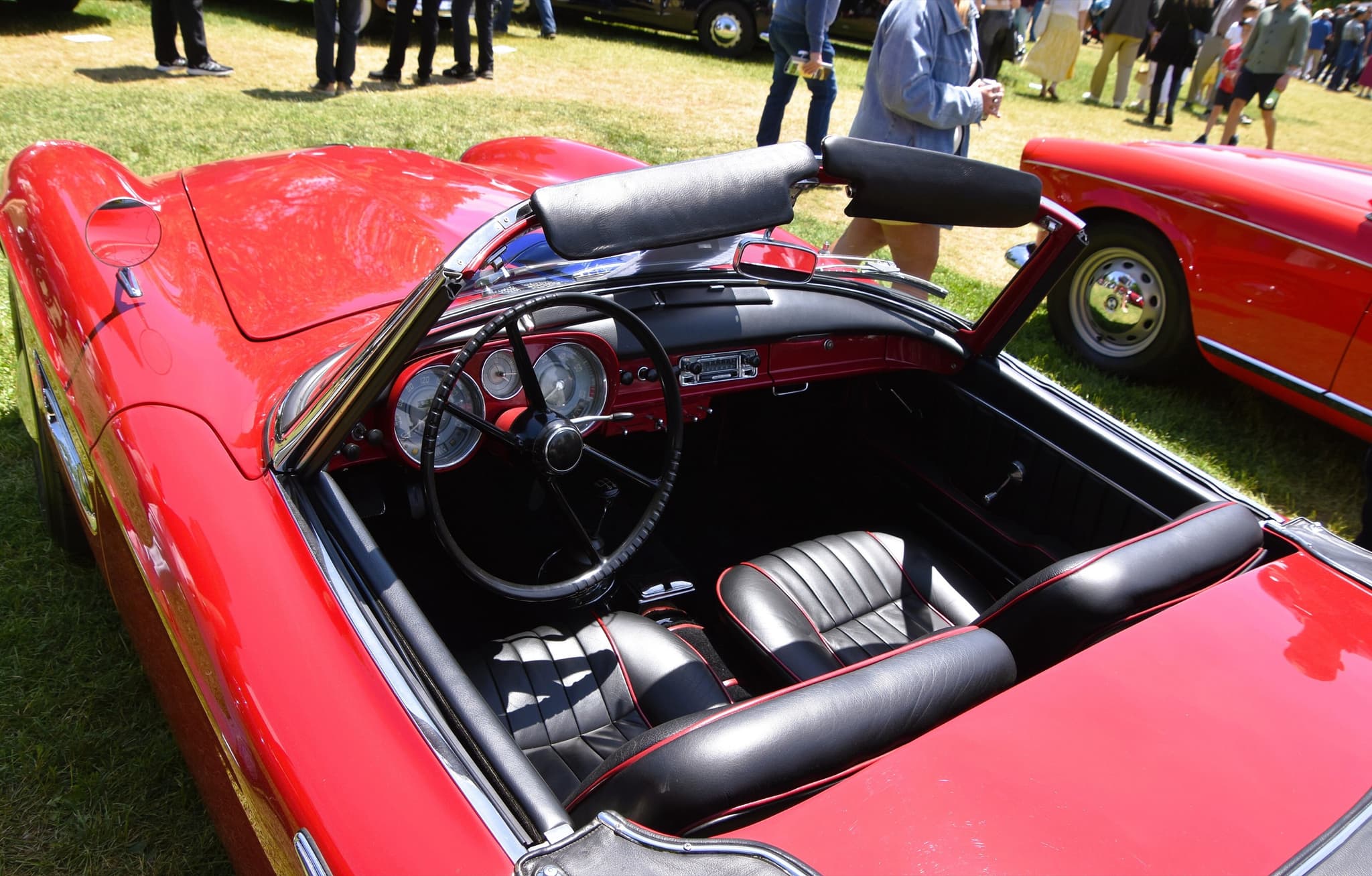
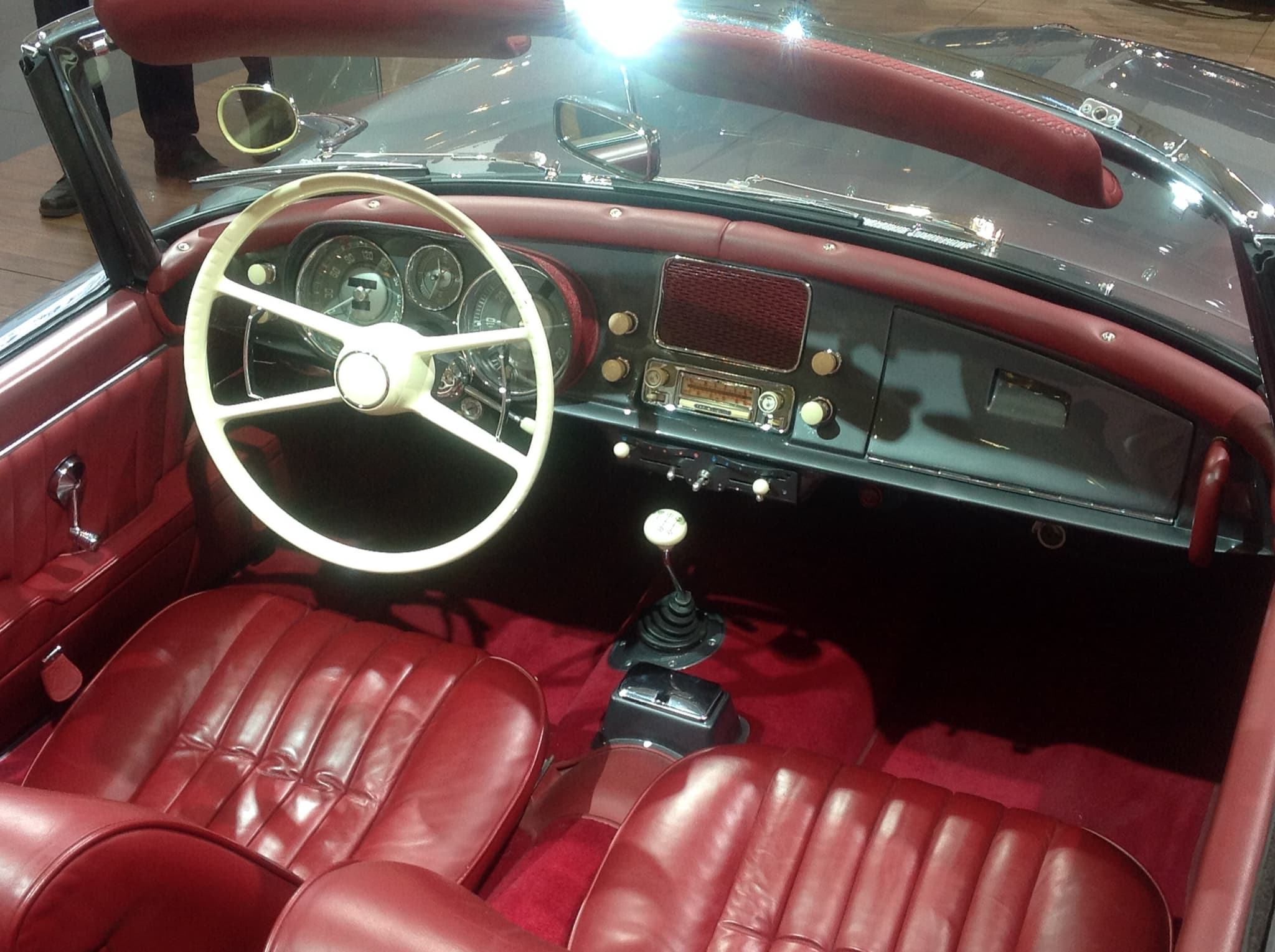
BMW made its changes in June 1957, and the BMW V8 Club's list starts them at chassis 70044; How many were made gives the counts of each series. Two things tell the two apart. In the Series I the fuel tank stood upright behind the seats and the filler sat on the tail, behind the folded hood (soft top); from the Series II the tank lay under the boot (trunk) floor beside the spare wheel and the filler moved to the right rear wing (fender), behind a lockable flap. On the fascia, a central loudspeaker grille and a larger glovebox mark the Series II. And with the tank gone from behind the seats, the Series II seats got longer runners, by the club's account. The club's list adds heavier bumpers on black brackets, narrower door handles and a rounded panel under the rear bumper on the Series II, and later changes within it: new heater hoses and a different camshaft later in 1957, then a stronger bonnet-stay pin in 1958 and the automatic brake adjusters dropped in 1959. The versions page sets out the differences, and the interior shows both dashboards.source 5source 6source 1source 7source 8
Later changes
Front disc brakes came only at the very end. Motor Sport's Earls Court guide said in October 1959 that discs were available, and Sports Cars Illustrated that December tested a car with Dunlop discs on the front, fitted "for 1960"; the BMW V8 Club believes at most the last four cars had them. Discs could also be fitted later: John Surtees, who bought his car new, had Dunlop discs put on all four wheels while Dunlop was developing them for the 507, and had more power from its engine, Automotive Engineering International reported in 2000.
Other details changed at the end of production. The centre-lock wheels, an extra from the start, lost their eared nuts in Germany by 1959, when the law no longer allowed ears, and took octagonal ones; the pedals and the wipers were redesigned for 1960.
Every 507 left Munich with its steering on the left, and Motor Sport explained in 1987 that the sump and the steering box made a right-hand-drive car hard to build.
The engine needs checking too. The 503 had the same V8 in a milder tune, so the engine number, checked against BMW's record for the chassis, is what shows whether a car has its own.source 9source 10source 11source 8source 6source 12source 13source 14
BMW 507 replica
A replica is a car built to look like a 507 on running gear that is not a 507's, and it is told apart by what lies under the body. One was announced in 2024: the German coachbuilder estella Fahrzeugtechnik's Tender 5.7, a carbon-fibre body in the 507's manner on BMW's Z4 M40i, with 15 conversions planned, bmwblog reported. A Z4-based car keeps its own chassis number and modern running gear.
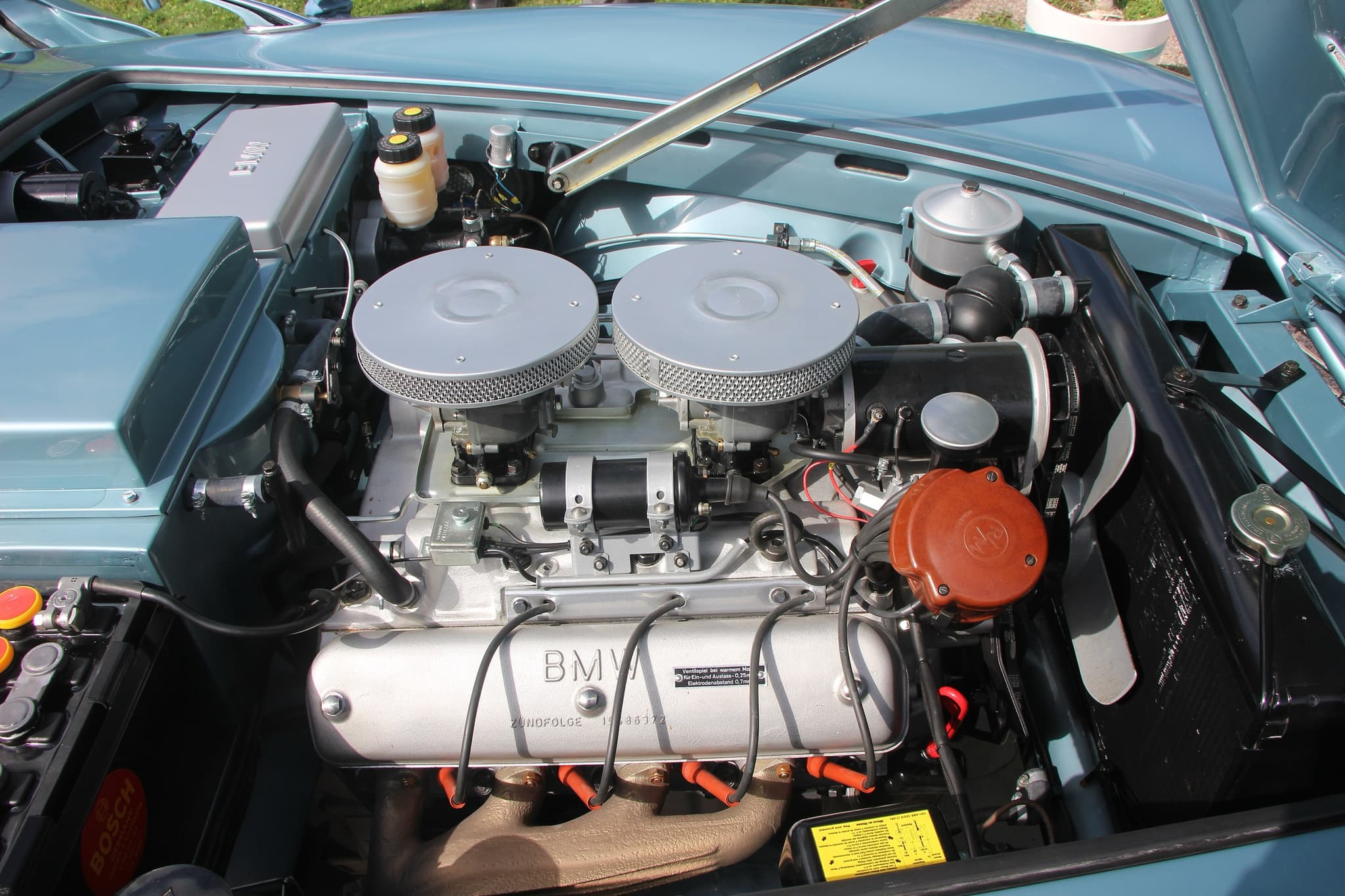
A real 507 has an aluminium body on BMW's box-section frame with tubular cross-members, the light-alloy V8 with its gearbox flanged to it, and a chassis number in the range above. The 507's frame was shortened from the 502's, which in auto motor und sport's table of 1955 measures 2,835 mm (111.6 in) between the axles, so a car on a 502 frame that was not shortened has a longer wheelbase than a 507; the engine page gives the 507's.source 15source 16source 17source 1
One-off bodies on 507 chassis
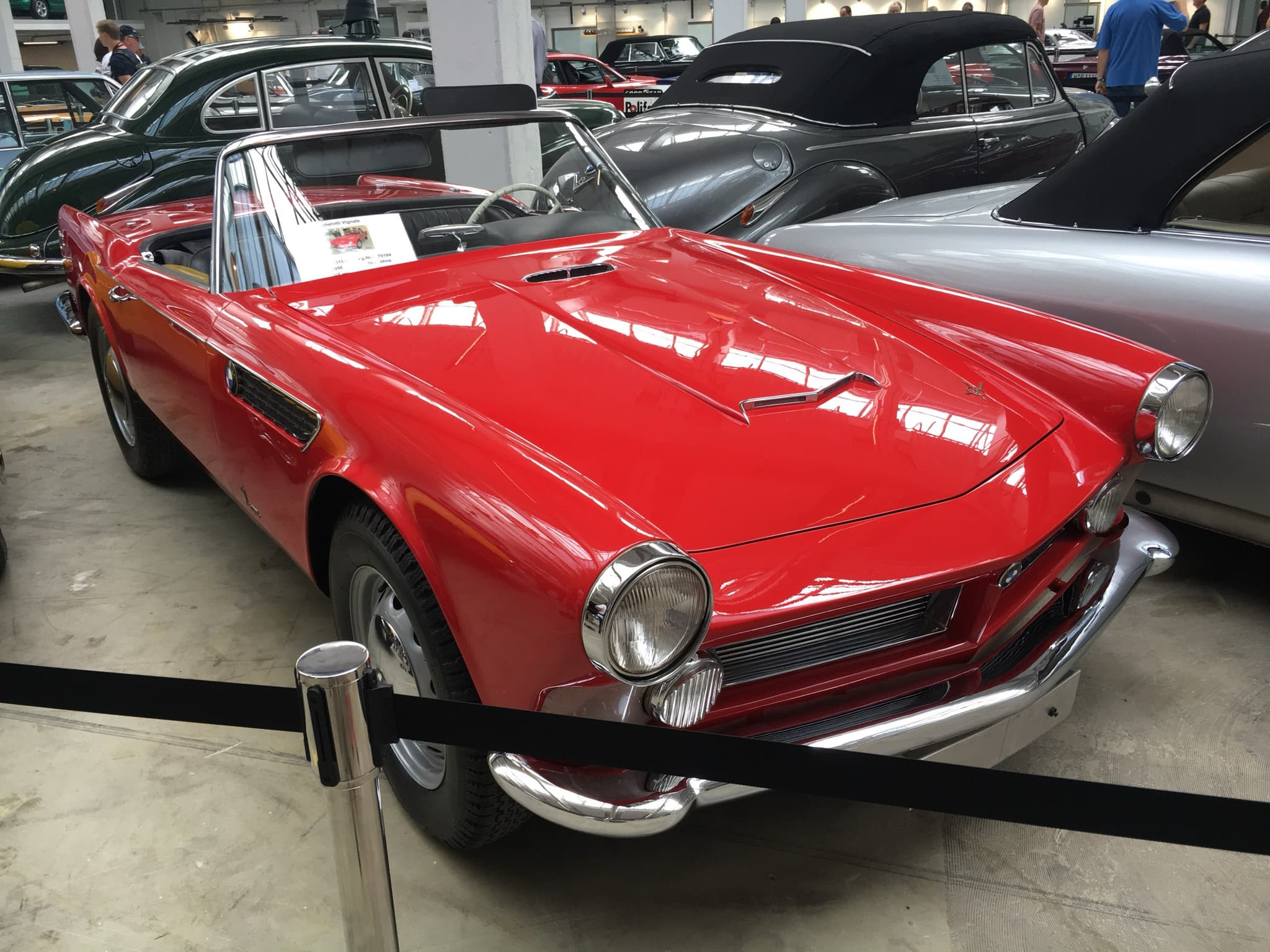
Two one-off cars were built on genuine 507 chassis with bodies that are not BMW's. Raymond Loewy had chassis 70024 bodied by Pichon et Parat of Sens as a coupé for the Paris Salon of 1957, and Giovanni Michelotti had 70184 bodied by Scaglietti and finished at Vignale for the Turin show of 1959; BMW Group Classic has owned Michelotti's car since 2005. Both cars are on Notable BMW 507s.source 18source 19source 20
Restoration
So few 507s were built, Sports Cars Illustrated explained in 1959, that the bodies could be "literally hand-made, the panels being hammered individually from aluminum sheet by devoted Bavarian craftsmen".
Motor Klassik's buying guide, which the BMW V8 Club reprints, explains that the aluminium body was set on the steel frame and flanged over, which makes it hard to lift off, and that where aluminium meets steel, at the wings, the sills (rocker panels) and the boot floor, contact corrosion can form. Some owners have had such places painted over during a restoration, so the guide suggests an endoscope and asks for the whole record of any restoration. Hood and upholstery can be remade faithfully, it says, but chrome parts such as the grille often have to be reproductions, because BMW itself has few originals left.
When BMW Group Classic restored Elvis Presley's car in 2014–16, taking it apart took a week instead of the two days planned; the aluminium body had to be lifted off the steel floor, and the paint came off in an acid bath for the floor and an alkaline bath for the body.
BMW Group Classic's own workshop at its Classic Center looks after, repairs and restores old BMWs, and its Classic Partners, certified regional workshops, do servicing, standard repairs and appraisals. One part made for Elvis Presley's car, the rubber seal for the tank cover, was made in a small series, and BMW said in 2016 that its parts department now sold it. The BMW V8 Club runs campaigns to have parts made again for its members and has experts for each type.source 8source 21source 3source 2source 6
Gearbox, engine and brakes in use
Motor Klassik's guide says the V8 is reputed very hard-wearing, good for at least 150,000 km (93,000 miles), but it dislikes long stretches at full throttle, runs hot in slow traffic and can suffer vapour lock; now and then a head gasket fails. It finds the gearbox gives less trouble, though the 1956 prototype Motor Sport drove tended to jump out of second and top, and the car Sports Cars Illustrated tested in 1959 wanted "a very slight pause at each shift". On revs, the man who looked after BMW GB's car in 1987 was cautious:
The danger of piston breakage is the ultimate rev limitation on these engines … so keep it down to 4,000 just to be on the safe side!
The brakes were criticised from the start. Denis Jenkinson, on a visit to Munich in 1956, was "taken aback by the way in which its brakes seemed to fade" and argued about it with Alex von Falkenhausen, Motor Sport recalled in 1987. Sports Cars Illustrated found in 1959 that the drums faded at the front before the rear, so that braking hard into a corner the car swung its tail out. The late front discs were thin, Motor Klassik's guide says, and can be damaged on long descents; it finds that the car with drums all round stands up better.
On the road, Motor Sport's tester in 1987 found the ride on torsion bars harsh at low speed and better the faster he went, and Sports Cars Illustrated found that on rough, irregular surfaces "that ponderous axle unsettles things". Its testers rated the steering's precision "topnotch" but found hard driving on winding lanes "an exercise", and in hard left turns their car spilled petrol (gas) from its filler cap.source 21source 13source 11source 8
Checklist
The chassis number
Between 70001 and 70254, by the BMW V8 Club's list; a 503 is numbered from 69001.
BMW's record
A digital birth certificate from the BMW Group Archive; what it holds depends on the model and the car's age.
The engine
Its number against BMW's record for the chassis: engines have been changed.
The series
Tank, filler and fascia agree with the chassis number: Series II from 70044.
Disc brakes
Front discs came on at most the last cars built; on an earlier car they were fitted later.
The body
Wings, sills and boot floor, where aluminium meets steel, and the record of any restoration.
An advertisement
Photographs taken now, not pictures of a car sold years ago.source 1source 3source 21source 4source 6
Sources
Every source the site cites is on the sources page.
- Primarymade at the time, by the maker or by people who were there
- Referenceserious later work: clubs, specialists, magazines, books
- BMW V8 Club Deutschland, "Technische Daten 503 507 3200CS", "Fahrgestellnummern"; the chassis ranges of the 503 and 507; running changes from 70044; running changes from 70044, later in 1957 and in 1958–59; the chassis ranges. bmw-v8-club.de/fahrzeuge/8-zylinder-baureihe/techniche-daten-503-507-3200-cs.html Reference
- BMW AG (BMW Group PressClub Global), "Elvis' BMW 507 lives on: Comeback at the Concours d'Elegance in Pebble Beach" (press release), Munich, 4 Aug 2016, the Chevrolet engine; no engine or gearbox in 2014; the restoration: the body off the floor, the dismantling, the tank-cover seal. press.bmwgroup.com/global/article/detail/T0262726EN/elvis Primary
- BMW Group Classic, BMW Group Classic: service pages (group): "Digitale Geburtsurkunde" and its order form, "Werkstatt", "Classic Partner", 2026, "Digitale Geburtsurkunde" and its order form; "Werkstatt"; "Classic Partner"; "Digitale Geburtsurkunde". bmwgroup-classic.com/de/services/digitale-geburtsurkunde.html Primary
- BMW V8 Club Deutschland, "Traum, Märchen, Betrügereien oder Alptraum", the member's account of the advertisement; current photographs. bmw-v8-club.de/club/ratschlaege-tipps/betrug-oder-traum-aufgepasst.html Reference
- BMW AG (BMW Group PressClub Czech Republic), "Zeitlose Eleganz: 50 Jahre BMW 507 und BMW 503", chapter of the press kit "Legenden der 50er Jahre: BMW 507 – BMW 503 – BMW Isetta", German, Apr 2005, the changes of June 1957; the tank behind the front seats, then under the boot floor. press.bmwgroup.com/czech/article/attachment/T0066597CS/96056 Primary
- BMW V8 Club Deutschland, "Modellübersicht 503 507 3200 CS", Series I and II: tank, filler, dashboard, seats, bumpers, door handles, the panel under the bumper; discs on at most the last four cars; the club's remanufacturing campaigns and type experts; Series I and II details; the late discs. bmw-v8-club.de/fahrzeuge/8-zylinder-baureihe/modeluebersicht-503-507-3200-cs.html Reference
- Jesse Alexander, "Complete report on BMW 507", with "Factory test data" and "Late news from BMW", Sports Cars Illustrated, May 1957, pp. 18–21, 50, the tank moved beside the spare. archive.org/details/sim_car-and-driver_1957-05_2 Primary
- Sports Cars Illustrated, "Disc-Braked BMW 507" (road test), with the same issue's Frankfurt show report, Dec 1959, pp. 49–51, 104, the lockable flap in the right wing; the Dunlop front discs "for 1960"; the centre-lock nuts; the pedals and wipers; the hand-made bodies; the gearchange; the drums and the tail; the axle; the steering; the fuel filler. archive.org/details/sim_car-and-driver_1959-12_5 Primary
- Motor Sport, "Earls Court Reviewed", Nov 1959, p. 39, BMW, stand 122: disc brakes available. motorsportmagazine.com/archive/article/november-1959/39/earls-court-reviewed Primary
- Denis Jenkinson ("D.S.J."), "At the House of B.M.W.", Motor Sport, Nov 1955, p. 46, knock-off hubs among the extras. motorsportmagazine.com/archive/article/november-1955/46/at-the-house-of-bmw Primary
- Bill Boddy, "German high performance", Motor Sport, Nov 1956, p. 28, the 503 and 507 engines compared; the prototype's gearbox. motorsportmagazine.com/archive/article/november-1956/28/german-high-performance Primary
- Motor Sport, "The Cars at Earls Court", Nov 1958, p. 22, the BMW stand: left-hand drive only. motorsportmagazine.com/archive/article/november-1958/22/cars-earls-court Primary
- Alex Harmer, "Sisters under the skin?", Motor Sport, Feb 1987, p. 17, the sump and steering box; the restorer's rev limit, the quotation; Jenkinson and von Falkenhausen; the ride at low speed. motorsportmagazine.com/archive/article/february-1987/17/sisters-under-the-skin Reference
- Stuart Birch, "Global Viewpoints – From 507 to Z8", Automotive Engineering International (SAE International), Jul 2000, Surtees's car: discs on all four wheels, more power. sae.org/automag/globalview_07-00/01.htm Reference
- Adrian Padeanu, Report on the estella Tender 5.7, a 507-styled body on the BMW Z4, BMWBLOG, 2024, the Tender 5.7: the Z4 M40i base, the carbon body, 15 planned. bmwblog.com/2024/05/25/bmw-z4-custom-body-507-inspiration Reference
- Bayerische Motoren Werke AG, BMW 507 Touring Sport (sales brochure), German, 1/1959, W 61 5 1.59, the technical data: body, frame, engine. archive.org/details/1959-bmw-507-touring-sport-brochure.-w-61-5-1.-59-0 Primary
- auto motor und sport, IAA report, "Technische Daten der deutschen Personenwagen" and "Preise der deutschen Personenwagen", Heft 20, 24 Sep 1955, the data table: the 502's and 507's wheelbases. archive.org/details/auto-motor-und-sport-1955-heft-20 Primary
- Motor Sport, "The 44th Paris Salon", Nov 1957, p. 21, Loewy's coupé on a 507 chassis. motorsportmagazine.com/archive/article/november-1957/21/the-44th-paris-salon Primary
- Jackie Jouret and Helmut Werb, "507s star at Pebble Beach", Bimmer, No. 119, 25 Oct 2013, pp. 9–10, chassis 70024 and 70184. bimmer-mag.com/issues/119/articles/507s-star-at-pebble-beach Reference
- BMW Group Classic (BMW Classic blog), "60 Years of Pure Temptation", 2015, the Michelotti car. presstopic.bmwgroup.com/en/bmw-classic-blog/text/60-YEARS-OF-PURE-TEMPTATION-4484.html Primary
- BMW V8 Club Deutschland, "Kaufberatung BMW 507" (Motor Klassik's "Kauf-Ratgeber BMW", reprinted), the body on its frame; contact corrosion; the record of a restoration; trim; chrome; the engine's habits; the gearbox; the late discs; contact corrosion; the restoration's documents. bmw-v8-club.de/club/ratschlaege-tipps/kaufberatung/kaufberatung-bmw-507.html Reference