The People Behind the BMW 507

An importer in New York, a designer he put forward to Munich, the engineers who built and tested the car, the managers who ran BMW while it was made and the shareholder who backed the company's rescue after it.

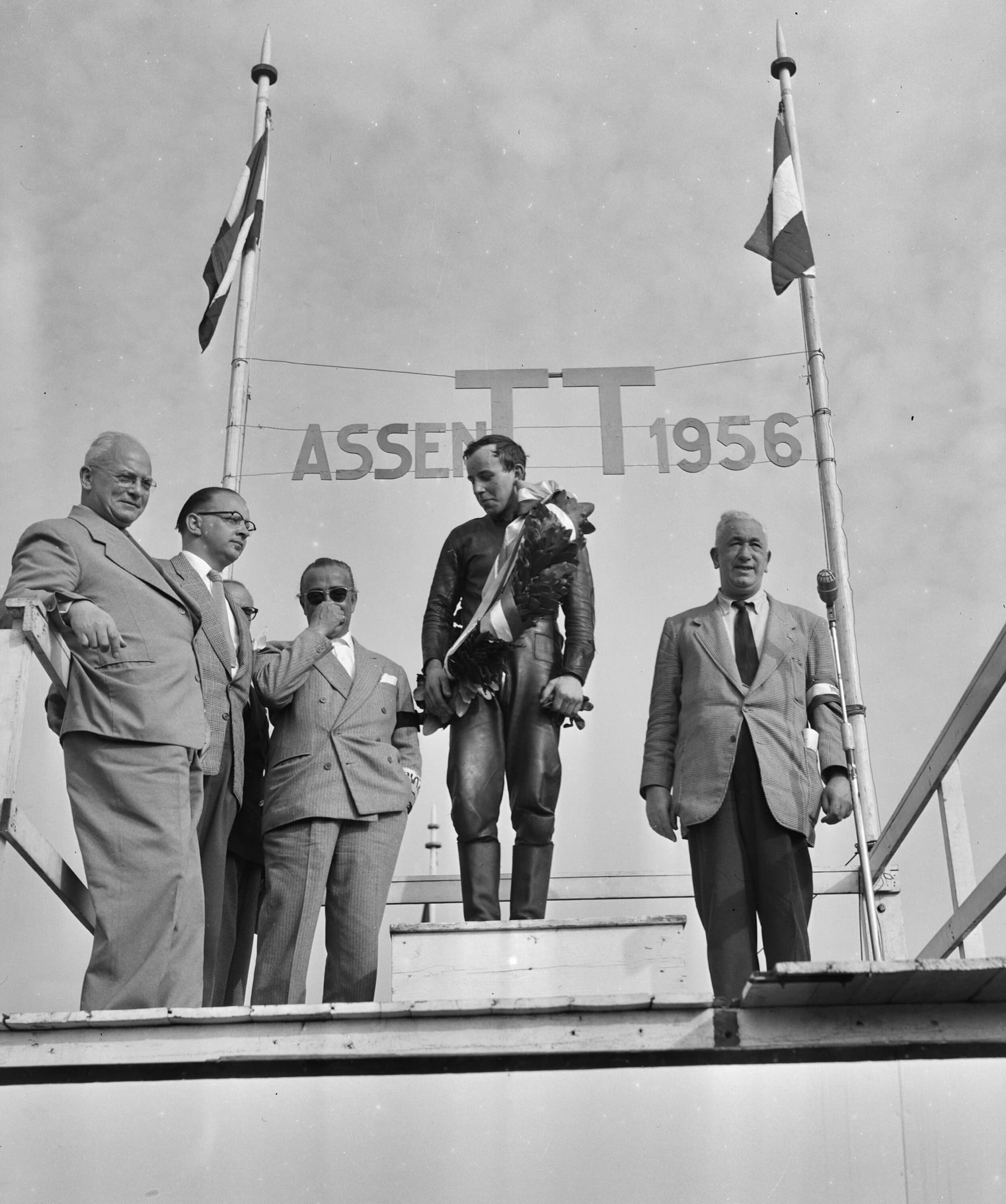
A smiling man in a light open-necked shirt holds a large laurel wreath with striped ribbons beside a white car, with spectators, flagpoles and a wooded hillside behind.
Hans Stuck with the winner's wreath of the Grand Tourisme class over 2,600 cc at the Schauinsland hillclimb near Freiburg in July 1958, the class he won in BMW's works 507 on 27 July (Landesarchiv Baden-Württemberg, Willy Pragher).Willy Pragher, CC BY 4.0

In September 1954 the first 507 prototype, built by Ernst Loof's team at the Nürburgring, won a gold medal at a concours in Bad Neuenahr. Max Hoffman, BMW's importer in New York, judged it unsaleable in America, and by the end of October sketches by Albrecht von Goertz, a German-born designer he had put forward to Munich, had arrived there. The history tells how the car was made. The entries here are about the people: Hoffman first, then the engineers, the managers who ran BMW while the car was built, the shareholder who backed the company afterwards and a Turin stylist who drew a 507 of his own. The cards after them name everyone the sources tie to the car.⁠source 1​source 2​source 3

Max Hoffman

Hoffman's father had a grocery in Vienna and turned it into a maker of sewing machines, then of bicycles and motorcycles. The son raced motorcycles, and cars too (an Amilcar among them), and built a dealership that imported British, French and Italian cars into Central Europe; the Austrian Embassy's profile of him adds that he was Volvo's first importer in Europe. He reached New York by way of France, and a costume-jewellery business he started there in wartime paid for his return to cars. Jaguar, Volkswagen and Alfa Romeo were among the makes he went on to import, and at one time he accounted for about a third of Porsche's sales worldwide.

Motor Sport told what he did for Mercedes-Benz in its guide to the 300 SL in 2020:

Hoffman boldly wagered that if Mercedes built a road-going version of the W194, then he could sell them to Americans craving high-performance machines during an economic boom.

Motor Sport, June 2020

BMW's account of 2005 introduces him as its general importer in New York, very successful at launching German two-seaters, who wanted one thing from Munich above all: "Einen Sportwagen" (translated: a sports car). By Karlheinz Lange's research, as Bimmer reported it in 2013, he expected to sell about 2,000 of them in the United States. BMW's own accounts start the 507 with his request; Lange dates the start of the project to March 1953, in Munich, and the history gives both. Later, the embassy's profile says, he pressed BMW for a compact, fast saloon (sedan) for America, the car that became the 2002.⁠source 4​source 5​source 2​source 6

Contents

Fritz Fiedler

Fiedler had laid down BMW's car designs with Rudolf Schleicher in 1932 and designed the chassis of the pre-war 328, and after the war he went to England, to AFN, which lent him to Bristol. Back at BMW, by Lange's research, he was given charge in March 1954 of building the first prototype of an open sports car, the car that Loof's team put together at the Nürburgring. When Denis Jenkinson toured the Munich works for Motor Sport in 1955, the man who showed him round was Fiedler, by then the head of BMW's design department.⁠source 7​source 8​source 6​source 9

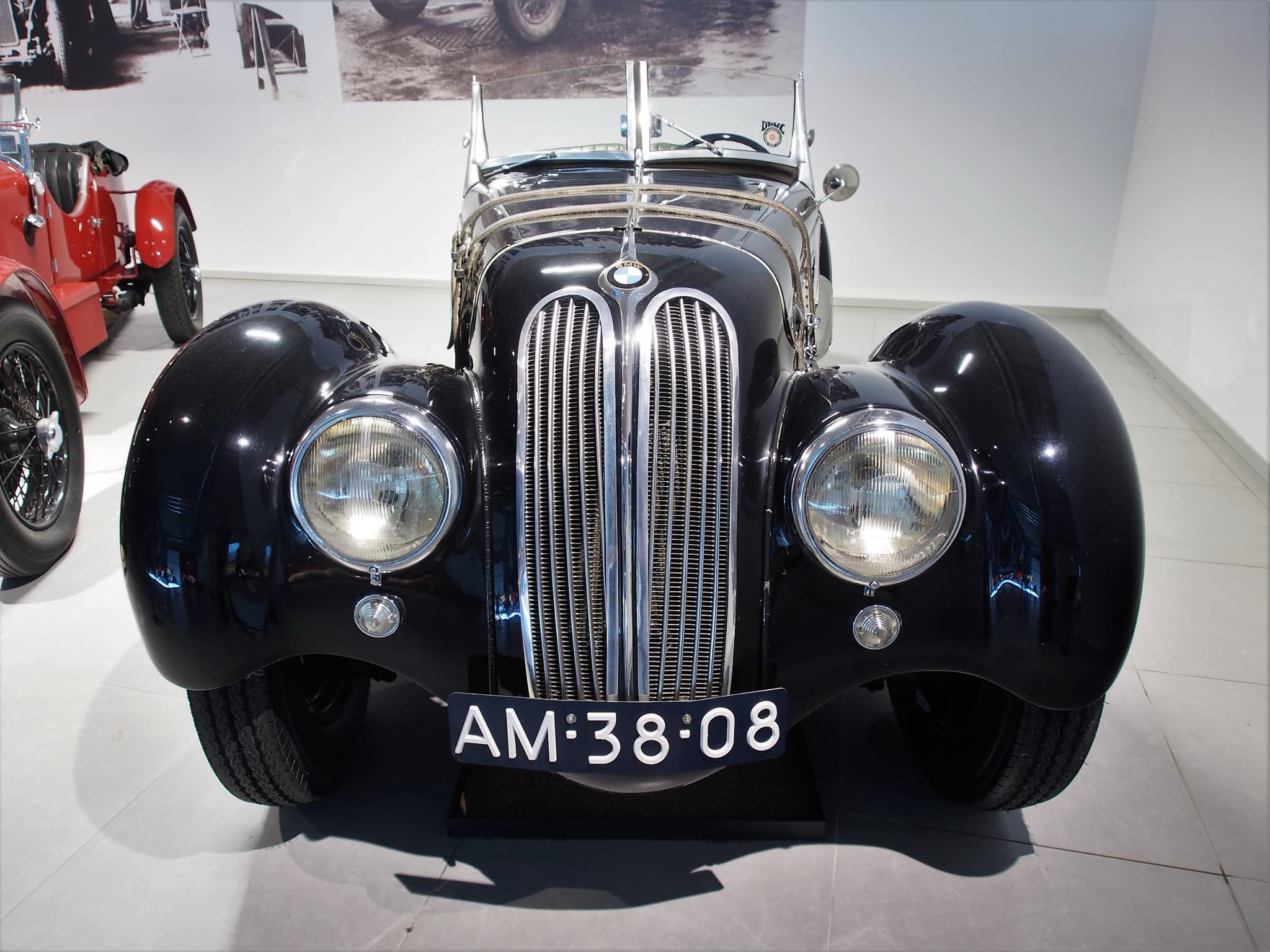
A black BMW 328 roadster seen head-on in a museum, with its narrow twin kidney grilles, headlamps set into the wings and a folding windscreen.
A BMW 328 roadster of 1936–40 in the Louwman Museum, The Hague, on 4 January 2017: BMW's pre-war sports car, whose chassis Fiedler designed, not a 507 and not a picture of him.Alf van Beem, Public domain (PD-self)

Contents

Alex von Falkenhausen

Von Falkenhausen ran BMW's motor racing from 1954, and the sources make him the 507's tester. When Motor Sport drove a prototype 507 in September 1956 he "produced the most comprehensive data sheets for the car", and it reported that he hoped to drive a 507 in the 1957 Alpine Rally. In 1987 the magazine remembered its own Denis Jenkinson arguing with him, at the time of the launch, about the way the brakes faded. BMW's release for his centenary in 2007 records a wish from 1955: he would have liked to sign the British racing rider John Surtees for BMW, but the budget did not stretch to it.⁠source 10​source 11​source 12

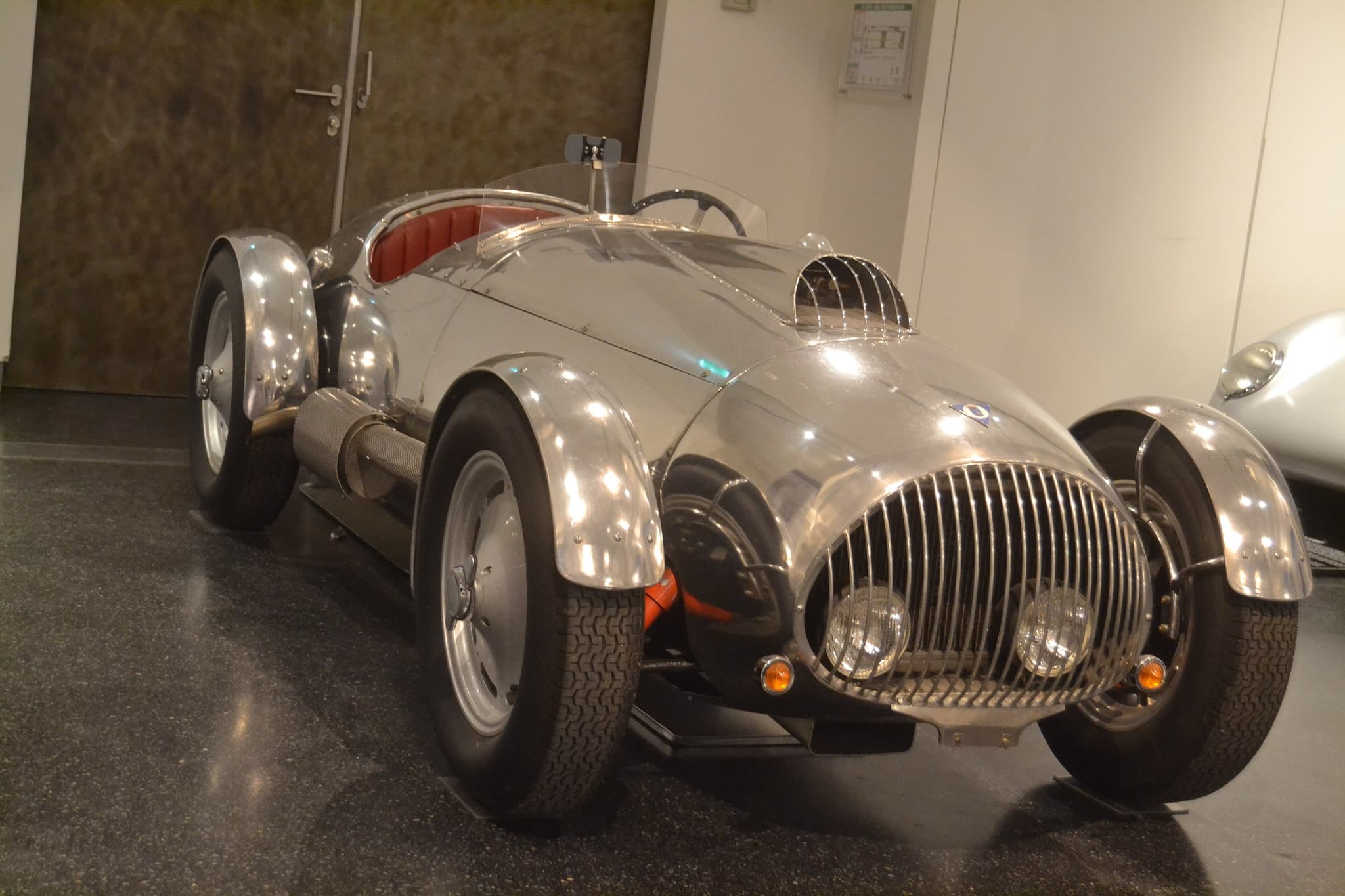
A polished aluminium AFM open racing car with a curved barred grille and cycle wings on a museum floor.
An AFM racing car, dated 1948 by the Prototyp museum in Hamburg, where it was photographed on 1 February 2015: a car built by von Falkenhausen's own firm after the war, not a 507 and not a picture of him.Matthias v.d. Elbe, CC BY-SA 3.0

Contents

Ernst Loof

Loof had headed BMW's sports-car department. In 1947 he set up Veritas to build sports cars on the 328, often a used 328 with a new body, and Veritas made them until 1953. BMW then bought the business and put Loof at the head of its research and development branch at the Nürburgring, in the former Veritas workshop, and there his team built the first 507 prototype in 1954. BMW Group Classic gives his years as 1907–1956.⁠source 13​source 2​source 6​source 1

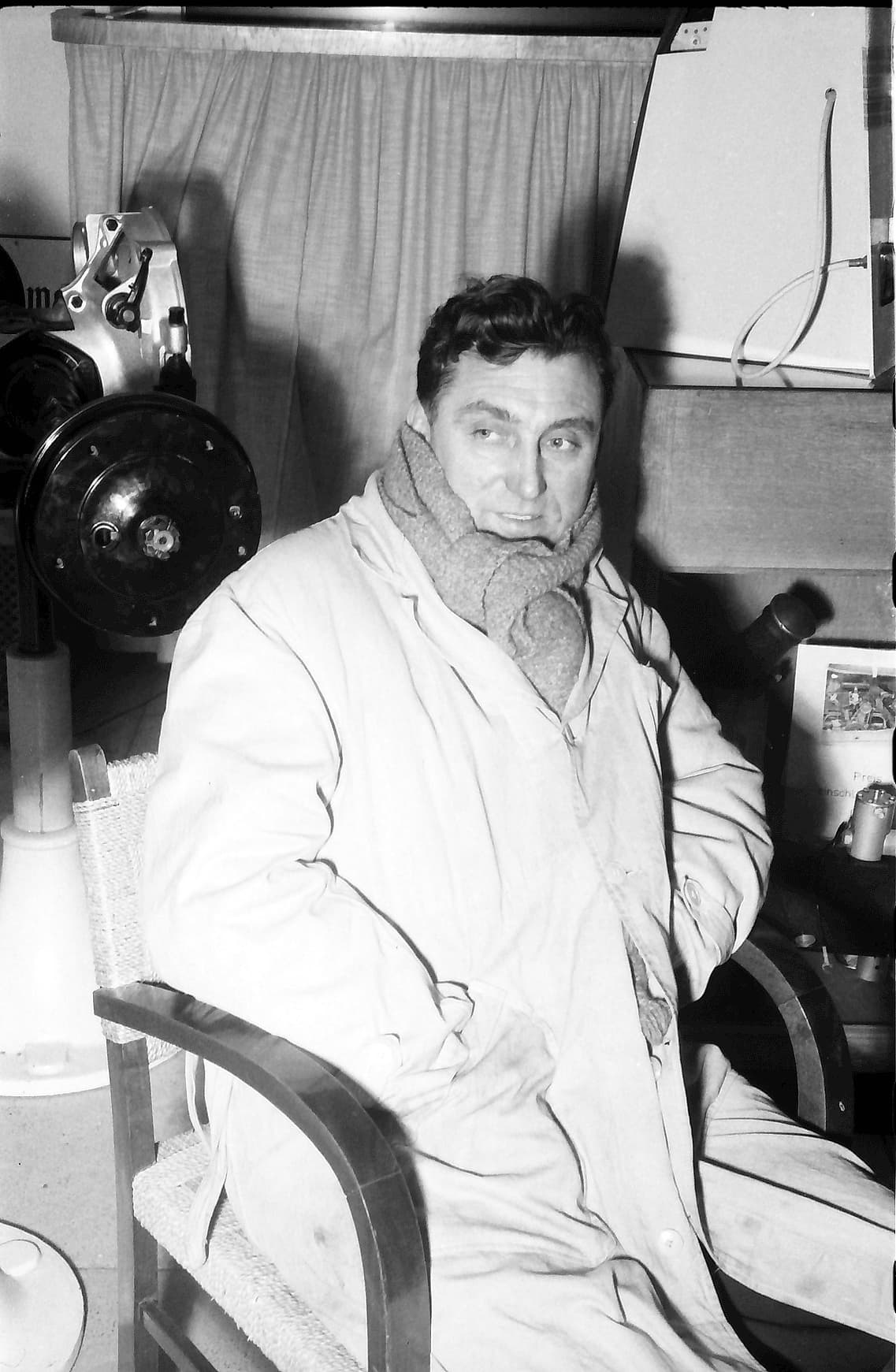
A black-and-white photograph of Ernst Loof in a raincoat and scarf, seated beside car parts.
Plate I Ernst Loof, seated in a white coat and scarf, in a photograph by Willy Pragher that the Landesarchiv Baden-Württemberg dates 9 January 1954, the year he built BMW's first 507 prototype at the Nürburgring.Willy Pragher, CC BY 4.0

Contents

Herbert Quandt

Quandt had been buying BMW shares since the 1950s. After the shareholders' meeting of 9 December 1959, which the history describes, he bought more, and BMW's history gives his reasons: he "expanded his stockholding, motivated by the perseverance of the workforce and by his own confidence in the company". Der Spiegel reckoned in February 1960 that he held 10 to 15 per cent of the capital, and about DM 7 million of the convertible bond BMW had issued in 1958.⁠source 14​source 15​source 16

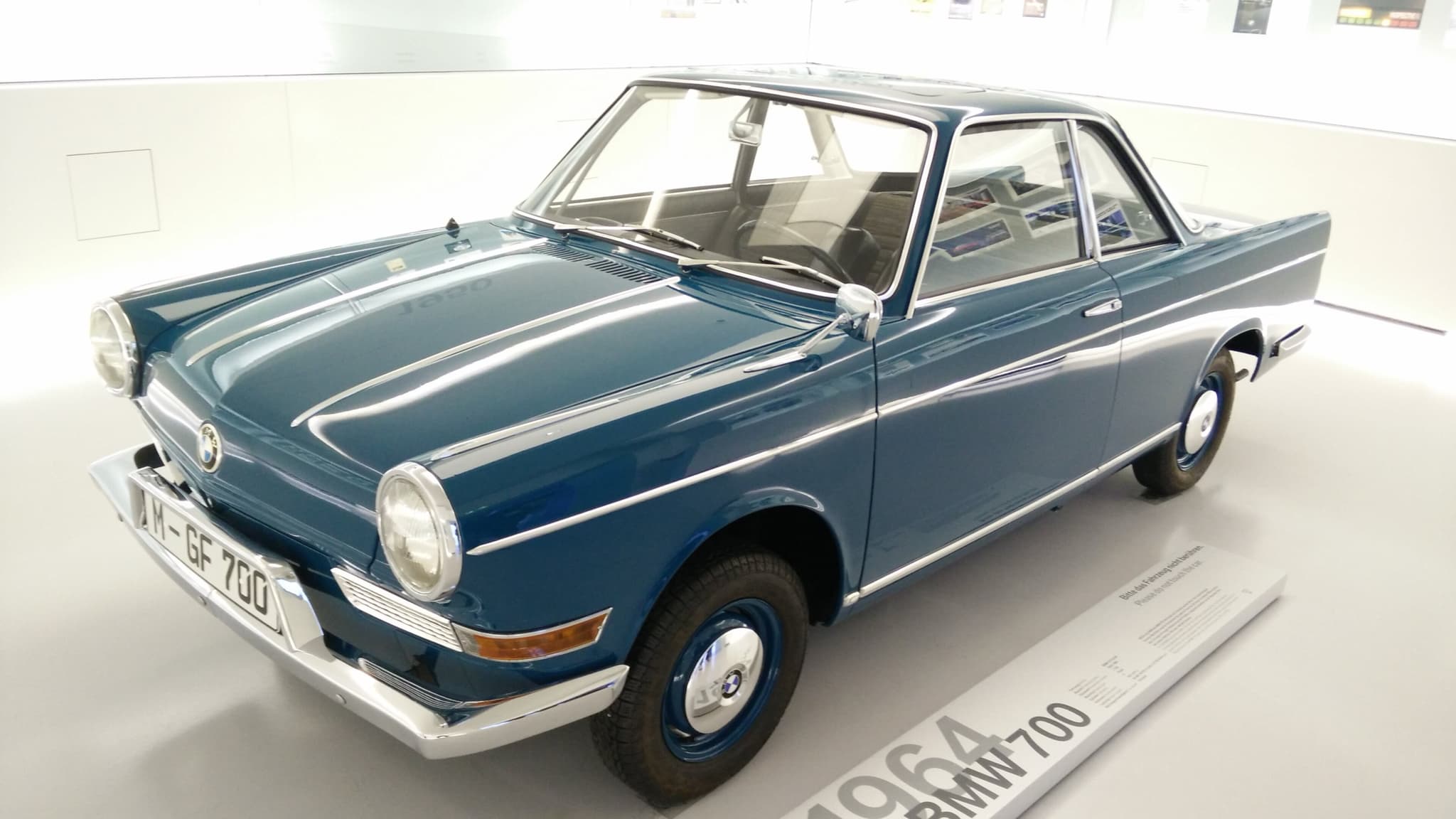
A blue BMW 700 LS coupé on a white museum floor beside a plinth reading 1964 BMW 700.
A BMW 700 LS Coupé, which the BMW Museum in Munich dates 1964, photographed there on 13 November 2014: the small car BMW was selling in the years after the rescue Quandt backed; not a 507.Nathanael Burton, CC BY-SA 2.0

Contents

BMW's managers

Hanns Grewenig was BMW's sales director when the 507 was designed. He invited Goertz to Munich in 1954, and he and Fiedler were the two at BMW who stood by Goertz's flat kidney grille. Der Spiegel, writing after the crisis of 1959, blamed BMW's losses in part on the programme of luxury cars and sports cars that he and the then chairman of the supervisory board, Hans Karl von Mangoldt-Reiboldt, had pursued, and quoted his idea of what a BMW should be:

BMW-Wagen sollen die Visitenkarte der deutschen Gesellschaft sein.

Hanns Grewenig, as quoted by Der Spiegel, January 1960

In English, translated: BMW cars should be the calling card of German society. Grewenig was pensioned off when Heinrich Richter-Brohm became BMW's chief executive on 1 March 1957. Richter-Brohm's study for the board that year found that the car business had lost almost DM 60 million since it began, and on 9 December 1959 it was Richter-Brohm who faced the shareholders.⁠source 17​source 18​source 19

Contents

Giovanni Michelotti

Michelotti, the Turin stylist, drew a 507 of his own, on his own initiative, BMW wrote in 2015; the notable cars page tells the car's story. Lange's research, as Bimmer reported it, has chassis 70184 going to Italy in 1958, bodied by Scaglietti at Maranello and finished by Vignale in Turin, as the successor to the 507 that, Jouret and Werb wrote, Michelotti hoped BMW would build. The car was shown at the Turin show in 1959 (in May, by BMW's account), and BMW bought it in 2005.⁠source 1​source 6​source 20

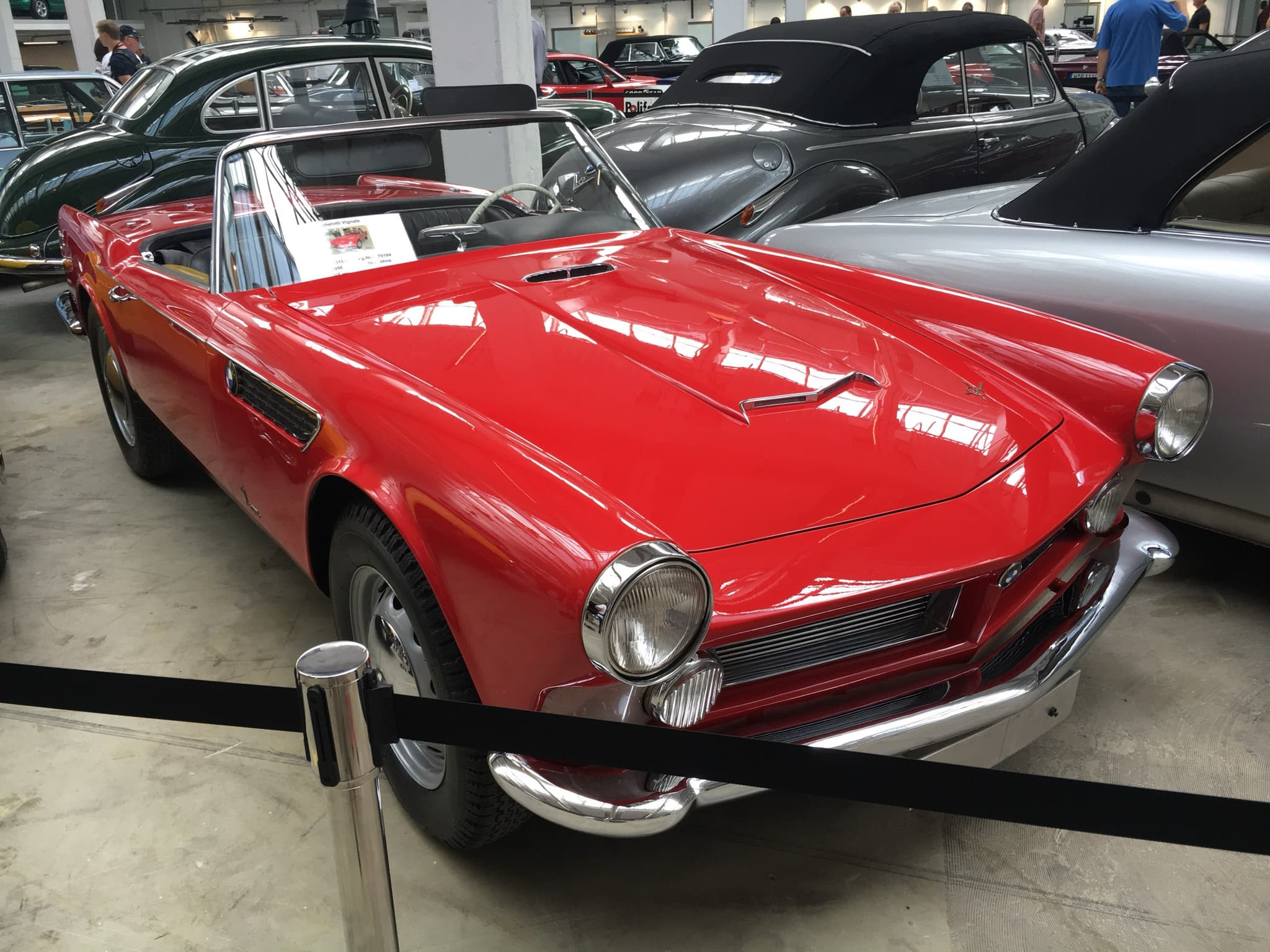
A red open two-seater with a low grille and round headlamps, the BMW 3200 Michelotti Vignale, behind a rope in a hall of classic BMWs with visitors behind it.
The BMW 3200 Michelotti Vignale on 10 September 2016: Giovanni Michelotti's design on 507 chassis 70184, shown at the Turin show in 1959 and owned by BMW since 2005.Buschtrommler, CC BY-SA 4.0

Contents

Goertz, Stuck, Surtees and Elvis Presley

Albrecht von Goertz drew the 503 as well as the 507. Hans Stuck, "the pre-war Auto-Union G.P. driver" to Motor Sport in 1959, drove BMW's works 507s in hillclimbs in 1958 and 1959, and John Surtees, the motorcycle world champion, bought a 507 new from Munich; the notable cars page covers both. One of Stuck's works cars, 70079, went to Elvis Presley in December 1958.⁠source 21​source 22​source 12​source 23

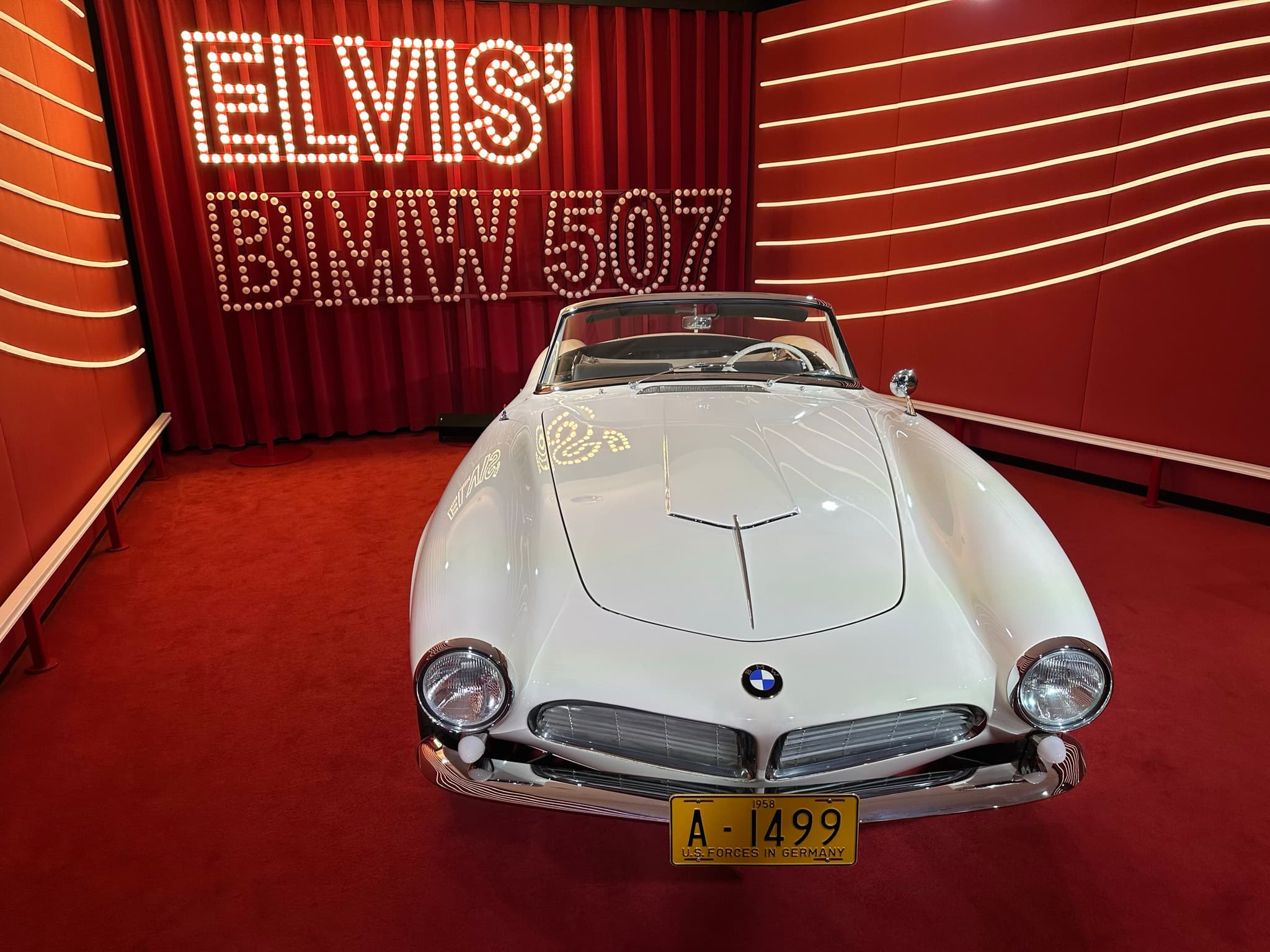
A black-and-white photograph of John Surtees in racing leathers holding a wreath on a podium under a sign reading Assen TT 1956, with five officials in suits.
Plate II John Surtees on the winner's platform after winning the 500 cc race at the TT Assen on 30 June 1956, in his first world-title season, with officials beside him (Nationaal Archief, Anefo).Joop van Bilsen / Anefo, CC0
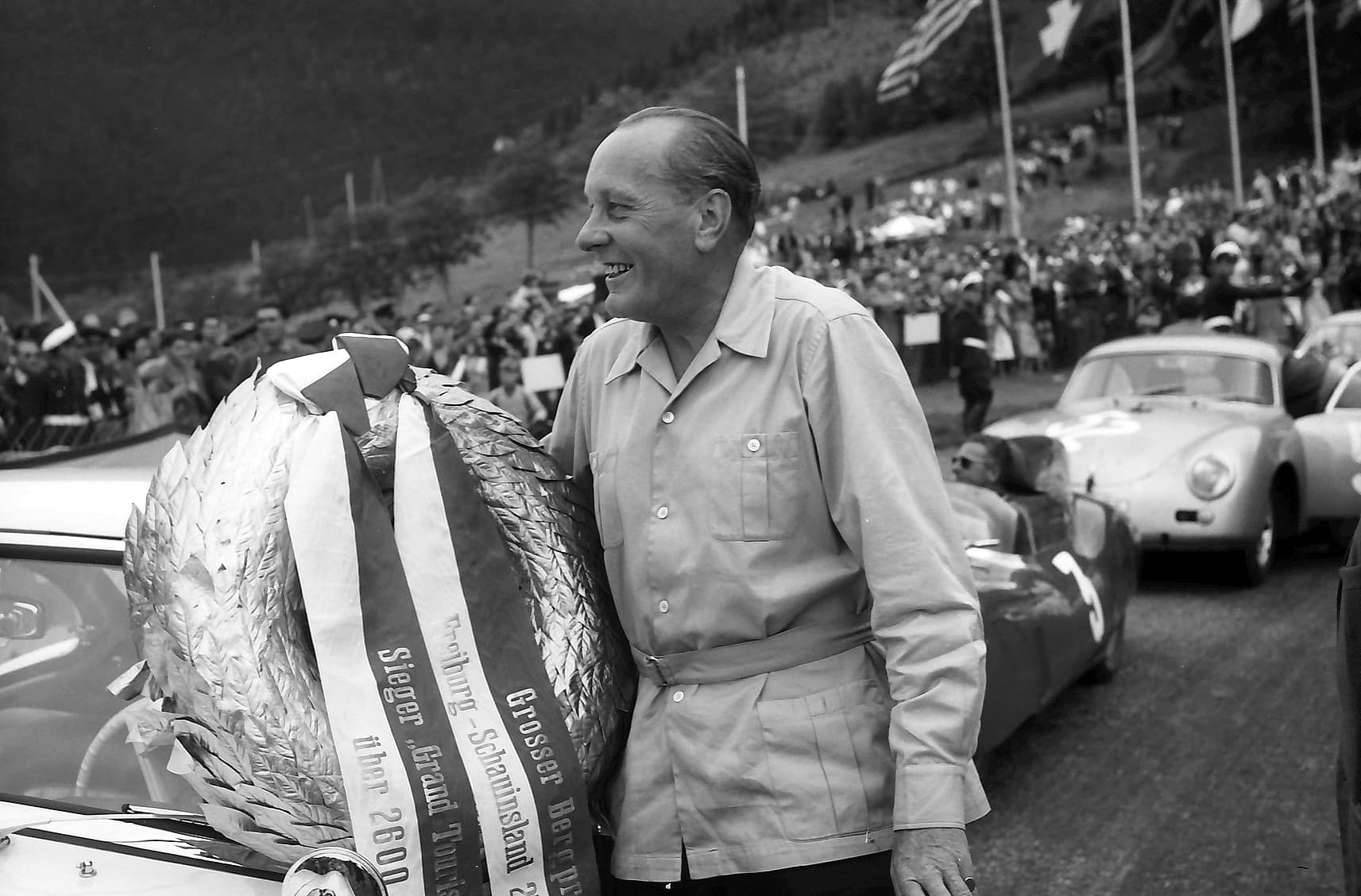
The white BMW 507 that belonged to Elvis Presley, head-on in a red display under a sign reading Elvis' BMW 507.
Elvis Presley's 507, chassis 70079, in its room at the BMW Museum, Munich, on 15 January 2025, with its 1958 US Forces plate A-1499.Steve Jurvetson from Los Altos, USA, CC BY 2.0

Contents

People

  • head of motor racing, head of engine development

    Alex von Falkenhausen

    Engineer and racing driver. Born in Munich, he joined BMW in 1934 as a works rider and motorcycle designer; after the war he built racing cars under his own name, AFM, and won the German sports-car championship of 1948. He returned to BMW in 1954, added engine development to racing in 1957 and retired in 1976. He died in Munich.

  • engineer

    Fritz Fiedler

    The engineer who designed the 328's chassis, the tubular frame BMW patented; after the war he joined AFN in Britain and was loaned to Bristol for its Type 400. Back at BMW, its board gave him charge of the first 507 prototype in March 1954 (Bimmer, reporting Karlheinz Lange's research), and he was head of its design department by 1955.

  • designer

    Albrecht von Goertz

    Industrial designer, born into an old noble family at Brunkensen, near Hanover. After a banking apprenticeship with Deutsche Bank in Hamburg and Helbert Wagg & Co. in London he emigrated to the United States in 1936; Der Spiegel adds that his mother was Jewish. In Los Angeles he modified Ford cars and built a coupé of his own design, the Paragon, shown at the 1939 World's Fair in San Francisco; he served in the US Army from 1940 to 1945 and became an American citizen. A chance meeting with Raymond Loewy led to the Pratt Institute and two and a half years in Loewy's Studebaker studio, where he and a colleague drew the Champion's "bullet nose" facelift. He opened Goertz Industrial Design in New York in 1953. Max Hoffman, BMW's importer in New York, put him forward to BMW, and he designed the 507 and the 503. His later designs ranged from an Agfa camera and Mont Blanc pens to SABA radios and televisions, and his last work was a Steinway grand piano. BMW and Motor Sport (1987) credit him with the Datsun 240Z; Nissan's letter to him of 1980, as Japanese Nostalgic Car reproduces it, says he was its design consultant from 1963 to 1965 and the sole consultant on a two-litre sports car developed with Yamaha that was not built, and that the 240Z was the work of Nissan's own designers, who had the benefit of his designs. Der Spiegel records that he drove BMW M3s into old age.

  • sales director

    Hanns Grewenig

    BMW manager in the 1950s, in charge of sales when the 503 and 507 were designed.

  • importer

    Max Hoffman

    Car importer. Born in Vienna, he raced motorcycles and cars and built a Vienna dealership importing cars to Central Europe. His father was Jewish, and he left Austria after the Anschluss of 1938 and reached New York in 1941. He founded Hoffman Motors in 1947 and in 1954 opened a New York showroom designed by Frank Lloyd Wright. He urged Mercedes-Benz to build a road-going 300 SL and ordered the first 1,000 cars himself, and the Austrian Embassy's profile credits him with the demand that led to Porsche's 356 Speedster. He was BMW's importer when the 507 was planned. In 1975 he divested his interests to BMW of North America, and in 2003 he was inducted into the Automotive Hall of Fame posthumously.

  • engineer

    Ernst Loof

    BMW's director of racing, by BMW's account, until the racing division was disbanded early in 1941; after the war he had the Kamm coupé for his own use, and entered it for Karl Kling's win at Hockenheim in 1947. He later headed BMW's development branch at the Nürburgring, his former Veritas works, where he built the first 507 prototype in 1954.

  • stylist

    Giovanni Michelotti

    Turin car stylist. He began his career in 1937 as an apprentice at Stabilimenti Farina; according to carrozzieri-italiani he opened his own design studio in Turin in 1949, the first in Italy devoted only to car design; the TSOA Newsletter of 1966 also dates the studio to 1949. His first contact with Standard-Triumph came in 1957: Harry Webster's obituary in the Telegraph says Webster "discovered" him, while Graham Robson says he was found through Raymond Flower and hired on Webster's recommendation with Alick Dick's approval. His first Triumph design was the one-off TR3 "Dream Car" on a TR3 chassis, shown at Geneva in 1957 according to later accounts; Krause says it followed a chance meeting with Alick Dick at a motor show. He went on to design the Italia (1959–62) on TR3A and TR3B running gear. On his own initiative he drew a one-off body for a BMW 507 chassis, shown at the Turin show in 1959, which BMW has owned since 2005. He styled the Herald (1959), whose separate chassis made the Spitfire possible; answering Webster's idea of a "Herald sports car", he built a single prototype in 1960, code-named "Bomb", and later restyled the car as the Mk IV of 1970. For the TR he styled the prototypes Zest (1958) and Zoom (1959) and the TR4 of 1961, which joined Zest's nose to Zoom's tail and kept Zoom's hardtop with its lift-out panel; the TR4A, TR5 and TR250 kept that body with new detail, and its centre section on the TR6 (1969), whose new front and rear Karmann designed because he was busy. According to his son Edgardo, his work for Triumph ended in the late 1970s with a restyle of the TR7 from coupé to spider; he died in January 1980. No source read links him to the Le Mans or Macau competition bodies.
  • owner

    Elvis Presley

    American singer. He served with the US Army in Germany from 1 October 1958 to 2 March 1960, and owned a BMW 507 there.

  • shareholder

    Herbert Quandt

    Industrialist, the second son of Günther Quandt, trained in accumulator manufacture and from the late 1930s a manager in the Quandt group. The BMW Foundation records, after Joachim Scholtyseck's study of 2011, that he joined the NSDAP in 1940 and, as a personnel manager, knew of the forced labour in the group's factories. He had been buying BMW shares since the 1950s. BMW founded the BMW Stiftung Herbert Quandt in 1970, for his sixtieth birthday.

  • chairman of the board

    Heinrich Richter-Brohm

    BMW's chief executive from 1957, through the end of the 503 and 507 and the crisis of 1959.

  • test driver, demonstrator, driver

    Hans Stuck

    Racing driver, known as the Bergmeister (mountain master). Before the war he drove Auto Union's Grand Prix cars and won the European Mountain Championship three times. Motor Sport, at lunch in 2011 with his son, Hans-Joachim Stuck, dates his work with BMW from 1957: he took class wins in the 507 and later won the German hill climb title in BMW's 700 coupé.

  • owner

    John Surtees

    Motorcycle and car racer: 500 cc world champion for MV Agusta in 1956, 1958, 1959 and 1960, and Formula 1 world champion in 1964, the only man to win Grand Prix world championships on two wheels and on four (BBC News). Motor Sport's Earls Court guide of 1959 noted that he owned a 507.

Contents

Sources

Every source the site cites is on the sources page.

  • Primarymade at the time, by the maker or by people who were there
  • Referenceserious later work: clubs, specialists, magazines, books
  1. BMW Group Classic (BMW Classic blog), "60 Years of Pure Temptation", 2015, Loof's prototype at Bad Neuenahr; Hoffman's verdict; late October 1954; Loof, 1907–1956; the Michelotti car: his own initiative; Turin, May 1959. presstopic.bmwgroup.com/en/bmw-classic-blog/text/60-YEARS-OF-PURE-TEMPTATION-4484.html Primary
  2. BMW AG (BMW Group PressClub Czech Republic), "Zeitlose Eleganz: 50 Jahre BMW 507 und BMW 503", chapter of the press kit "Legenden der 50er Jahre: BMW 507 – BMW 503 – BMW Isetta", German, Apr 2005, Loof's car and Hoffman; "Auch er verlangte vor allem eins aus München"; Loof, Veritas and the Nürburgring branch. press.bmwgroup.com/czech/article/attachment/T0066597CS/96056 Primary
  3. Industrial Design, Profile of Albrecht Graf Goertz, Aug 1959 (vol. 6 no. 8), pp. 50–51, pp. 50–51, Hoffman and the sketches. archive.org/details/sim_i-d_1959-08_6_8 Primary
  4. Hannes Richter, "Motor Man: Maximilian Hoffman", Austrian Embassy, Washington (austria.org), "USA 250" series, 29 May, his family, his racing, the Vienna dealership, Volvo, France and New York, the jewellery business, Jaguar, Volkswagen, Alfa Romeo, Porsche's sales, the 2002. austria.org/usa250/1dh70msdgdg5rlxri9hlk33wmy0v9q Reference
  5. Motor Sport, "Road car buying guide: Mercedes-Benz 300 SL", Jun 2020, p. 132, p. 132, the Hoffman passages. motorsportmagazine.com/archive/article/june-2020/132/road-car-buying-guide-mercedes-benz-300-sl Reference
  6. Jackie Jouret and Helmut Werb, "507s star at Pebble Beach", Bimmer, No. 119, 25 Oct 2013, p. 1, Lange: the project from March 1953; 2,000 expected in the US; p. 1, the board's decision of March 1954; p. 1, the former Veritas workshop; p. 9, 70184 to Italy in 1958; Scaglietti; Michelotti's hope. bimmer-mag.com/issues/119/articles/507s-star-at-pebble-beach Reference
  7. Denis Jenkinson ("D.S.J."), "BMW type 328: fifty years ago", Motor Sport, Jun 1986, p. 40, p. 40, "Fiedler concentrated on the chassis". motorsportmagazine.com/archive/article/june-1986/40/bmw-type-328-fifty-years-ago Reference
  8. The Frazer Nash Archives, "Personalities", Fritz Fiedler, 1899 - 1972. frazernasharchives.co.uk/index.php?idPage=12 Reference
  9. Denis Jenkinson ("D.S.J."), "At the House of B.M.W.", Motor Sport, Nov 1955, p. 46, the head of the design department. motorsportmagazine.com/archive/article/november-1955/46/at-the-house-of-bmw Primary
  10. BMW Group (PressClub USA), "The three lives of the BMW baron" (press release), 18 May 2007, head of motor racing from 1954; Surtees in 1955. press.bmwgroup.com/usa/article/detail/T0017811EN_US Primary
  11. Bill Boddy, "German high performance", Motor Sport, Nov 1956, p. 28, the data sheets; the 1957 Alpine Rally. motorsportmagazine.com/archive/article/november-1956/28/german-high-performance Primary
  12. Alex Harmer, "Sisters under the skin?", Motor Sport, Feb 1987, p. 17, Jenkinson and the brakes at the launch; Surtees "purchased one new from Munich". motorsportmagazine.com/archive/article/february-1987/17/sisters-under-the-skin Reference
  13. BMW Historic Motor Club, "Veritas", Veritas, 1947–1953. bmwhistoricmotorclub.co.uk/cars/veritas Reference
  14. BMW Foundation Herbert Quandt, "About the BMW Foundation" (biography of Herbert Quandt), BMW shares since the 1950s. bmw-foundation.org/about-us/about-the-bmw-foundation Reference
  15. BMW Group (bmwgroup.com), "BMW Group history", 1959–1960. bmwgroup.com/en/company/history.html Primary
  16. Der Spiegel, "BMW: Nicht kaputtgekriegt", 9/1960, 23 Feb 1960, his holding and the convertible bond, February 1960. spiegel.de/wirtschaft/nicht-kaputtgekriegt-a-2fc71441-0002-0001-0000-000043063395 Primary
  17. Der Spiegel, "Industrie / BMW: Bayerns Gloria", 3/1960, 12 Jan 1960, Grewenig's programme and his "Visitenkarte"; Richter-Brohm's study; 9 December 1959. spiegel.de/politik/bayerns-gloria-a-0dd99757-0002-0001-0000-000043062979 Primary
  18. Der Spiegel, "BMW: Das rettende Modell", 20/1959, 12 May 1959, Richter-Brohm from 1 March 1957. spiegel.de/politik/das-rettende-modell-a-4829ddb4-0002-0001-0000-000046162557 Primary
  19. Melina Aulinger and Walter Zeichner, "You've got to be lucky", Mobile Tradition live (BMW Group Mobile Tradition), 02/2004, pp. 10–17, p. 14, Grewenig and Goertz. bmw7er-club.de/interaktiv/download/mobilemtradition_02_04.pdf Primary
  20. Martin Buckley, "Out for the Count: Michelotti's BMW 507", Classic & Sports Car, BMW's purchase in 2005. classicandsportscar.com/features/out-count-michelottis-bmw-507 Reference
  21. Motor Sport, "Earls Court Reviewed", Nov 1959, p. 39, BMW, stand 122: Stuck and Surtees. motorsportmagazine.com/archive/article/november-1959/39/earls-court-reviewed Primary
  22. Jackie Jouret, "Elvis' 507: The real story", Bimmer, No. 83, Jun 2009; republished on bimmer-mag.com, 28 Jul 2014, Stuck's 1958 class wins in 70079. web.archive.org/web/2016id_/http://www.bimmer-mag.com:80/news-blog/elvis-507-the-real-story Reference
  23. BMW AG (BMW Group PressClub Global), "Elvis' BMW 507 lives on: Comeback at the Concours d'Elegance in Pebble Beach" (press release), Munich, 4 Aug 2016, 70079 delivered to Elvis Presley, 20 December 1958. press.bmwgroup.com/global/article/detail/T0262726EN/elvis Primary

Contents